Savoir vs Connaître: Two Ways to Know in French
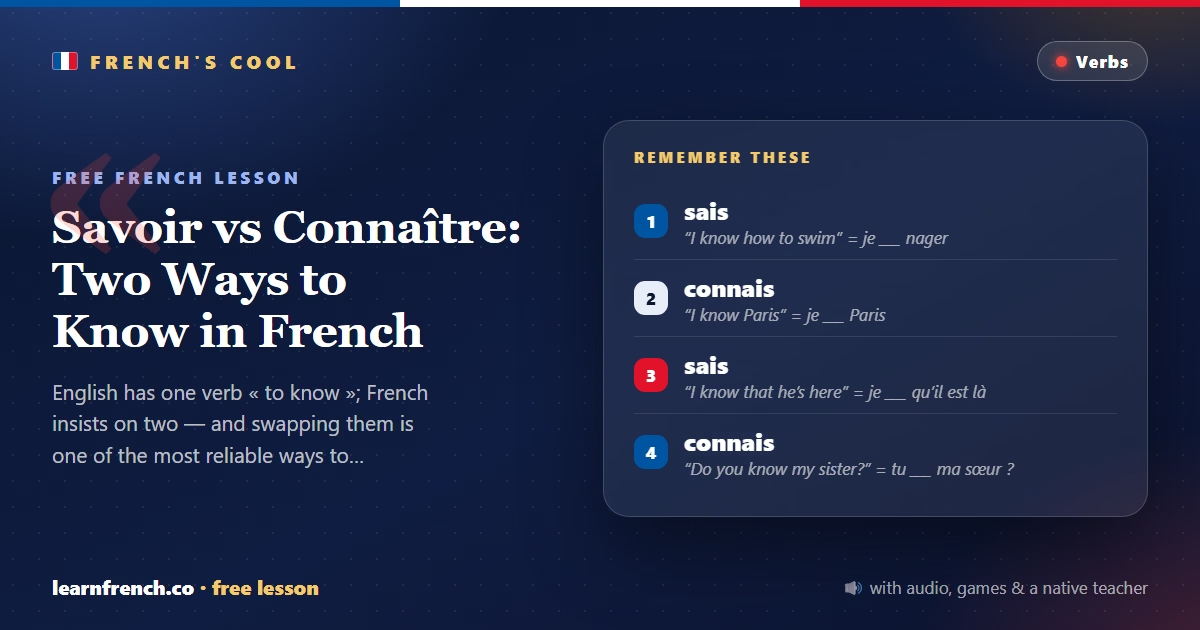
English has one verb « to know »; French insists on two — and swapping them is one of the most reliable ways to sound foreign.
What you'll learn
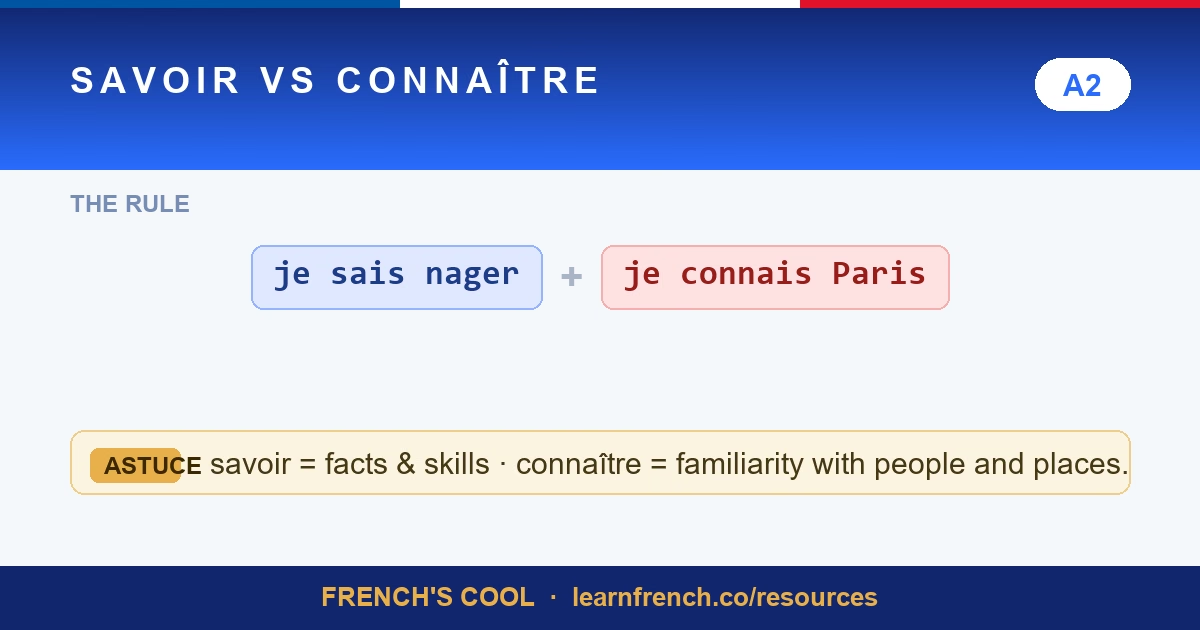
English has one verb « to know »; French insists on two — and swapping them is one of the most reliable ways to sound foreign. The split is clean once you see it: savoir knows facts and skills, connaître knows people and places.
🧠 Facts vs familiarity
Savoir = facts and skills; it loves clauses and infinitives: je sais QUE, je sais OÙ, je sais NAGER. Connaître = familiarity; it only ever takes a noun: je connais Paris, je connais ta sœur. If a que or an infinitive follows, it can’t be connaître.
🎬 This lesson in one minute
The quick version — the full lesson is below. More shorts →
The rule in one table
| Use | Verb | Example |
|---|---|---|
| Facts & information | savoir | Je sais qu’il vient. — I know (that) he’s coming. |
| Skills (+ infinitive) | savoir | Elle sait nager. — She knows how to swim. |
| Question words | savoir | Tu sais où c’est ? — Do you know where it is? |
| People | connaître | Je connais Marie. — I know Marie. |
| Places | connaître | Tu connais Lyon ? — Do you know Lyon? |
| Works & things (familiarity) | connaître | Je connais cette chanson. — I know this song. |
The two tests that never fail
Test 1 — the noun test: if « know » is followed directly by a person, place or thing, it’s connaître. Connaître ALWAYS takes a direct object — it can never be followed by que, an infinitive, or a question word.
Test 2 — the “how to” test: if you can insert “how to” or “that” in English, it’s savoir: I know (how to) swim → je sais nager; I know (that) it’s late → je sais qu’il est tard.
When both work — with different meanings
« Je sais sa réponse » = I know what the answer is (the information). « Je connais sa réponse » = I’m familiar with it (I’ve heard it before). And in the passé composé they shift again: j’ai su = I found out; j’ai connu = I met / experienced. « J’ai connu Paul en 2019 » — I met Paul in 2019.
In real sentences
Read each one aloud, then tap 🔊 and shadow the audio — rhythm first, speed later.
Drill it: the connaître chart · past-tense meaning shifts · object pronouns
✍️ Your turn: fact or familiarity?
« I know how to drive » = ? (skill)
Show answer
Je sais conduire.
« Do you know my brother? » = ? (a person)
Show answer
Tu connais mon frère ?
« I know that she’s right » = ? (que-clause)
Show answer
Je sais qu’elle a raison — que forces savoir.
What changes between je savais and j’ai su? (tense shifts meaning)
Show answer
je savais = I knew; j’ai su = I found out. (Likewise j’ai connu = I met.)
« Je sais Paris » — grammatical? (bare noun)
Show answer
No — a plain noun needs connaître: je connais Paris. Savoir + noun survives only in « je sais ma leçon » territory (learned by heart).
FAQ
Is it « je sais Paris » or « je connais Paris »?
Je connais Paris — places always take connaître. « Je sais Paris » is impossible; savoir refuses plain nouns for people and places.
How do I say « I don’t know »?
« Je ne sais pas » — the everyday phrase, often shortened in speech to « je sais pas » (or the ultra-casual « chais pas »). For a person: « Je ne le connais pas » — I don’t know him.
What about « s’y connaître »?
A lovely idiom: « s’y connaître en » = to be knowledgeable about — « Il s’y connaît en vin » (he knows his wine). File it at B1.
Drill both conjugations with audio: savoir and connaître.
A song, a poem — savoir or connaître?
Both, with different depths: je connais cette chanson = I’m familiar with it; je la sais par cœur = I know it by heart, I could perform it. Par cœur always travels with savoir.
What does reconnaître add?
Re + connaître = recognise: je ne t’avais pas reconnu ! (I didn’t recognise you!). Same conjugation as connaître, and a very common verb the moment haircuts change.
Quick practice
Play the Quiztap to start · quick practice from this material
📊 Chart it: Every tense of savoir in one chart: the savoir conjugation chart.