Futur Proche: The Easy French Future (Aller + Infinitive)
Want to talk about the future in French without learning a single new ending? The futur proche — aller + infinitive — is how French speakers actually discuss plans, and if you know the present tense…
What you'll learn
Want to talk about the future in French without learning a single new ending? The futur proche — aller + infinitive — is how French speakers actually discuss plans, and if you know the present tense of aller, you already own it.
🚗 aller + infinitive = the future you actually speak
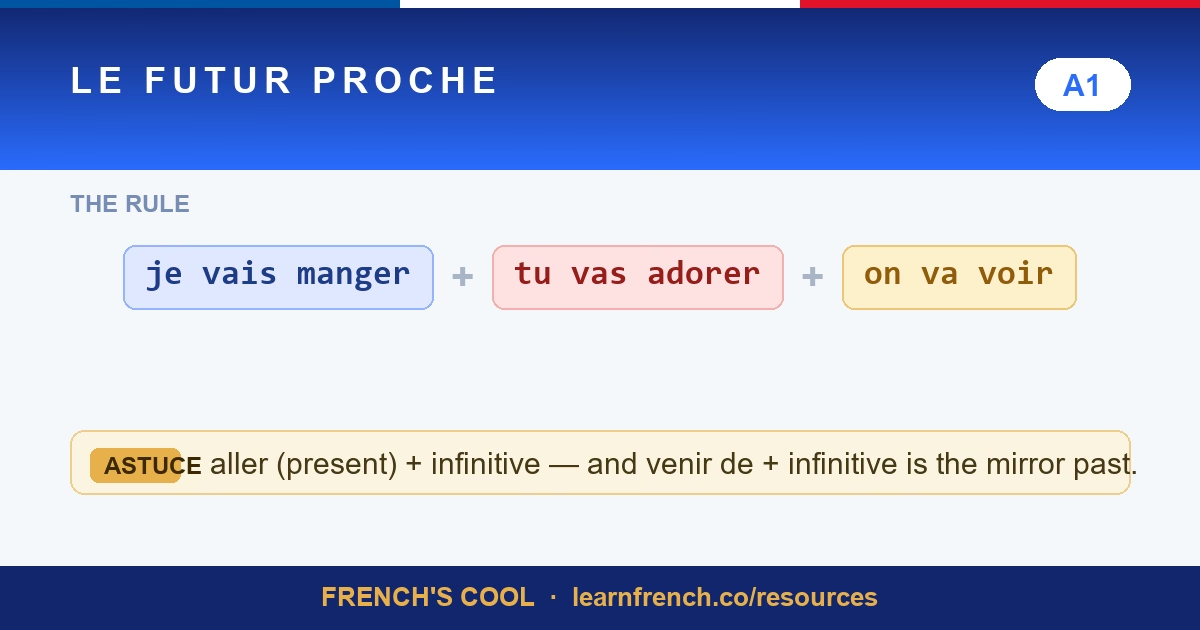
Conjugate aller in the present, add any infinitive: je vais partir, on va manger, ils vont comprendre. In conversation this covers most of the future; the futur simple (je partirai) steps in for writing, promises and predictions. Master this first — it is instant.
🎬 This lesson in one minute
The quick version — the full lesson is below. More shorts →
The formula
aller (present) + infinitive. Exactly like English “going to”:
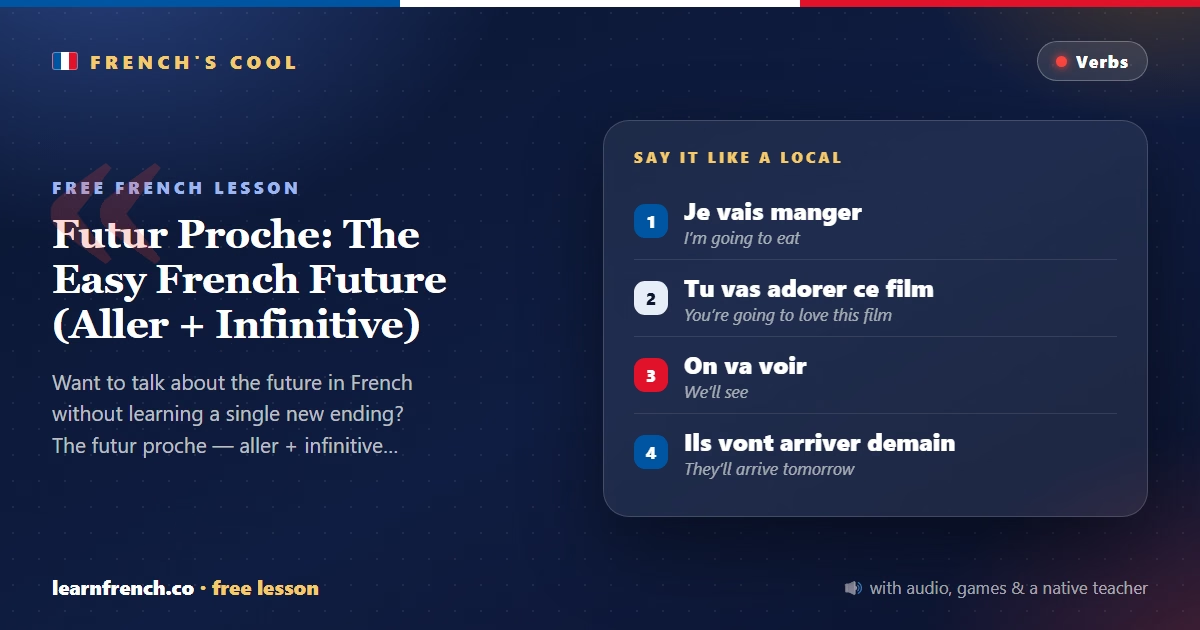
- Je vais manger. — I’m going to eat.
- Tu vas adorer ce film. — You’re going to love this film.
- On va voir. — We’ll see.
- Ils vont arriver demain. — They’ll arrive tomorrow.
Negation and reflexives
Ne…pas wraps around ALLER, not the infinitive: Je ne vais pas venir. Reflexive pronouns stick to the infinitive: Je vais me coucher (I’m going to bed) — not « je me vais coucher ».
Futur proche or futur simple?
| Futur proche | Futur simple | |
|---|---|---|
| Feel | planned, connected to now | distant, formal, predictions |
| Example | Je vais déménager en mai. | Un jour, j’habiterai à Paris. |
| Register | conversation’s default | writing, promises, forecasts |
In everyday speech the futur proche does most of the work — even for events months away, as long as they feel decided: « On va se marier l’année prochaine. »
The mirror twin: passé récent
The same trick works backwards with venir: venir de + infinitive = to have JUST done something. Je viens de manger — I just ate. Plans ahead with aller, fresh news behind with venir: two tenses for the price of two verbs you already know.
And for the mirror image — the past you can see from here — meet venir de, the ’I just did it’ construction.
In real sentences
Read each one aloud, then tap 🔊 and shadow the audio — rhythm first, speed later.
Drill it: venir de — the recent past · the aller chart · the conditional
✍️ Your turn: say the future
« She’s going to sleep » = ? (assemble it)
Show answer
Elle va dormir.
Negate: « je vais accepter ». (sandwich aller)
Show answer
Je ne vais pas accepter — ne…pas wraps aller, not the infinitive.
« I’m going to do it » — where does le go? (pronoun home)
Show answer
Je vais LE faire — the pronoun sticks to the verb it belongs to, the infinitive.
Futur proche or futur simple: a wedding vow? (register)
Show answer
Futur simple — je t’aimerai toujours. Solemn promises and written French prefer the real future.
Is « je vais aller » acceptable? (aller twice)
Show answer
Perfectly — je vais aller à Lyon is everyday French. Only stylists avoid the doubling; speech doesn’t care.
FAQ
Do I conjugate the second verb?
Never — it stays in the infinitive: nous allons partir, vous allez comprendre. Only aller changes.
Can futur proche be used in the past?
Yes, elegantly: imparfait of aller + infinitive = “was about to”: J’allais partir quand tu as appelé (I was about to leave when you called).
When must I use the futur simple instead?
After quand referring to the future (quand tu arriveras…), in formal writing, and for si-clause results — see the si clauses guide. Everywhere else, futur proche is safe.
Master aller in every tense first, then place the futur proche in the big picture with the complete tense guide and the present tense lesson.
Can the futur proche talk about the distant future?
Yes — despite the name, it follows your framing: dans dix ans, on va tous travailler autrement. Proche describes the CERTAINTY (planned, on track), not the distance.
What is the past mirror of this construction?
Venir de + infinitive: je viens de finir = I just finished. The two make a matched pair around the present — je viens de manger, et je vais dormir.
Quick practice
Play the Quiztap to start · quick practice from this material
🎬 Watch next: Hear the futur proche on the streets of Paris — Easy French asks « What are your plans tonight? ».
📊 Chart it: The engine of the futur proche, fully conjugated: the aller chart.