Ce, Cet, Cette, Ces: How French Says “This” and “That”
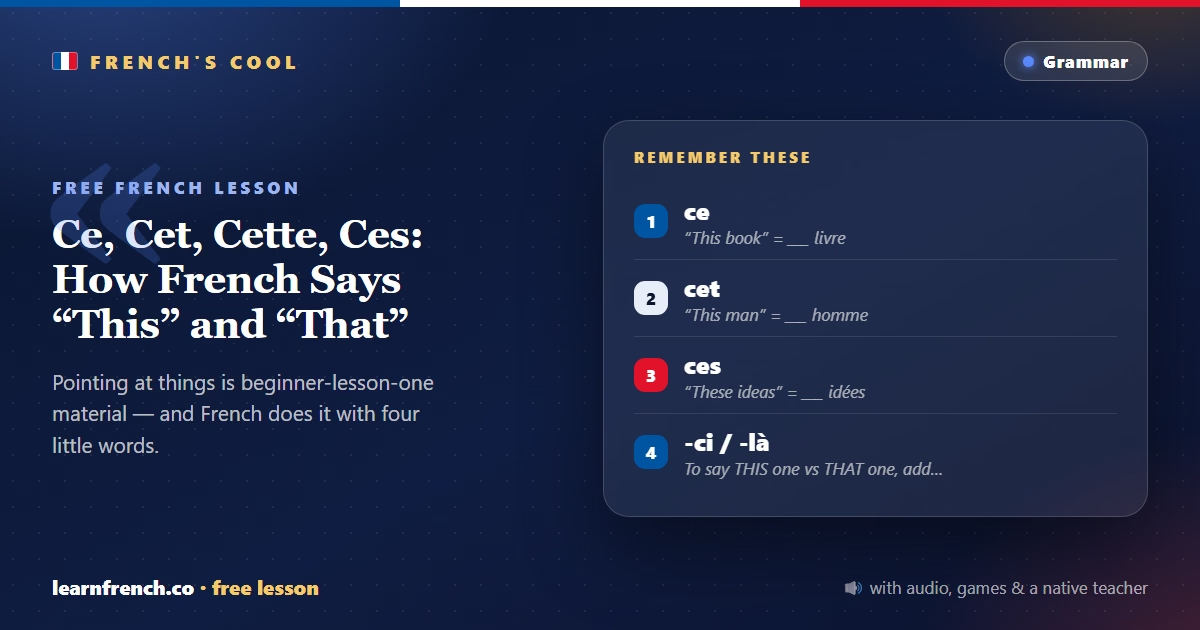
Pointing at things is beginner-lesson-one material — and French does it with four little words.
What you'll learn
Pointing at things is beginner-lesson-one material — and French does it with four little words. Ce, cet, cette, ces cover this/that/these/those, with one sound-driven twist and one surprise: French usually doesn’t care about the this/that difference at all.
👈 Four spellings, one sound rule
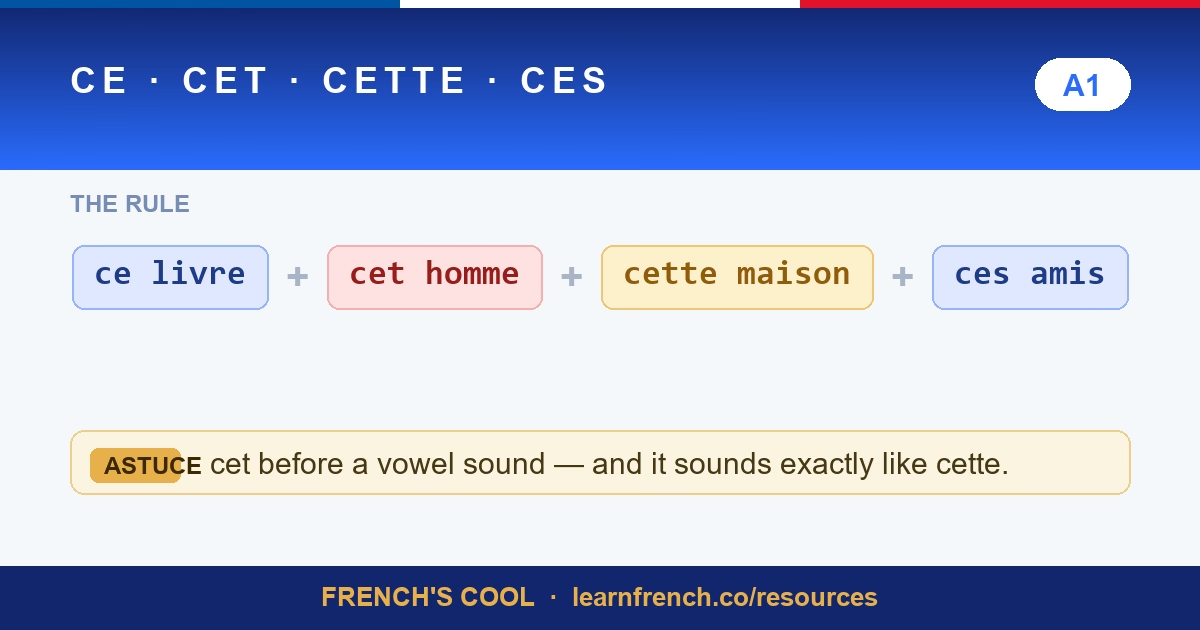
Ce + masculine (ce livre), cet + masculine starting with a vowel sound (cet homme, cet ami), cette + feminine (cette maison), ces + any plural. Cet and cette sound identical /sɛt/ — only the spelling knows the gender.
🎬 This lesson in one minute
The quick version — the full lesson is below. More shorts →
The four forms
| Form | With | Example |
|---|---|---|
| ce | masculine | ce livre — this/that book |
| cet | masc. before a vowel sound | cet homme, cet arbre |
| cette | feminine | cette maison |
| ces | all plurals | ces livres, ces maisons |
Cet exists purely for the ears — « ce homme » clashes, so the t glides in: cet homme [sɛtɔm]. It sounds exactly like cette, which is why listening alone can’t teach you this spelling.
This vs that: the -ci and -là tags
By default, ce livre means this OR that book — context decides. When French truly needs the contrast, it tags the noun: ce livre-ci (this one here) vs ce livre-là (that one there). In practice, -là dominates speech: « ce jour-là » (that day), « cette fois-là » (that time).
Pointing without a noun: celui & friends
Drop the noun and the demonstrative changes clothes: celui/celle/ceux/celles. « Quelle voiture ? — Celle de Marie. » (Marie’s one.) « Ceux qui veulent venir… » (those who want to come). Add the tags for this-one/that-one: celui-ci, celle-là.
And the famous ça
For pointing at situations rather than nouns: ça (informal cela) — Ça m’énerve. Ça va ? Ceci exists but mostly in writing; conversation runs on ça.
In real sentences
Read each one aloud, then tap 🔊 and shadow the audio — rhythm first, speed later.
Drill it: noun gender · possessives · c’est vs il est
✍️ Your turn: ce, cet, cette or ces?
___ hôtel est complet. (vowel sound ahead)
Show answer
Cet hôtel — masculine + vowel sound (the h is mute) takes cet.
___ école est fermée. (feminine)
Show answer
Cette école — feminine stays cette, vowel or not.
How does French say « this one here, that one there »? (the suffixes)
Show answer
-ci and -là: ce modèle-ci, cette année-là. Without them, ce covers both this and that.
Cet ami / cette amie — how do you hear the difference? (you don’t)
Show answer
You don’t — both are /sɛtami/. Context or the rest of the sentence carries the gender.
« this evening / this morning » = ? (time phrases)
Show answer
Ce soir, ce matin — plus cette semaine, cette année. Fixed time phrases, extremely frequent.
FAQ
How do I choose between ce and cet?
Same trigger as mon amie or bel homme: the next SOUND. Vowel or mute h → cet: cet ami, cet hôtel. Aspirated h keeps ce: ce héros.
Is « ce » here the same as in « c’est »?
Same word, different job — before être it’s a pronoun: c’est génial. That use has its own lesson: c’est vs il est.
Do the French really not distinguish this and that?
Mostly not — proximity rarely matters enough. When it does (comparing two things), out come the tags: je préfère celui-ci à celui-là.
Full tables on the demonstratives & possessives chart and the demonstrative pronouns chart; the gender behind ce/cette starts at le or la?
What is the difference between ce and ça?
Ce is the determiner glued to a noun (ce film) and the subject of être (c’est). Ça is a standalone pronoun for everything else: ça marche, ça m’intéresse, tu vois ça ? If there’s no noun after and no être, you want ça.
Do -ci and -là really matter?
Only when contrasting: je préfère ce modèle-ci à ce modèle-là. Otherwise plain ce does both jobs and adding -là everywhere sounds pointed — ces gens-là carries real distance, almost disdain.
Quick practice
Play the Quiztap to start · quick practice from this material