En and Y: The Two Tiny Pronouns That Make French Flow
B1In this article, you'll learn
Nothing marks real French like the little words en and y. They replace whole phrases, glue answers together, and hide inside expressions the French use hourly. Two rules cover almost everything.
🎬 This lesson in one minute
The quick version — the full lesson is below. More shorts →
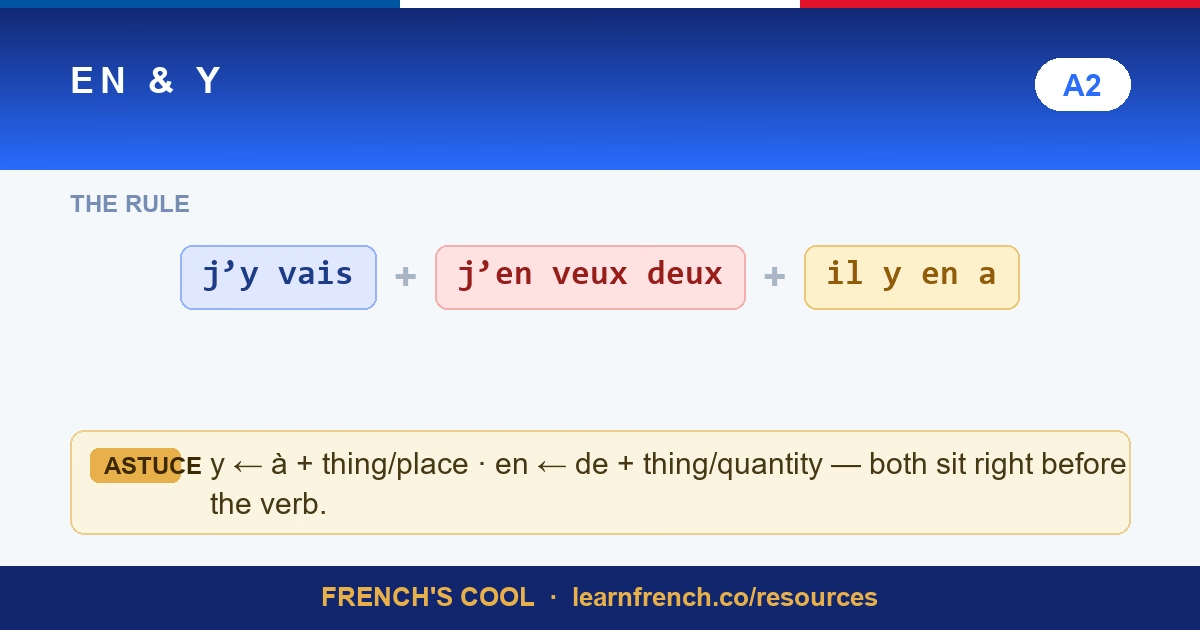
Y = there / à + thing
Y replaces a place, or à + a thing:
- Tu vas à Paris ? — Oui, j’y vais demain. (I’m going THERE.)
- Tu penses à ton examen ? — Oui, j’y pense. (I’m thinking ABOUT IT.)
En = of it / de + thing / a quantity
En replaces de + a thing, or a noun after a number or quantity:
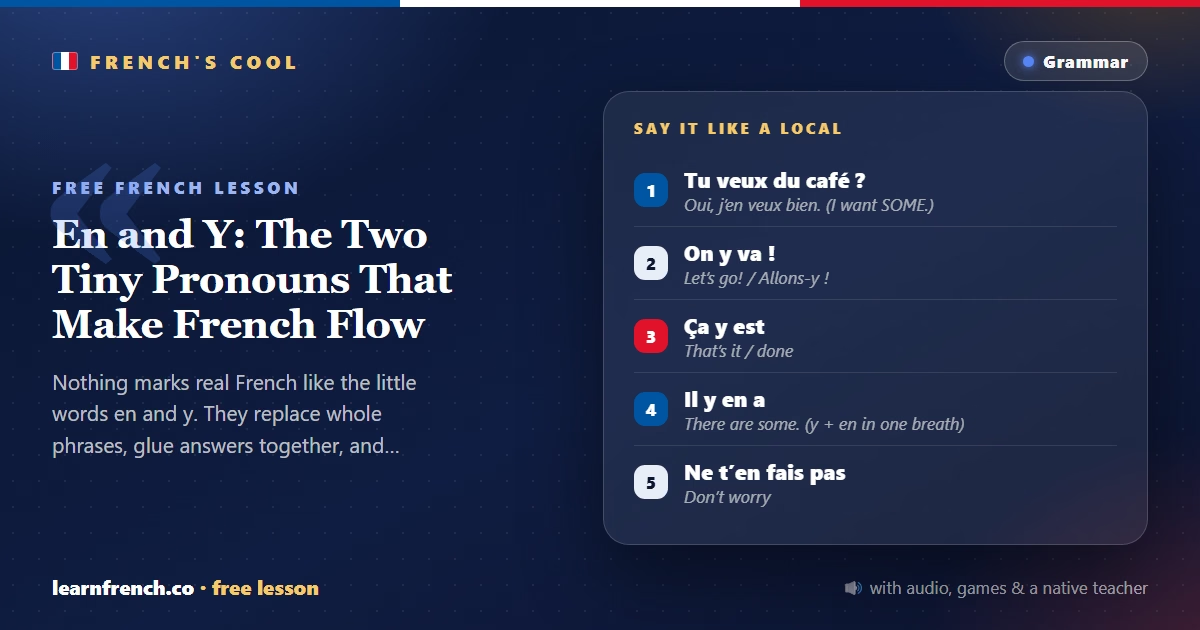
- Tu veux du café ? — Oui, j’en veux bien. (I want SOME.)
- Tu as des frères ? — J’en ai deux. (I have two OF THEM — the en is compulsory!)
- Tu viens de la gare ? — Oui, j’en viens. (I’m coming FROM THERE.)
Where do they go?
Right before the verb (or the auxiliary): j’y vais, il en a parlé, nous y sommes allés. In a negative: je n’y vais pas. Only the positive imperative moves them after: vas-y !, prends-en !
The expressions you already know
- On y va ! — Let’s go! / Allons-y !
- Ça y est. — That’s it / done.
- Il y en a. — There are some. (y + en in one breath)
- Ne t’en fais pas. — Don’t worry.
- Je m’en vais. — I’m off.
FAQ
What order when en and y meet other pronouns?
They come last, and y beats en: il y en a trois (there are three). You will mostly meet y+en in exactly that phrase — learn it as a chunk.
Can en and y replace people?
Usually no. For people after à, French prefers lui/leur (je lui parle) or à + stressed pronoun (je pense à toi — NOT j’y pense). En for people sounds off except with numbers: des sœurs ? J’en ai deux.
Is “il y a” the same y?
Yes — the frozen expression il y a (there is/are) is built on it. We unpack it in the il y a guide.
Drill both on the y & en chart, and meet their cousins on the COD/COI pronouns page.
Quick practice
Play the Quiztap to start · quick practice from this material
Keep going: The people-pronouns (le, la, lui, leur) are the other half of the system: French object pronouns.
More free French lessons
Désolé pour le retard: announcing a delay without losing the client
How to write the French bad-news email: front-load the context, name the new date, apologise at the right register, and commit again. With a full annotated model.
Learn more →Your N+1, the CSE and fifteen other acronyms
N+1, CDI, CSE, cadre: a working reference to the acronyms and institutions that run a French office, and what each one actually means for you.
Learn more →How to say no in French without ever saying non
A flat Non can cost you more than the favour you refused. Here is the refusal ladder, the constraint move, and how to say no up, sideways and down at work.
Learn more →On se tutoie ? The tu/vous switch at work
How tu and vous actually work in a French workplace: who proposes the switch, the exact phrases, the awkward asymmetric period, and why email stays at vous longest.
Learn more →B1 or B2? Read the marking grids before you book the DELF
B1 means you can cope in French; B2 means you can argue. Four honest self-tests, a paper-by-paper comparison, and how to choose the level you will actually pass.
Learn more →Vrai ou faux, justifiez: the DELF reading question that quietly halves your score
At DELF B2, ticking the right box on a vrai/faux question earns you nothing if the justification is wrong. Here is how the item is actually marked.
Learn more →
Want to learn French with Xavier?
Your first 30-minute lesson is free — no card, no commitment.