Mon, Ma, Mes: French Possessives and the His/Her Surprise
French possessives look like a simple vocabulary list — until you meet the rule that breaks every English speaker’s brain for a week: sa voiture can mean HIS car or HER car.
What you'll learn
French possessives look like a simple vocabulary list — until you meet the rule that breaks every English speaker’s brain for a week: sa voiture can mean HIS car or HER car. French possessives agree with the thing owned, never the owner. Here’s the whole system.
🔑 Agree with the thing, not the owner
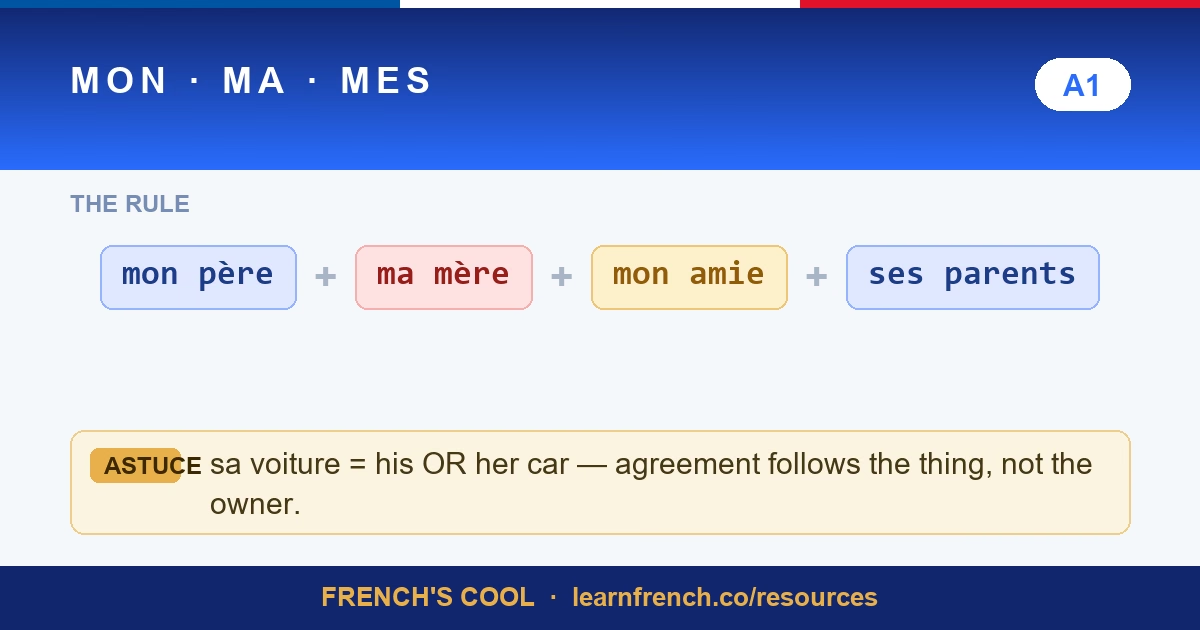
French possessives agree with what is OWNED: sa voiture is his car AND her car — sa because voiture is feminine, whoever owns it. And before a vowel, feminine nouns borrow the masculine form for flow: mon amie, son école.
🎬 This lesson in one minute
The quick version — the full lesson is below. More shorts →
The table
| Owner | + masc. | + fem. | + plural |
|---|---|---|---|
| je | mon père | ma mère | mes parents |
| tu | ton père | ta mère | tes parents |
| il / elle | son père | sa mère | ses parents |
| nous | notre père / mère | nos parents | |
| vous | votre père / mère | vos parents | |
| ils / elles | leur père / mère | leurs parents | |
The his/her surprise
« Elle lave sa voiture » — her car. « Il lave sa voiture » — HIS car. Sa agrees with voiture (feminine), and couldn’t care less who owns it. When French really needs to disambiguate, it adds à lui / à elle: « C’est son idée à elle. »
The mon amie rule
Before a vowel sound, ma/ta/sa switch to mon/ton/son — even for feminine nouns: mon amie, ton école, son histoire. Pure euphony again (French despises « ma amie »), and the noun stays feminine: mon amie est géniale.
Mine, yours: the pronoun versions
Drop the noun and upgrade: le mien, la mienne, les miens… « C’est ta tasse ? — Non, c’est la mienne. » Full paradigm on the possessive pronouns chart.
In real sentences
Read each one aloud, then tap 🔊 and shadow the audio — rhythm first, speed later.
Drill it: noun gender · ce, cet, cette, ces · plural nouns
✍️ Your turn: whose is it?
« her school » = sa école? (vowel ahead)
Show answer
Son école — feminine noun, but son before a vowel, for the sound.
How does French distinguish « his car » from « her car »? (it doesn’t)
Show answer
It doesn’t — both are sa voiture. If it matters, add à lui / à elle: c’est sa voiture à elle.
« their house » / « their houses » = ? (one s only)
Show answer
Leur maison / leurs maisons — leur takes s only when the OWNED things are plural.
« I wash my hands » = je lave mes mains? (body parts)
Show answer
Je me lave les mains — body parts take the article plus a reflexive verb, not the possessive.
« mine / yours » after c’est = ? (pronouns)
Show answer
Le mien / la mienne, le tien / la tienne… agreeing with the thing: cette valise ? C’est la mienne.
FAQ
Why is it « leur » with no -e for feminine?
Leur is gender-blind: leur père, leur mère. It only takes -s for plural things: leurs enfants. (Don’t confuse it with the pronoun leur = “to them”: je leur parle.)
How do the French say « my » with body parts?
Often they don’t! With reflexive verbs the article does the job: je me lave les mains (not mes mains). The pattern lives in the reflexive verbs guide.
Votre or vos with vous-as-polite-singular?
Match the noun, not the politeness: votre manteau (one coat), vos gants (gloves) — even talking to one person. The tu/vous choice itself is covered in tu vs vous.
Practise on the demonstratives & possessives chart — family vocabulary is the natural gym: la famille.
Why does French say mon amie about a woman?
Pure euphony — ma amie would clash two vowels, so the masculine form steps in before any vowel sound: mon amie, mon école, son histoire. The noun stays feminine; only the little word changes.
Do notre and votre have vowel forms too?
No tricks there — notre/nos, votre/vos, leur/leurs never change before vowels: notre école, votre amie. Only mon/ton/son play the euphony game.
Quick practice
Play the Quiztap to start · quick practice from this material
Keep going: Practise the whole set on the family tree: French family vocabulary.