C’est vs Il est: Finally Clear
Both mean roughly « it is / he is » — and French speakers switch between them by instinct. The instinct follows two rules, and once you know them, c’est vs il est stops being a coin-flip.
What you'll learn
Both mean roughly « it is / he is » — and French speakers switch between them by instinct. The instinct follows two rules, and once you know them, c’est vs il est stops being a coin-flip.
🎯 Determiner after? Then c’est
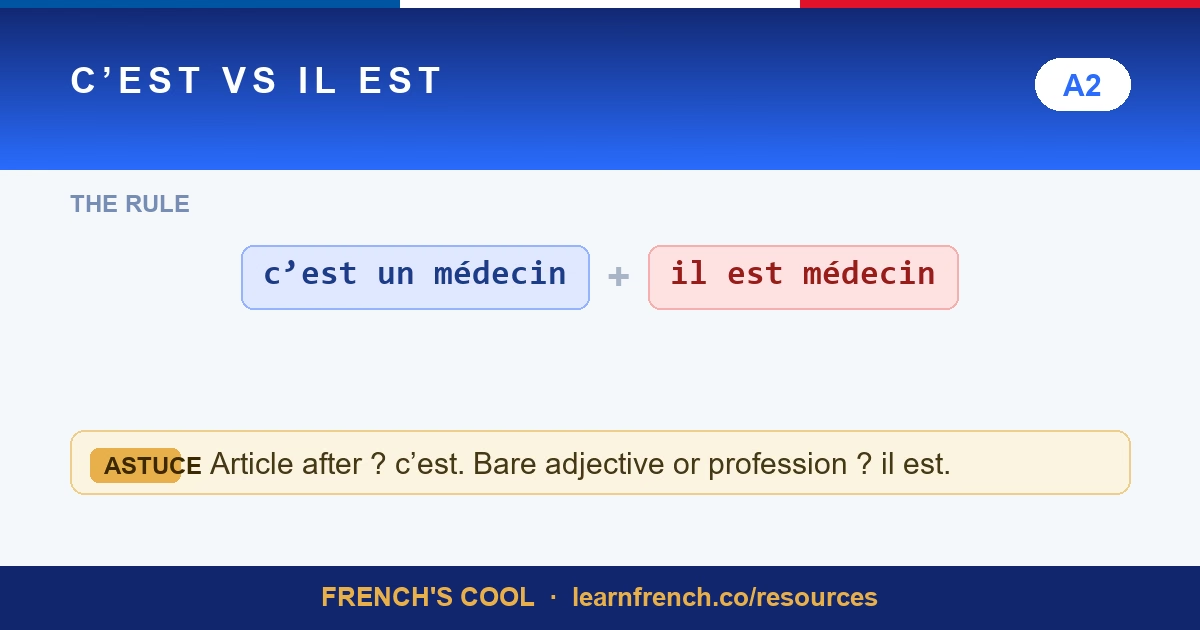
The shortcut that solves 90%: if what follows has a determiner or is a name or pronoun — un, une, le, mon, Marie, moi — use c’est. A bare adjective or a bare profession takes il/elle est: il est médecin, elle est géniale — but c’est UN bon médecin.
🎬 This lesson in one minute
The quick version — the full lesson is below. More shorts →
Rule 1: c’est + determiner + noun
If a noun (with un, une, le, mon…) follows: c’est.
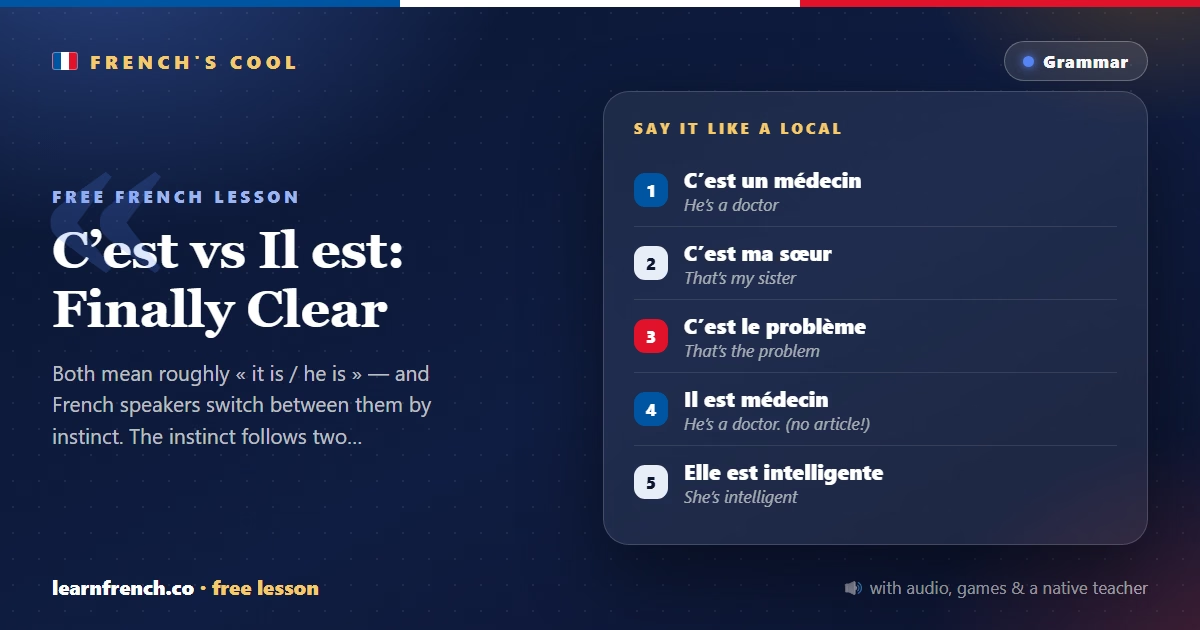
- C’est un médecin. — He’s a doctor.
- C’est ma sœur. — That’s my sister.
- C’est le problème. — That’s the problem.
Rule 2: il est + bare adjective or profession
If just an adjective or an unadorned profession/nationality follows: il est.
- Il est médecin. — He’s a doctor. (no article!)
- Elle est intelligente. — She’s intelligent.
- Il est français. — He’s French.
Notice the doctor appears twice: « il est médecin » (bare) and « c’est un médecin » (with article). Both correct — the article decides the pronoun.
Commenting on things: c’est + adjective
To react to a situation or idea (not a specific noun), French uses c’est + masculine adjective: « C’est difficile ! », « C’est génial ». Rule of thumb: reacting to life in general → c’est; describing a specific known thing → il/elle est: « Ce film ? Il est génial. »
The impersonal il est: time and set phrases
One place il est rules unchallenged: clock time — « Il est huit heures », never « c’est huit heures ». But days flip to c’est: « C’est lundi ». And formal French favours « il est + adjective + de » for judgements: « Il est essentiel de pratiquer » — which everyday speech relaxes to « C’est essentiel de pratiquer ». Knowing both lets you match the register on purpose.
C’est… qui / c’est… que: the spotlight trick
French’s favourite way to emphasise ANYTHING is to clamp it in c’est … qui/que: « C’est Marie qui a raison » (MARIE is the one who’s right), « C’est ce livre que je veux » (THIS book is the one I want). Where English uses voice stress, French rebuilds the sentence — mastering this pattern (la mise en relief) instantly makes your French sound structured. Full lesson: mise en relief.
Plural and pronoun edges
- Formal plural: ce sont mes parents. Spoken: c’est mes parents (fine in conversation).
- With stressed pronouns, c’est wins: « C’est moi ! », « C’est eux. »
- Pointing at people: « C’est qui ? » — never « il est qui ? »
In real sentences
Read each one aloud, then tap 🔊 and shadow the audio — rhythm first, speed later.
Drill it: noun gender · quel vs qu’est-ce que · tout in all its forms
✍️ Your turn: c’est or il est?
« He’s a teacher » — two correct ways? (article decides)
Show answer
Il est professeur (bare profession) OR c’est un professeur (with article). Never « il est un professeur ».
« It’s my book » = ? (possessive = determiner)
Show answer
C’est mon livre.
difficile à or difficile de: « ___ est difficile ___ dire non. » (the formal pattern)
Show answer
Il est difficile DE dire non (formal); everyday French happily says c’est difficile à faire when pointing at a known task.
React to a sunset in two words. (general comment)
Show answer
C’est beau ! — general reactions run on c’est.
« She’s a great doctor » = ? (adjective + noun)
Show answer
C’est une excellente médecin — the article drags in c’est.
FAQ
Why is « il est un médecin » wrong?
Because the article triggers c’est. French treats professions after il est like adjectives — bare: il est médecin, elle est avocate. Add un/une and you must switch: c’est un médecin.
Is it c’est or ce sont in the plural?
Formally ce sont + plural: ce sont mes amis. Spoken French happily says c’est mes amis — fine in conversation, keep ce sont for writing.
How do I say « it is important to… »?
Il est important de + infinitive (formal) or c’est important de… (spoken). Both live in the c’est vs il est chart with more patterns.
C’est beau vs il est beau — what actually changes?
C’est beau comments on the scene in general (the view, the moment). Il est beau points at one specific masculine thing or person already in the conversation. Wrong choice is understood — but natives feel the difference instantly.
Why does « il est médecin » drop the article?
Professions, nationalities and religions behave like adjectives after être: il est médecin, elle est ingénieure, ils sont catholiques. The moment you add any qualifier — un bon, une jeune — the noun returns and c’est takes over.
Quick practice
Play the Quiztap to start · quick practice from this material
Keep going: And when the pronoun stands alone — ça, cela or ceci? Sort them in ça vs cela vs ceci.