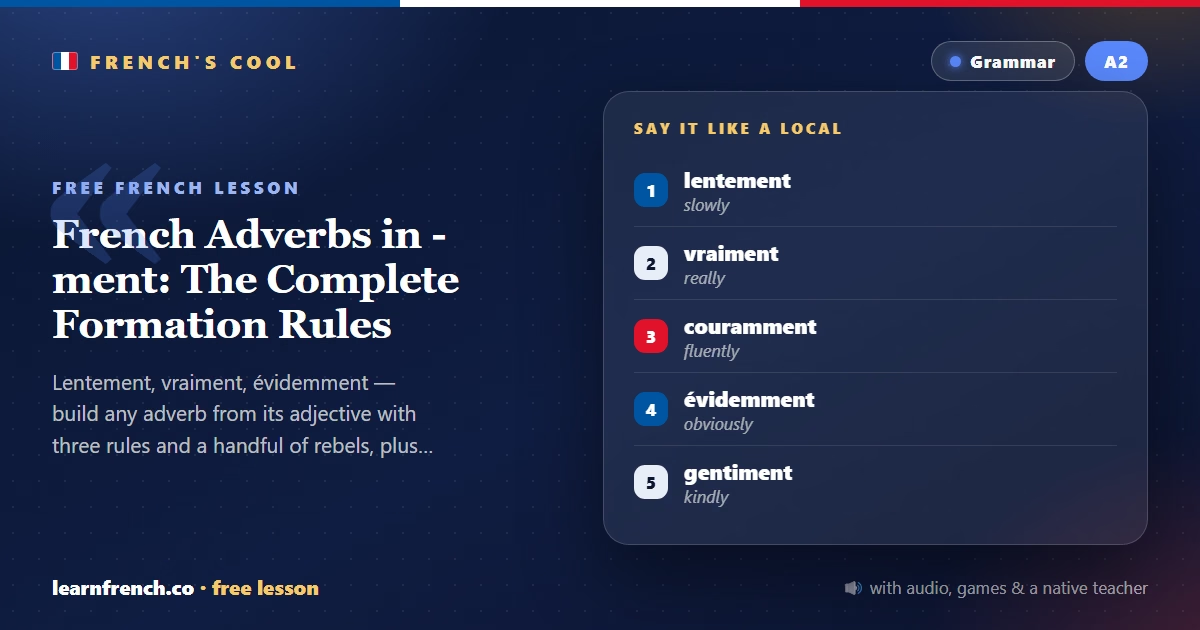
French Adverbs in -ment: The Complete Formation Rules
Lentement, vraiment, évidemment — build any adverb from its adjective with three rules and a handful of rebels, plus where the adverb actually goes.
What you'll learn
English has -ly, French has -ment — and the recipe is more regular than it looks. Three rules cover almost everything.
🎬 This lesson in one minute
The quick version — the full lesson is below. More shorts →
Rule 1: feminine adjective + -ment
- lent → lente → lentement (slowly)
- heureux → heureuse → heureusement (fortunately)
- doux → douce → doucement (gently)
Rule 2: adjective ends in a vowel? Skip the feminine
- vrai → vraiment (really)
- absolu → absolument (absolutely)
- poli → poliment (politely)
Rule 3: -ant / -ent become -amment / -emment
- courant → couramment (fluently — je parle couramment !)
- évident → évidemment (obviously)
- récent → récemment (recently)
Both endings sound identical: “-amment”.
The rebels worth knowing
- gentil → gentiment (kindly)
- précis → précisément · profond → profondément (é sneaks in)
- bon → bien, mauvais → mal, meilleur → mieux — no -ment at all
- vite is already an adverb: il court vite (never « vitement » !)
Where does the adverb go?
After the verb in simple tenses: « Elle parle lentement. » In the passé composé, short common adverbs slip between avoir and the participle: « J’ai bien mangé », « il a vraiment aimé » — but -ment adverbs usually follow: « Il a parlé lentement. »
Common mistakes to iron out
Four errors I correct every single week:
- « seulment » → seulement — you built on the masculine. Feminine first (seule), and the e stays.
- « vraiement » → vraiment — the opposite crime. Vowel-final adjectives skip the feminine, so no extra e.
- « Elles chantent doucements » → « Elles chantent doucement » — adverbs are invariable. No -s, no feminine, no agreement, ever. That’s their whole charm.
- « Il conduit prudent » → « Il conduit prudemment » — verbs take adverbs, nouns take adjectives. Don’t send an adjective to do an adverb’s job.
At the café: -ment in the wild
— Alors, la vie à Lyon ?
— Franchement, ça se passe vraiment bien. Le travail avance lentement mais sûrement.
— Et le français ?
— Malheureusement, je ne parle pas encore couramment… mais j’apprends énormément.
Seven -ment adverbs in four lines of ordinary small talk. And steal lentement mais sûrement — “slowly but surely” — as a ready-made phrase: it works for careers, marathons and French learning alike.
In real life: the sentence-opener trick
The French love opening a sentence with a -ment adverb as a mood-setter: Franchement, c’est trop cher. Honnêtement, je n’en sais rien. Apparemment, il pleut demain. It buys you half a second to think — and it instantly sounds native, because that pause-then-opinion rhythm is exactly how French people talk.
One register note: évidemment can land as a sarcastic “well, obviously” — deliver it with a smile, or reach for bien sûr instead. In relaxed speech you’ll also hear carrément (totally) doing the job of an enthusiastic yes: « Tu viens ce soir ? — Carrément ! » For more of that street-level French, see French slang.
A memory trick that sticks
Picture -ment as a suffix that refuses to sit on a bare consonant — it wants a vowel cushion. Feminine forms end in one (lente, douce, heureuse), which is why rule 1 works. Adjectives like vrai, poli and absolu come pre-cushioned, which is why rule 2 skips the feminine. One image, two rules, zero flashcards.
FAQ
How do I say “fluently”?
Couramment — from courant. « Je parle couramment français » is the goal sentence of every learner; say it daily until true.
Évidemment or évidamment?
Spelling follows the adjective: évidENT → évidEMMENT; courANT → courAMMENT. The sound is the same — only the writing differs.
Why not just use an adjective?
French often does! « Parle plus fort » (not fortement), « ça sent bon ». For the adjective side of the family, see adjective placement and bon vs bien.
Quick practice
Play the Quiztap to start · quick practice from this material