French Adjective Placement: Before or After the Noun?
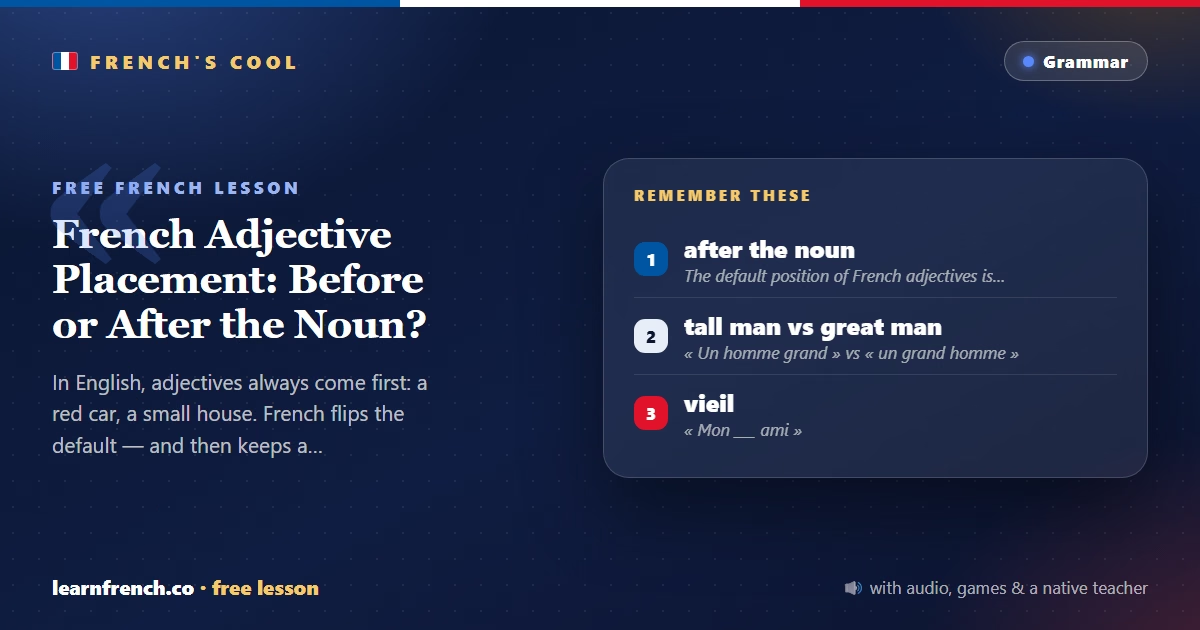
In English, adjectives always come first: a red car, a small house. French flips the default — and then keeps a short VIP list of exceptions.
What you'll learn
In English, adjectives always come first: a red car, a small house. French flips the default — and then keeps a short VIP list of exceptions. Master French adjective placement once and a whole class of mistakes disappears.
📏 Default AFTER the noun — a small club goes before
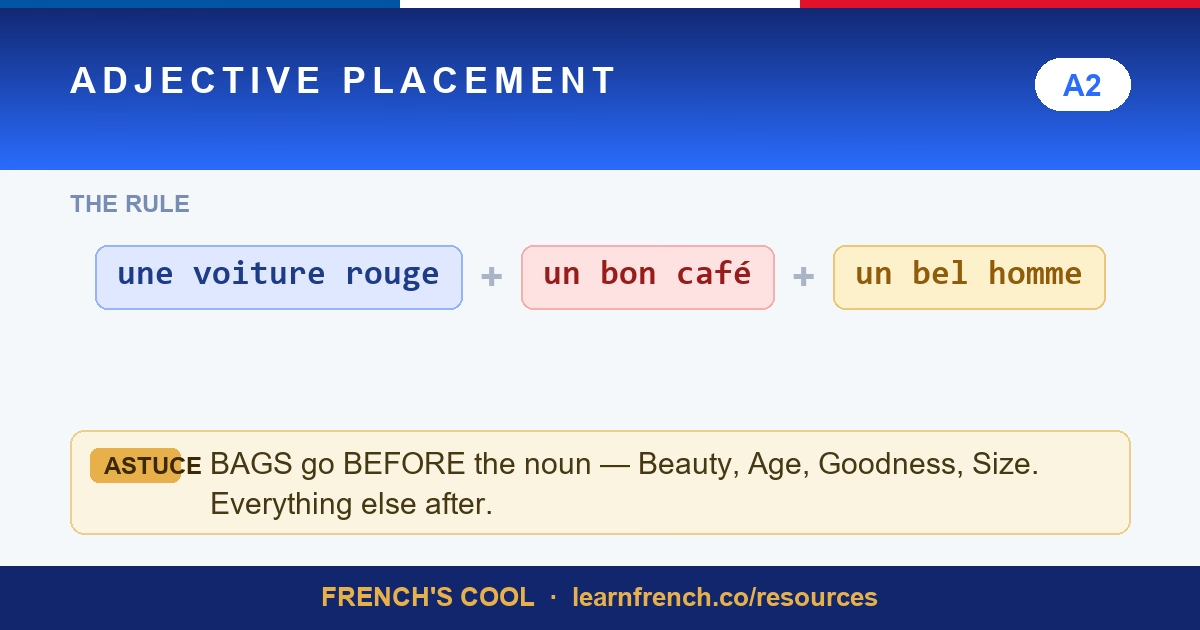
French adjectives normally follow: un vin rouge, une idée intéressante. A short club of everyday adjectives jumps ahead — think BAGS: Beauty (beau, joli), Age (jeune, vieux, nouveau), Goodness (bon, mauvais), Size (grand, petit, gros): un bon petit restaurant.
🎬 This lesson in one minute
The quick version — the full lesson is below. More shorts →
The default: after the noun
Most French adjectives FOLLOW their noun: une voiture rouge, un film intéressant, une idée géniale. Colour, shape, nationality, style — all after: le drapeau français, une table ronde.
The BAGS exceptions: before the noun
A small set of very common adjectives jumps in front. The classic memory hook is BAGS:
| BAGS | Adjectives | Example |
|---|---|---|
| Beauty | beau, joli | une jolie robe |
| Age | jeune, vieux, nouveau | un vieux château |
| Goodness | bon, mauvais | un bon restaurant |
| Size | grand, petit, gros | une petite rue |
Bonus rule hiding here: before a vowel sound, beau → bel, vieux → vieil, nouveau → nouvel — un bel homme, le nouvel an.
The meaning-changers
A few adjectives mean different things depending on position — position IS the meaning:
- un grand homme (a great man) ≠ un homme grand (a tall man)
- mon ancien collègue (my former colleague) ≠ une maison ancienne (an old house)
- ma propre chambre (my own room) ≠ une chambre propre (a clean room)
- un pauvre homme (an unfortunate man) ≠ un homme pauvre (a poor man)
Rule of thumb: BEFORE the noun = figurative, AFTER = literal.
In real sentences
Read each one aloud, then tap 🔊 and shadow the audio — rhythm first, speed later.
Drill it: adjective agreement · bon vs bien · noun gender
✍️ Your turn: before or after?
« a red car » = ? (colour)
Show answer
Une voiture rouge — colours always follow.
« a good idea » = ? (BAGS)
Show answer
Une bonne idée — bon belongs to the before-club.
Un grand homme vs un homme grand — difference? (position = meaning)
Show answer
Un grand homme = a great man; un homme grand = a tall man. Before = figurative, after = literal.
Mon ancienne école vs une école ancienne = ? (same trick)
Show answer
Mon ancienne école = my FORMER school; une école ancienne = an OLD (historic) school.
« J’ai de bonnes idées » — why de, not des? (the little rule)
Show answer
When the adjective comes BEFORE a plural noun, des shrinks to de: des idées → de bonnes idées.
FAQ
Why does “des” become “de” before an adjective?
Written French turns des into de when a plural adjective comes first: de belles photos, de bons amis. Spoken French often keeps des — but exams want de.
What if I have two adjectives?
Each keeps its own seat: une jolie voiture rouge (jolie before, rouge after). Two after-the-noun adjectives join with et: un film long et ennuyeux.
Do adjectives still agree when they move?
Always — position never switches off agreement. Un bon croissant, une bonne baguette, de bonnes crêpes. The full agreement system is on the adjective agreement chart.
Go deeper with the place & meaning of adjectives chart, and if le/la is still a coin-flip, start with French noun gender.
What order do two adjectives take?
Each keeps its own seat: the club adjective goes before, the rest after — une jolie robe bleue, un petit café tranquille. Two after-adjectives join with et: un film long et ennuyeux.
Which other adjectives change meaning with position?
The famous four beyond grand/ancien: propre (sa propre chambre = his own / une chambre propre = clean), cher (mon cher ami = dear / un vin cher = expensive), pauvre (unfortunate / penniless), seul (un seul homme = only one / un homme seul = lonely).
Quick practice
Play the Quiztap to start · quick practice from this material
Keep going: Turn those adjectives into adverbs next: the -ment formation rules.