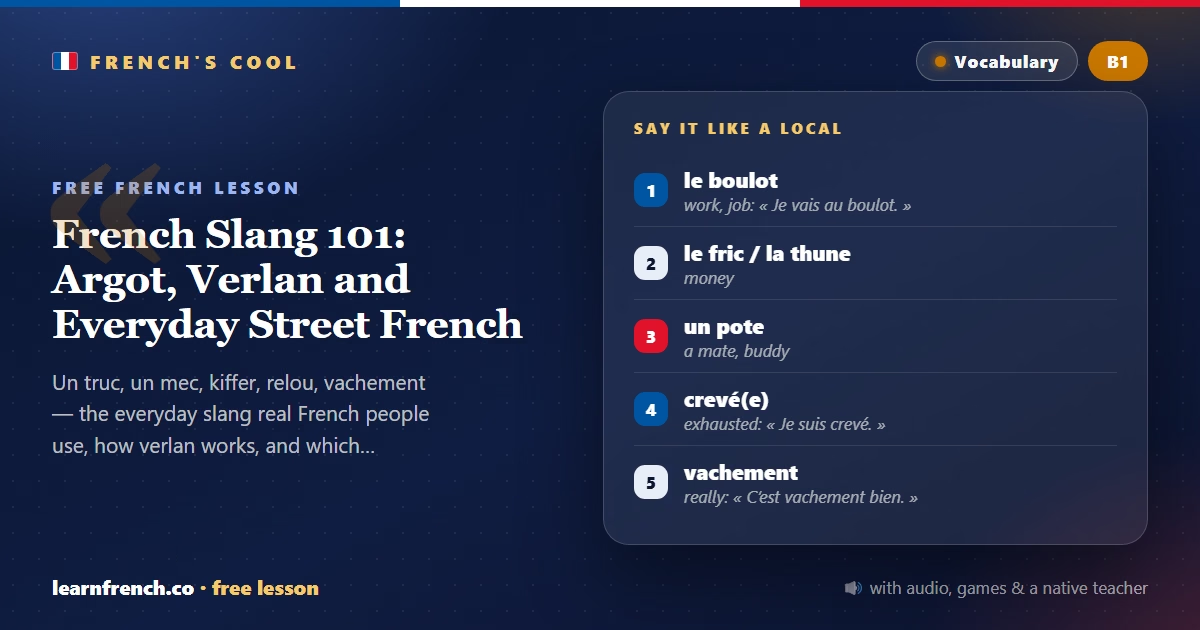
French Slang 101: Argot, Verlan and Everyday Street French
Un truc, un mec, kiffer, relou, vachement — the everyday slang real French people use, how verlan works, and which words to leave out of the office.
What you'll learn
Textbook French gets you to the café; argot gets you the conversation at the next table. Here’s the everyday slang you’ll hear within five minutes in France — and the register rules that keep it safe.
🎬 This lesson in one minute
The quick version — the full lesson is below. More shorts →
The absolute essentials
- un truc — a thing / thingy: « C’est quoi, ce truc ? »
- un mec / une meuf — a guy / a girl (girlfriend: ma meuf)
- le boulot — work, job: « Je vais au boulot. »
- bouffer — to eat: « On va bouffer ? » (the noun: la bouffe)
- le fric / la thune — money
- kiffer — to love / be into: « Je kiffe cette chanson. »
- un pote — a mate, buddy
- crevé(e) — exhausted: « Je suis crevé. »
Verlan: French in reverse
Verlan flips syllables (l’envers → verlan). Some flips are now standard casual French:
- femme → meuf (girl), fou → ouf — « un truc de ouf ! » (something crazy)
- lourd → relou (annoying): « Il est relou, ce mec. »
- louche → chelou (sketchy, weird): « C’est chelou. »
- merci → cimer, fête → teuf
The intensifiers everyone uses
- vachement — really: « C’est vachement bien. »
- grave — totally: « — Tu viens ? — Grave ! »
- carrément — completely: « Carrément d’accord. »
- trop — so: « C’est trop bon. »
Register: when NOT to use it
All of the above is fine with friends and unthinkable in a cover letter. In a shop or with your boss, stay neutral: travail not boulot, manger not bouffer. And swear words — even ones you hear constantly — carry far more weight from a foreign accent. When in doubt, smile and stay textbook.
The decoding list: French text abbreviations you’ll actually receive
Open any French group chat and the texting language looks like an encryption exercise. It isn’t — French texting slang follows two simple habits: drop the vowels, and spell sounds with single letters. Here is the list of french text abbreviations that carry 90% of the world of french sms traffic, the text slang terms a french friend will genuinely send you:
- mdr — mort de rire, “dying of laughter” — the French rofl/lol. Stronger: ptdr (pété de rire).
- slt — salut (hi). slt tlm — salut tout le monde, “hi everyone”, the group-chat opener.
- bcp — beaucoup. « merci bcp » is probably the most common french text message ever sent.
- jtm — je t’aime. Three letters doing heavy emotional lifting.
- tkt — t’inquiète, “don’t worry” — the all-purpose reassurance.
- dsl — désolé (sorry). pk / pq — pourquoi. koi — quoi.
- c, g, t — c’est, j’ai, t’es: single letters standing for whole verb phrases, the purest langage SMS. « g fam » = j’ai faim.
- a+ — à plus (tard), “see you later”. @2m1 — à demain, if your correspondent is feeling artistic.
- cv ? — ça va ? — and the answer « cv » means it’s going fine. One abbreviation, question and answer both.
- nrv — énervé (annoyed); bg — beau/belle gosse (good-looking); jsp — je sais pas.
How native french speakers actually use this: to save time, yes, but mostly to set a register — texting in french with full spelling reads as formal, even cold, between friends. The same message travels via text as « slt cv? on se voit 2m1? » and by email as full sentences. French internet slang adds a layer on top (verlan like « wesh », English loans like « lol » — yes, used in french alongside mdr), and french pronunciation is the decoder key: read any mystery abbreviation ALOUD and the sound usually reveals the word — that’s the trick every guide to french text lingo forgets to teach, and the reason this free french lesson makes you read the list out loud. Use french abbreviations sparingly at first — receiving them is the skill; sending them fluently comes with common french internet exposure, one text message at a time.
FAQ
What does mdr mean in French texting?
« Mort de rire » — dying of laughter, the French text message abbreviations equivalent of lol/rofl. Escalate with ptdr or the imported lol, both everyday french in chats.
How do you abbreviate common words in French texts?
Two rules: strip vowels (salut → slt, beaucoup → bcp) and use letter sounds (c’est → c, j’ai → g). Read any French text slang aloud and the pronunciation gives the word back.
Is it rude to use texting slang with French people?
With friends, the opposite — full spelling can read as distant. With strangers, elders or anything professional, write in full: french slang words in the wrong register are the actual rudeness.
Is slang the same as texting abbreviations?
No — argot is spoken; text-speak (slt, mdr, jsp) is written. That system has its own lesson: French text speak.
Will French people be offended if I use verlan?
Not offended — sometimes amused. Used naturally and in the right company it earns instant warmth. Match the register of the person talking to you, and keep tu vs vous in mind: slang lives on the tu side.
How do I learn which words are safe?
Films and series are the best register lab: see learn French with films. And beware lookalikes that aren’t slang at all: false friends.
Quick practice
Play the Quiztap to start · quick practice from this material