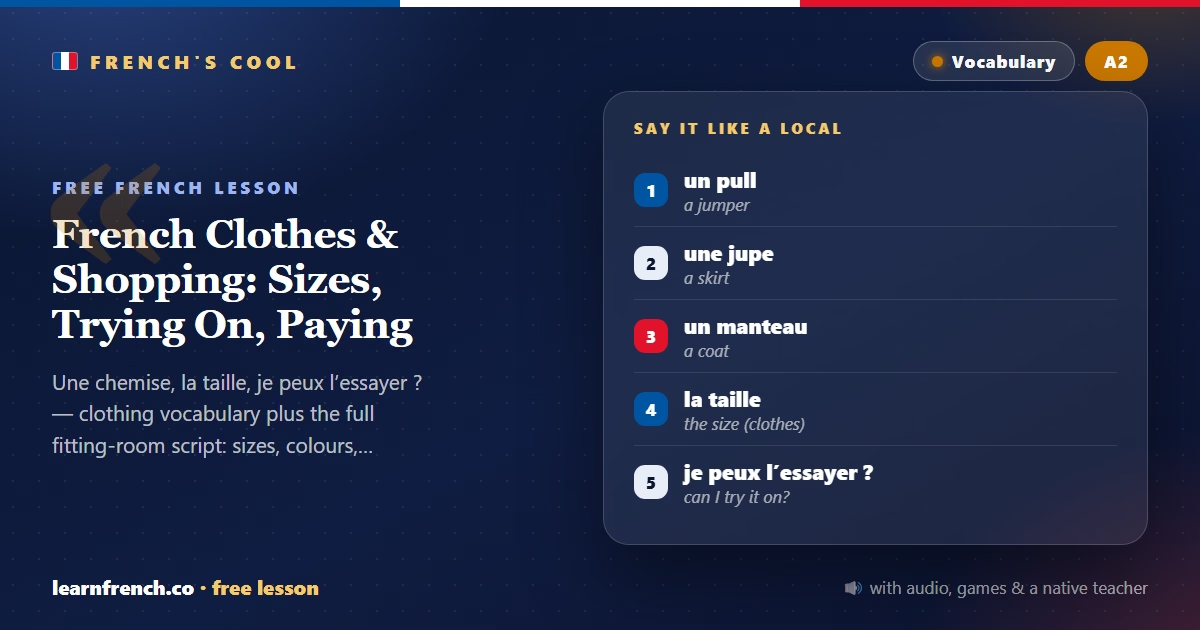
French Clothes & Shopping: Sizes, Trying On, Paying
Une chemise, la taille, je peux l’essayer ? — clothing vocabulary plus the full fitting-room script: sizes, colours, too big, too small, I’ll take it.
What you'll learn
Shopping French is a closed script — the same six exchanges in every boutique in France. Learn the props (the clothes) and the lines (the script) and you’re fluent inside the shop.
🎬 This lesson in one minute
The quick version — the full lesson is below. More shorts →
The wardrobe
- une chemise — shirt · un tee-shirt · un pull — jumper
- un pantalon — trousers (singular!) · un jean · une jupe — skirt
- une robe — dress · une veste — jacket · un manteau — coat
- les chaussures — shoes · les chaussettes — socks · une écharpe — scarf
The fitting-room script
- « Je peux vous aider ? » — « Non merci, je regarde. » (just looking — the magic phrase)
- « Vous l’avez en quelle taille ? » — What size do you have it in?
- « Je peux l’essayer ? » — Can I try it on?
- « C’est trop grand / trop petit. » — Too big / too small.
- « Vous l’avez en bleu ? » — Do you have it in blue?
- « Je le prends. » — I’ll take it.
Sizes: taille vs pointure
Clothes use la taille (je fais du M, du 40); shoes use la pointure (je fais du 42). French sizes run on EU numbers — a UK 10 dress ≈ taille 38, a US 9 shoe ≈ pointure 42.5.
Paying
- « Ça fait combien ? » — How much is it?
- « Vous payez par carte ou en espèces ? » — Card or cash?
- « Les soldes » — the sales (state-scheduled in France, twice a year!)
The full clothing vocabulary list, head to toe
The French word for clothes is les vêtements — and the slang word every French person actually uses is les fringues. Here is the clothing vocabulary the wardrobe section above didn’t cover, with genders, because in French clothing has grammar: masculine, feminine, and some items that only exist in the plural.
- Tops — un pull (sweater), un sweat (hoodie), une chemise (shirt), un tee-shirt. « Il porte des baskets et un pull vert » — note the adjective after the noun.
- Bottoms — un pantalon (trousers — singular in French!), un jean (the word for jeans is singular too), une jupe, un short.
- Footwear — des chaussures, des baskets (sneakers), une sandale (a sandal — usually des sandales), des bottes (boots).
- Accessories — un chapeau (hat), une ceinture (belt), un sac (bag), une écharpe (scarf), des gants (gloves).
- French underwear — les sous-vêtements: un caleçon, une culotte, un soutien-gorge. French lingerie vocabulary is its own export industry.
- Formal wear — un costume (men’s suit), une robe de soirée, un tailleur (women’s suit) — the essential French for dress codes on an invitation.
Two grammar notes worth their space: clothing items you wear in pairs (gants, chaussures, baskets) behave as plural nouns, and the verb of the whole topic is porter — to wear. « Je porte », « il porte », « elle portait » — one regular -er verb covers your entire wardrobe, which is why clothes related vocabulary is a favourite first topic when you learn French. To be able to describe an outfit — colours, items, who wears what — is intermediate fluency hiding inside common pieces of beginner vocabulary. Say what you and the people around you are wearing, in French, once a day: cheaper than immersion, and it works. That is how words for clothes stop being a vocabulary list to memorize and become French clothing words you own — the same way French fashion vocabulary sneaks into English word by English word (prêt-à-porter, haute couture…).
FAQ
What is the French word for clothes?
« Les vêtements » (masculine plural). The verb is « s’habiller » (to get dressed), and to say clothing in a shop context you’ll also meet « les habits ».
What is the French word for outfit?
« Une tenue » — « j’adore ta tenue ! » (I love your outfit!). For a deliberately stylish look, French today also borrows “un look”.
What are French clothes called?
Generic clothes are les vêtements; French-made fashion is la mode française. The stereotypical French wardrobe — marinière, béret, trench — is real enough to buy but not what most French people wear daily.
What is the slang word for clothes in French?
« Les fringues » — completely standard informal French. « Se fringuer » is the slang verb for getting dressed; you’ll hear both from every French friend under sixty.
Why is « un pantalon » singular?
French counts trousers as one garment: un pantalon, un jean, un short. « Des pantalons » means several pairs.
Porter or mettre?
Mettre = to put on (action), porter = to wear (state): je mets mon manteau, puis je porte mon manteau.
Where do the colour rules live?
Colours follow and agree with the noun — une chemise bleue — with rebels like orange and marron. See adjective placement, and pick up shop numbers in numbers 0-100.
Quick practice
Play the Quiztap to start · quick practice from this material
📊 Chart it: The full wardrobe with audio: les vêtements vocabulary chart.
Keep going: Describe what you’re buying: the full color palette and its agreement rules.