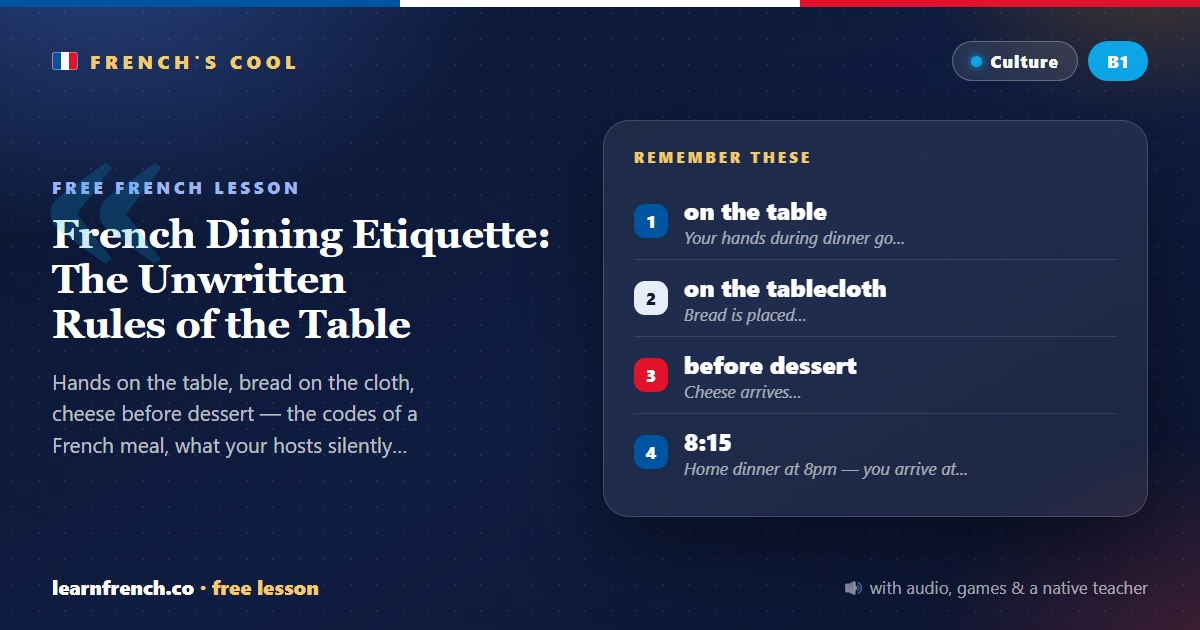
French Dining Etiquette: The Unwritten Rules of the Table
Hands on the table, bread on the cloth, cheese before dessert — the codes of a French meal, what your hosts silently expect, and the phrases that carry you through.
What you'll learn
A French dinner runs on rules nobody announces but everyone follows. Break them and nothing is said — but everything is noticed. Here’s the code.
🎬 This lesson in one minute
The quick version — the full lesson is below. More shorts →
Before you sit down
- Arrive 15 minutes late for a home dinner — le quart d’heure de politesse. Never early.
- Bring wine, flowers or chocolates — and hand them over with two hands and a compliment.
- Wait to be told where to sit: « Installez-vous ! »
At the table
- Hands ON the table (wrists, not elbows) — hiding hands in your lap reads as suspicious, the exact opposite of anglo manners.
- Bread goes directly on the tablecloth, not on your plate — and it’s torn, never bitten.
- Nobody eats before the host’s « bon appétit ! », nobody drinks before the toast: « santé ! » with eye contact.
- Finish your plate — leaving food suggests you didn’t like it.
The sacred order
Apéritif → entrée → plat → fromage → dessert → café. Cheese comes BEFORE dessert, the salad often after the main, and coffee is never during the meal. Asking for a cappuccino after dinner marks you instantly — un café (espresso) is the move.
Phrases that do the work
- « C’est délicieux ! » — say it early, mean it.
- « Je peux vous aider ? » — offer once; accept the refusal.
- « Je suis servi(e), merci. » — polite refusal of seconds.
- « C’était vraiment merveilleux. » — the exit compliment.
Common mistakes that quietly give you away
- Cutting the salad with your knife → fold the leaf with your fork. It’s an old rule, but older guests still clock it.
- Salting before tasting → taste first. The cook seasoned that dish on purpose, and an early salt grab says otherwise.
- Asking for butter for your bread → dinner bread comes dry. Butter belongs to breakfast, radishes and seafood platters.
- Pouring your own wine first → serve your neighbours, then yourself — and never fill a glass to the brim.
- Asking to take leftovers home → fine in a restaurant (« Je peux emporter le reste ? »), unthinkable at someone’s home.
At the restaurant: a real exchange
— S’il vous plaît !
— Oui, je vous écoute.
— Le plat du jour pour moi, et une carafe d’eau, s’il vous plaît.
— Très bien. Et comme boisson ?
— Un verre de rouge, merci.
— Je vous apporte ça.
Three details doing the work here. You catch a waiter with s’il vous plaît and eye contact — never « garçon », which died out with black-and-white films. Une carafe d’eau gets you free tap water; ask vaguely for “water” and a paid bottle may land instead. And the bill never arrives uninvited — leaving you in peace IS the politeness — so when you’re ready: « l’addition, s’il vous plaît ». Service is already included; rounding up a euro or two is plenty.
The cheese platter has its own law
It comes round once — take two or three cheeses, not five, and don’t ask for a second pass. Cut with respect for the shape: a wedge of brie gives up a thin slice along its length, never its tip — slicing off la pointe is the classic offence, because you’ve just kept the ripest bite for yourself. Round cheeses are cut like a cake, and everything goes on bread, never crackers. Hesitating with the platter in your hands? « Un peu de tout, merci ! » — enthusiasm forgives technique every time.
FAQ
Is it rude to refuse wine?
No — cover it with « pas pour moi, merci » and nobody blinks. Leaving the glass full after a toast sip is also fine.
When do I use tu with dinner guests?
Follow the host’s lead — and the full logic in tu vs vous. Among friends-of-friends, vous first is never wrong.
What food vocabulary should I bring?
The table set: food vocabulary and the etiquette’s big sister, French culture surprises.
Quick practice
Play the Quiztap to start · quick practice from this material