The French E Muet: The Vowel That Vanishes
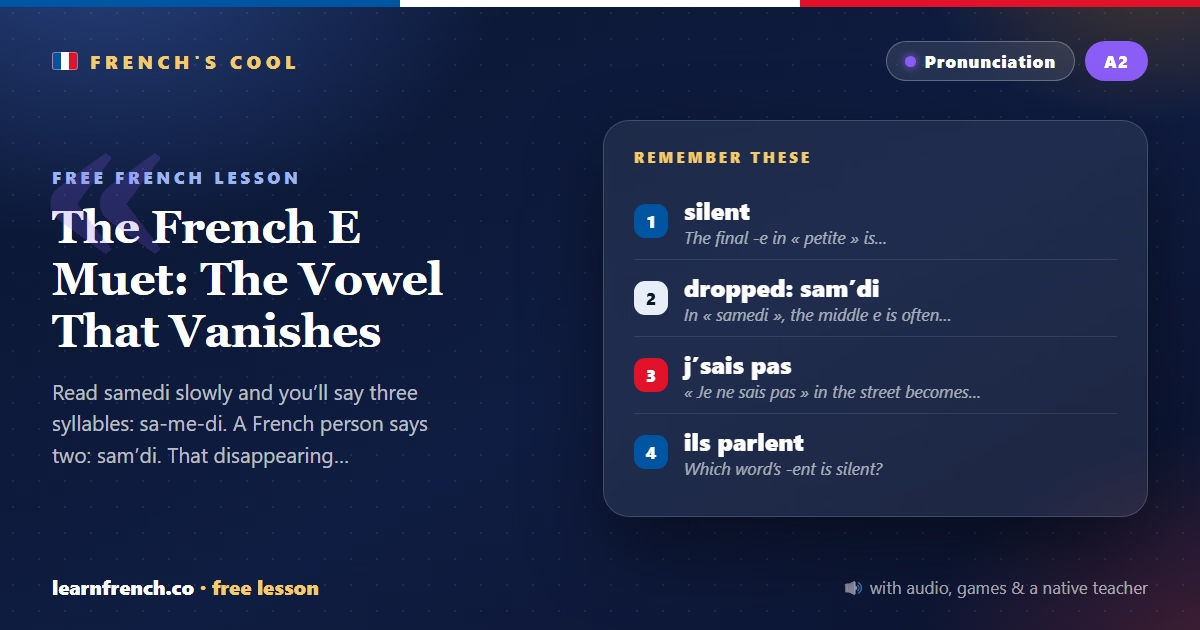
Read samedi slowly and you’ll say three syllables: sa-me-di. A French person says two: sam’di . That disappearing vowel is the e muet (also called e caduc — the “falling e”), and it’s the single biggest reason spoken French sounds faster than written French reads. 🌬️ Only the naked e vanishes The disappearing vowel is…
What you'll learn
Read samedi slowly and you’ll say three syllables: sa-me-di. A French person says two: sam’di. That disappearing vowel is the e muet (also called e caduc — the “falling e”), and it’s the single biggest reason spoken French sounds faster than written French reads.
🌬️ Only the naked e vanishes
The disappearing vowel is the plain, accent-less e: sam(e)di, ach(e)ter, je n(e) sais pas. An accented é or è never drops — café keeps every sound. When in doubt: if dropping the e would pile up three consonants, keep it (vendredi, not vendr’di).
🎬 This lesson in one minute
The quick version — the full lesson is below. More shorts →
Which e drops?
Only the plain, unaccented e — never é, è, ê, and never e before a double consonant. It survives on paper but dies in speech whenever the surrounding consonants can shake hands without it:
- sam(e)di, méd(e)cin, mainten(e)ant — inside words
- j(e) sais, c(e) soir, la p(e)tite — little grammar words
- tabl(e), fenêtr(e), vert(e) — word-final e is essentially always silent
When it must stay
French tolerates two consonants meeting, not three. When dropping the e would pile up three consonant sounds, it stays: vendredi keeps its e (vendr’di = ndrd, impossible), simplement keeps it (mpl’m). This is the famous “three-consonant rule” (la loi des trois consonnes).
The chain reaction: je ne → j’n’
Grammar words line up and take turns dropping: « je ne sais pas » becomes j’n’sais pas — or in fast speech just chais pas. « Je te le donne » → j’t’le donne. One e drops, the next must stay, alternating down the chain.
Where the e never dies
Poetry and song revive every e muet — Brel sings “Ne me quitte pas” with all its e’s beating. And in the south of France the e muet lives on in everyday speech: a Marseillais really does say sa-me-di. Both are correct; Paris-fast is just the default learners hear.
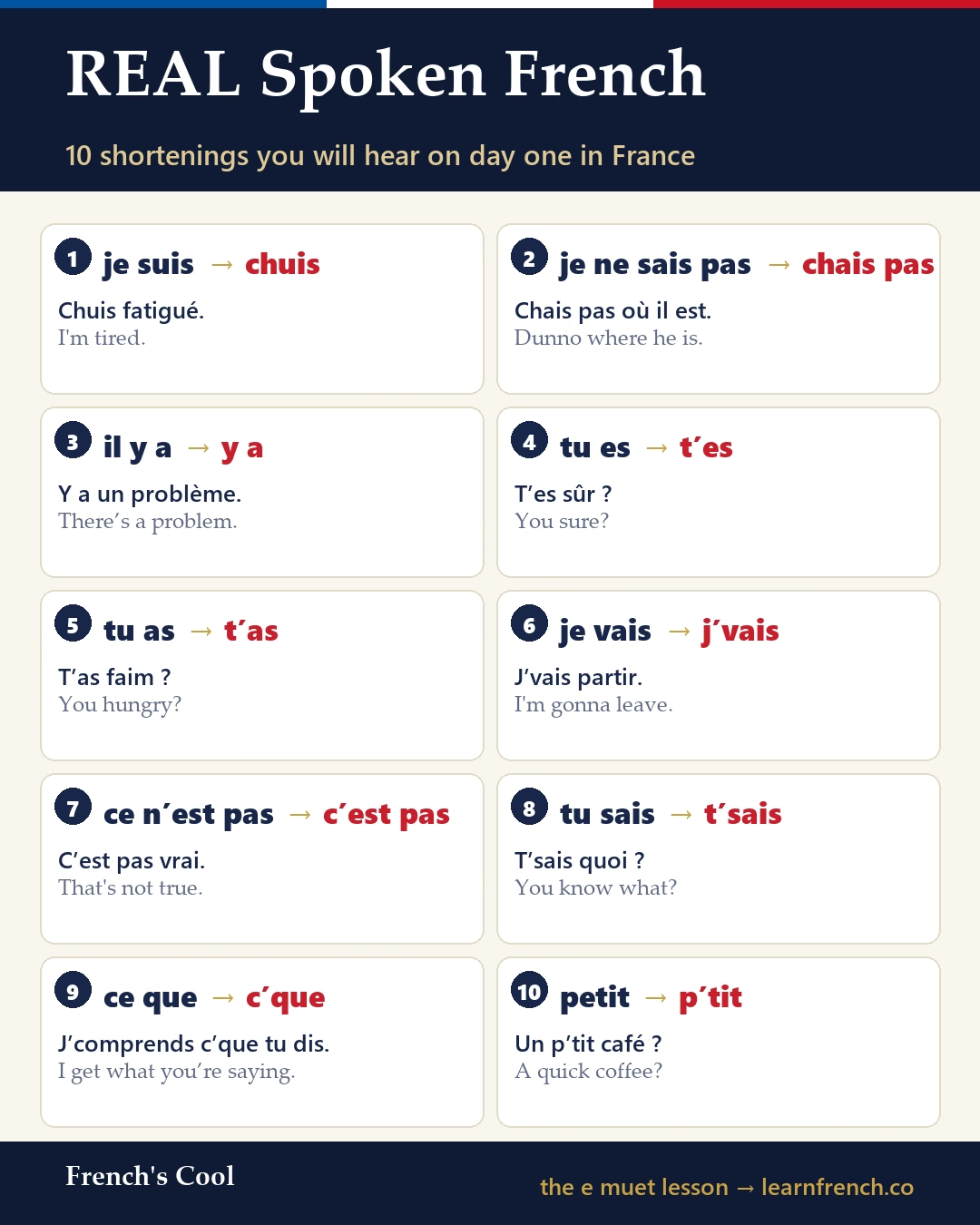
In real sentences
Read each one aloud, then tap 🔊 and shadow the audio — rhythm first, speed later.
Drill it: silent letters · nasal vowels · the pronunciation guide
✍️ Your turn: drop it or keep it?
How do the French actually say « samedi »? (count the syllables)
Show answer
Two syllables: sam’di. The middle e is gone in normal speech.
Why does « vendredi » keep its middle e? (three-consonant rule)
Show answer
Dropping it would jam d-r-d together — French refuses three consonants, so the e stays: ven-dre-di.
« je te le dis » in fast speech becomes…? (chain drop)
Show answer
j’te l’dis — alternate e’s drop so the chain stays pronounceable.
Does the e in « café » ever drop? (look at the accent)
Show answer
Never — only the accent-less e is fragile. É and è are full, stable vowels.
Where does every e get pronounced even today? (music)
Show answer
In songs and classical poetry — that’s why sung French seems to have extra syllables.
FAQ
Is e muet the same sound as “schwa”?
Yes — linguists write it [ə], the neutral schwa. When pronounced, it sounds close to the eu of « peu ». The trick is that most of the time it isn’t pronounced at all.
How do I practice hearing it?
Take any sentence, cross out every plain e that isn’t accented, and read what’s left. « Ce que je te demande » → c’que j’t’demande. Painful for a week, automatic forever after.
Does the dropped e affect liaison?
Indirectly — dropping e’s creates the consonant chains that make French flow. The linking system itself is the other half: see the liaison lesson and silent letters.
Is dropping the e sloppy or slang?
Neither — it is standard spoken French at every register. Pronouncing every written e sounds stilted in Paris (though the South genuinely keeps many of them — that’s the famous accent du Midi).
How should I train it?
Don’t force drops word by word. Shadow short recorded sentences — the ones above have audio — and let your mouth copy the rhythm; the e’s fall out on their own once the syllable count is in your ear.
Quick practice
Play the Quiztap to start · quick practice from this material
🎬 Watch next: Hear the vanishing act at full speed — Elisa’s fast-spoken-French tips.