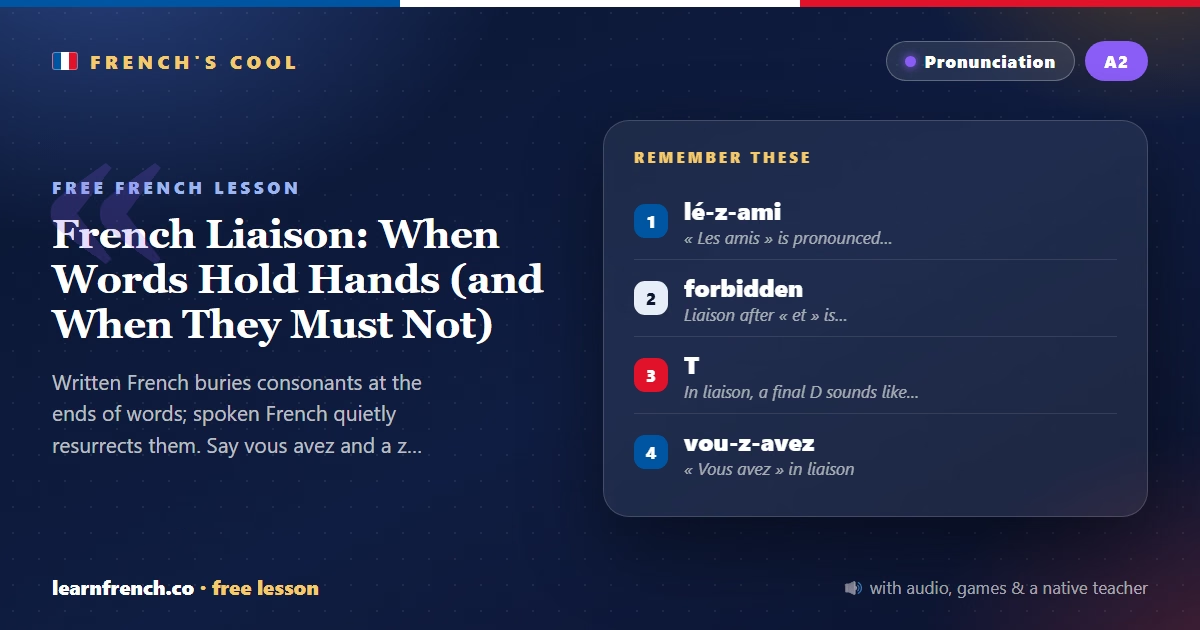
French Liaison: When Words Hold Hands (and When They Must Not)
Written French buries consonants at the ends of words; spoken French quietly resurrects them. Say vous avez and a z appears from nowhere: voo- z -avay. That resurrection is la liaison — and it’s not decoration. Some liaisons are mandatory, some are forbidden, and getting them wrong is instantly audible. 🔗 A silent letter wakes…
What you'll learn
Written French buries consonants at the ends of words; spoken French quietly resurrects them. Say vous avez and a z appears from nowhere: voo-z-avay. That resurrection is la liaison — and it’s not decoration. Some liaisons are mandatory, some are forbidden, and getting them wrong is instantly audible.
🔗 A silent letter wakes up before a vowel
Liaison is a final consonant that is normally silent surfacing before a vowel: les‿amis /z/, un‿instant /n/, petit‿hôtel /t/. Compulsory after determiners and pronouns; forbidden after et and after singular nouns. Everything else is style.
🎬 This lesson in one minute
The quick version — the full lesson is below. More shorts →
Liaisons you must make
| After | Example | Sounds like |
|---|---|---|
| determiners | les amis, un homme, mes enfants | lé-zami, un-nomme |
| pronoun + verb | vous avez, ils ont, on est | voo-zavé, il-zon |
| adjective + noun | petit ami, grand homme | peti-tami, gran-tomme |
| short prepositions | en été, dans un an, chez eux | an-nété, che-zeux |
| numbers | deux heures, trois ans | deu-zeur, troi-zan |
Notice the sound changes: s and x liaise as z, d as t, f as v in neuf heures (neu-veur).
Liaisons that are forbidden
- After et: un chat et // un chien — never “é-t-un”.
- Before an aspirated h: les // héros, en // haut. (Say “lé-z-héros” and you’ve said “the zeros”.)
- After a singular noun: un étudiant // intelligent.
- After quand as a question word: Quand // est-il parti ?
The h that decides everything
French has two silent h’s. The mute h behaves like a vowel and welcomes liaison: les hommes (lé-z-omme). The aspirated h is a force field: les // haricots, les // héros. Nothing marks the difference in spelling — dictionaries flag aspirated h with an asterisk, and the wrong guess changes meaning.
Optional liaisons: the formality dial
After être, after adverbs, between verb and complement — liaison becomes a register choice. A newsreader says « je suis‿allé » ; friends at a café say « je suis // allé ». More liaison = more formal. Start by nailing the mandatory ones; add optional ones when you want to dress up.
In real sentences
Read each one aloud, then tap 🔊 and shadow the audio — rhythm first, speed later.
Drill it: silent letters · nasal vowels · the pronunciation guide
✍️ Your turn: link or break?
What sound links grand and arbre in « un grand arbre »? (not /d/)
Show answer
/t/ — grand‿arbre. Final d turns into t in liaison; same in quand‿il /t/.
Why is there no liaison in « et elle »? (the forbidden one)
Show answer
Liaison after et is always forbidden — et // elle, with a clean break.
« les héros » — z or no z? (h aspiré)
Show answer
No liaison: les / héros. The aspirated h blocks it (whereas les‿hommes takes /z/).
« neuf heures » sounds like…? (special f)
Show answer
/nœvœʁ/ — f becomes /v/ before heures and ans: neuf‿heures, neuf‿ans.
« vous avez » without liaison — possible? (compulsory class)
Show answer
No — pronoun + verb liaison is obligatory: vous‿avez /z/, always.
FAQ
Why do the French say “z-yeux” for eyes?
Les yeux = lé-zyeu, liaison from les. Kids even say “un zyeu” by mistake — the liaison is THAT welded to the word.
Is liaison the same as enchaînement?
Cousins. Liaison revives a silent consonant (vous‿avez); enchaînement just re-syllabifies one that was already pronounced: elle est → è-lè.
How do I know if an h is aspirated?
You memorize the common ones — we keep the complete h aspiré word list with audio. Related: silent letters explains which finals sleep in the first place.
Liaison is why French sounds like one long ribbon of sound. Pair it with French accent marks and you’ve covered the two pillars of reading French aloud.
How do I handle optional liaisons like est arrivé?
They mark register: newsreaders link, friends mostly don’t. Learners do best mastering the compulsory set and letting optional ones come naturally with exposure — a missing optional liaison is invisible; a broken compulsory one is not.
Any trick for h aspiré words?
Learn them as vocabulary with their article glued on: LE héros, LA honte, LE homard, EN haut. If you memorise le hérisson rather than hérisson alone, the blocked liaison takes care of itself.
Quick practice
Play the Quiztap to start · quick practice from this material