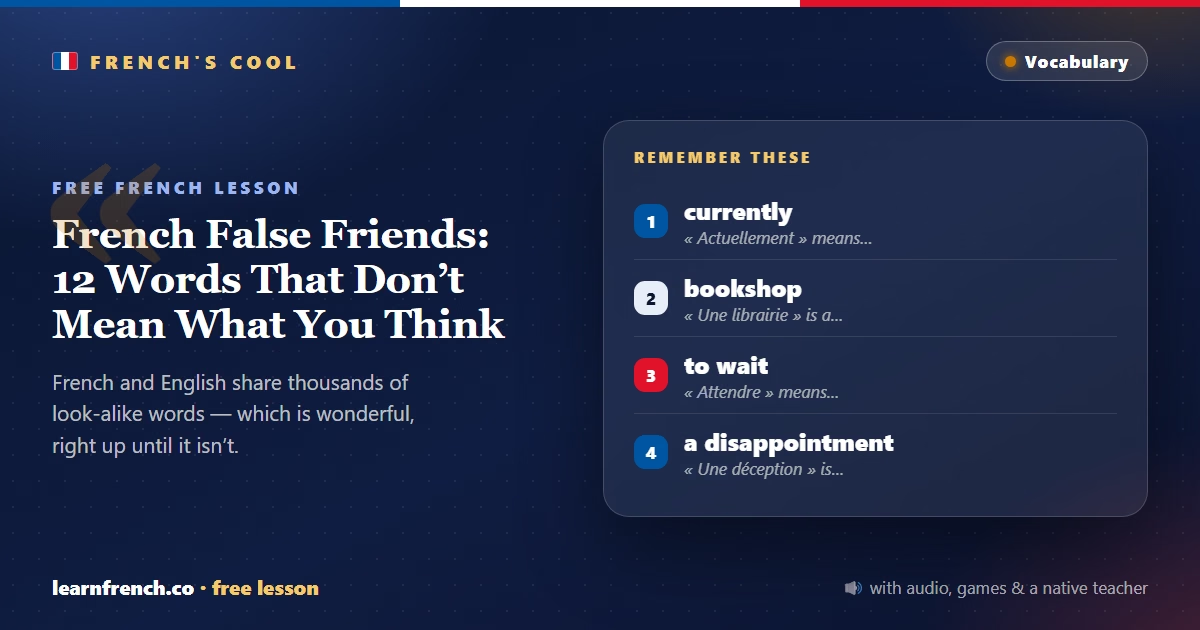
French False Friends: 12 Words That Don’t Mean What You Think
French and English share thousands of look-alike words — which is wonderful, right up until it isn’t.
What you'll learn
French and English share thousands of look-alike words — which is wonderful, right up until it isn’t. False friends (faux amis) look identical, mean something else, and generate the most memorable mistakes in the language. Here are the twelve that matter most, ranked by embarrassment potential.
🎬 This lesson in one minute
The quick version — the full lesson is below. More shorts →
The dangerous dozen
| French word | Actually means | You wanted |
|---|---|---|
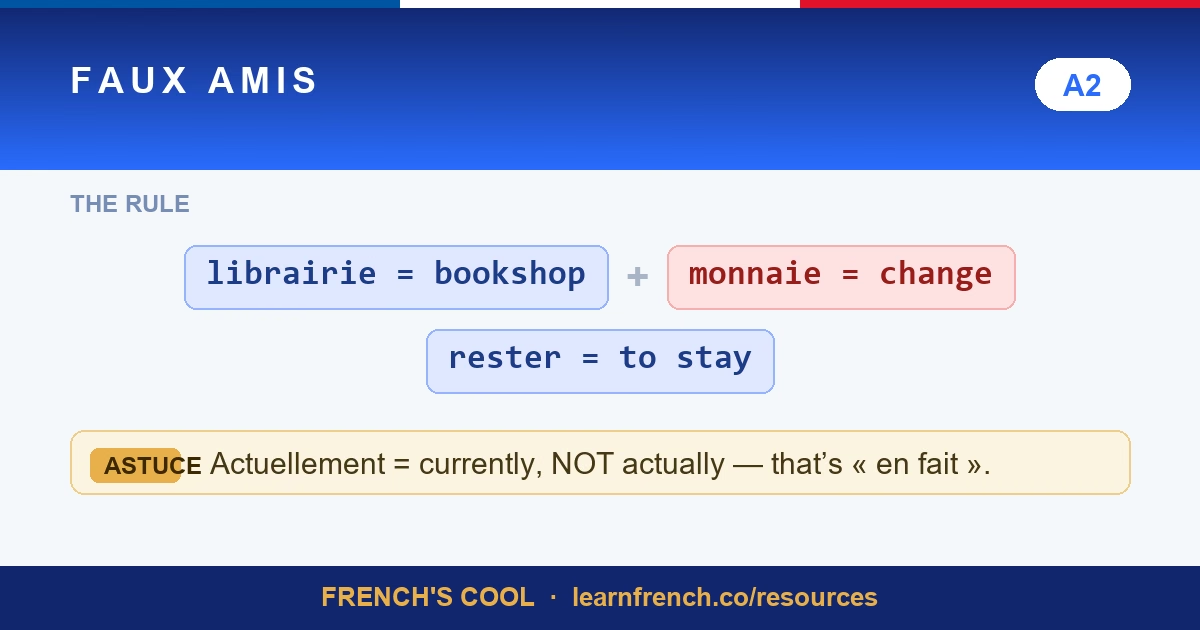
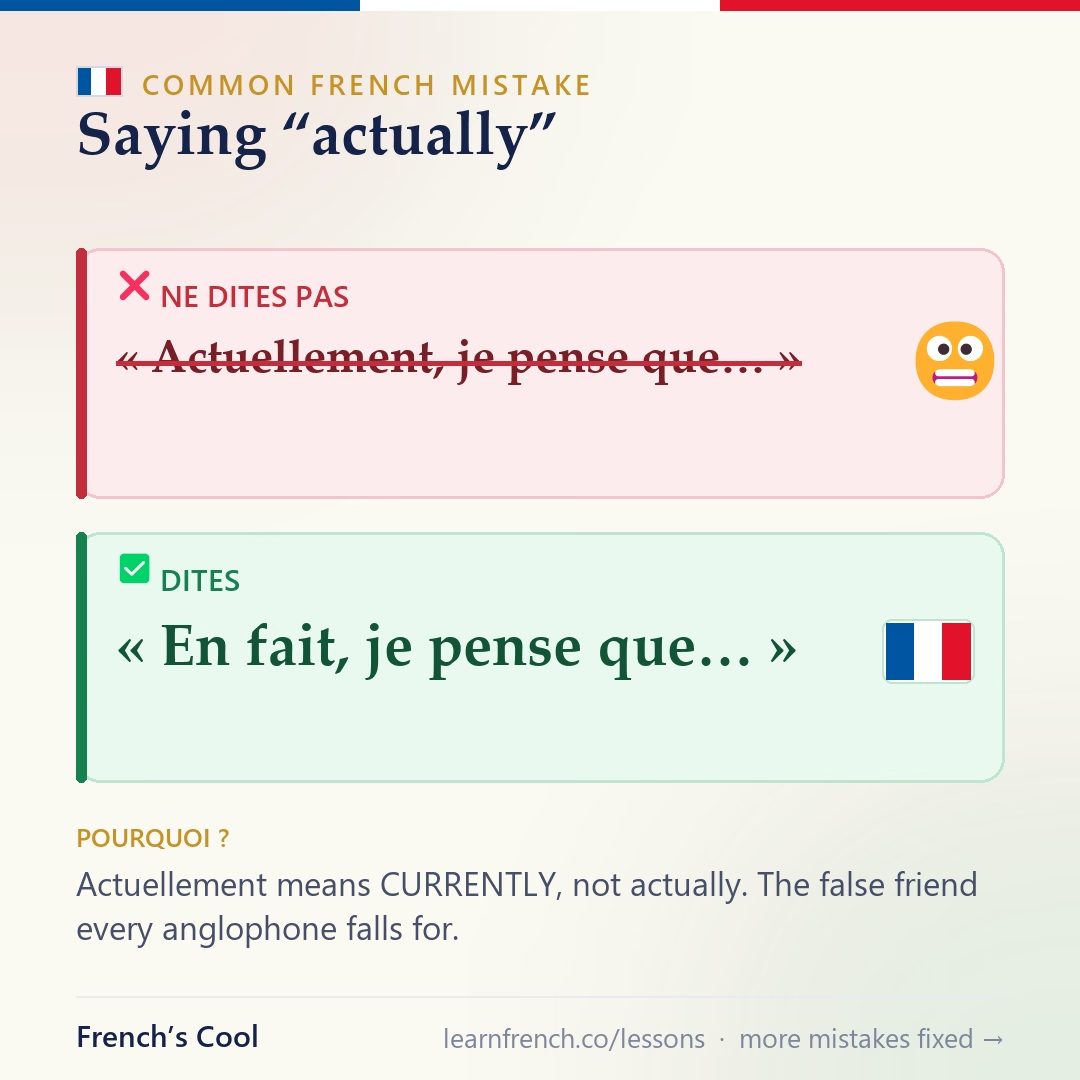
| actuellement | currently | actually = en fait |
| assister à | to attend | to assist = aider |
| attendre | to wait | to attend = assister à |
| blesser | to injure | to bless = bénir |
| déception | disappointment | deception = tromperie |
| envie | desire (avoir envie de) | envy = jalousie |
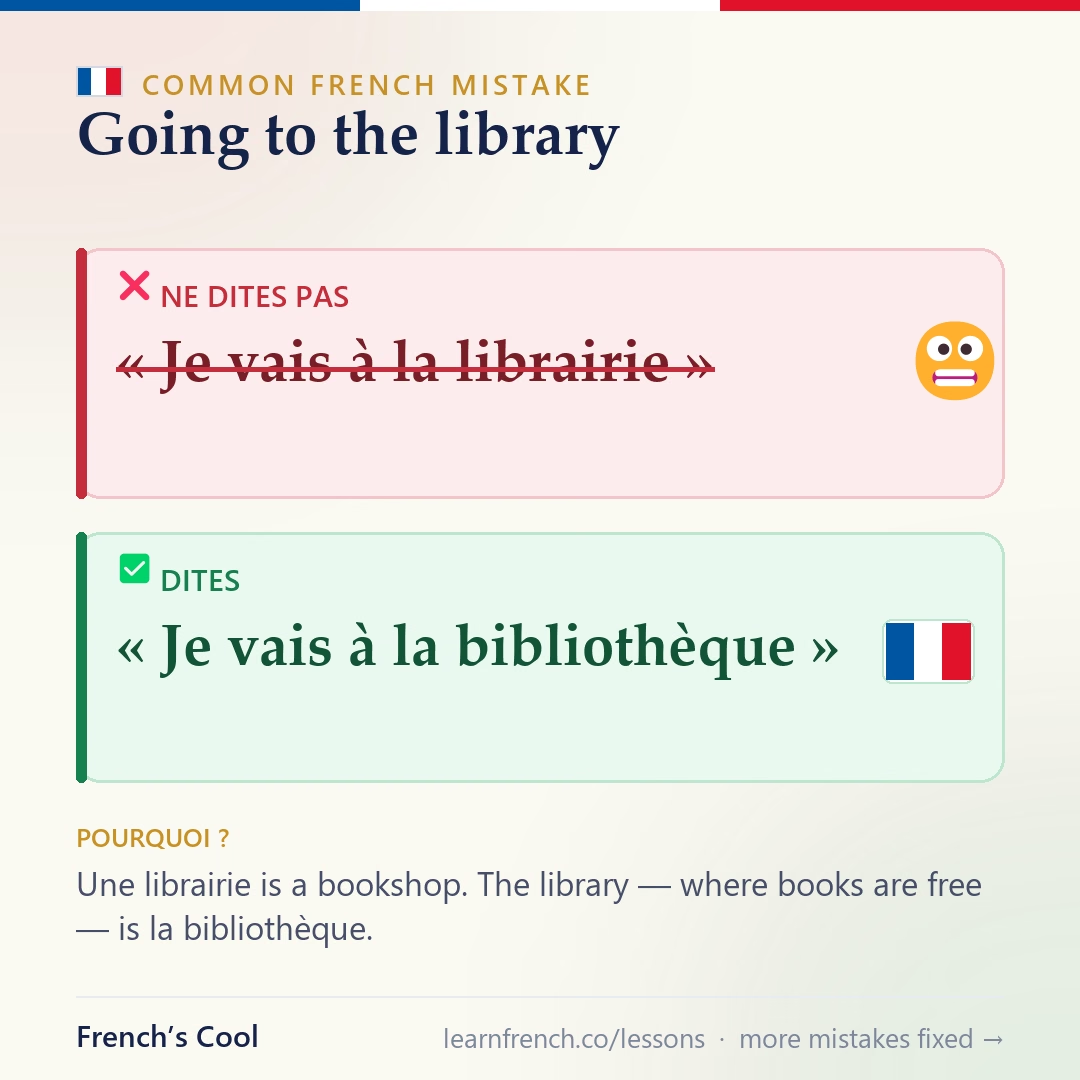
| librairie | bookshop | library = bibliothèque |
| monnaie | change, coins | money = argent |
| passer un examen | to TAKE an exam | to pass = réussir |
| préservatif | condom (!) | preservative = conservateur |
| rester | to stay | to rest = se reposer |
| sensible | sensitive | sensible = raisonnable |
The two that ruin dinner parties
Telling your host there are “beaucoup de préservatifs” in British jam is the canonical horror story — say conservateurs. And announcing “Je suis excité(e)” for “I’m excited” reads as physical arousal — say J’ai hâte (I can’t wait).
Why French has so many
Because a third of English IS old French — but nine centuries of separate drift changed the meanings on each side of the Channel. The look-alikes that kept their meaning (vrais amis like table, restaurant, important) massively outnumber the traitors. The fix isn’t fear; it’s meeting the short traitor list head-on.
Cognates, false cognates, and how to tell them apart
A cognate is a word that looks similar in two languages because it shares a root — and thanks to 1066, English and French share thousands. Most are honest: la table, la nation, impossible. The trouble is the minority: false cognates (the French say faux-amis), words that look similar or are pronounced alike but carry a different meaning in each language. They exist because English borrowed massively from Latin through French, then each language let the meanings drift for nine hundred years. The resemblance survived; the sense didn’t — and no translator instinct or dictionary reflex will warn you, because the trap is precisely that the english word feels like a safe translation.
Practical caution beats memorising: when a French word seems suspiciously identical to an English one AND the situation would make the English meaning odd, check before you translate. Classic confusion pairs beyond the dozen above: introduire (to insert — to introduce a person is « présenter »), une proposition (an offer or a clause, rarely a marriage proposal), assister à (to attend, not to assist), la déception (disappointment, no deceit involved). Each example is a phrase you will genuinely meet — which is why every good french vocabulary lesson flags its faux-amis as it goes, instead of hoping the learner never says « je suis excité » in a job interview.
The good news for language skills long-term: false friends are a finite list, the tricky ones number a few dozen, and once burned you rarely forget. Native speakers will usually reconstruct what you meant — a French speaker hearing « librairie » for “library” corrects to bibliothèque without blinking, because the French language borrows and mislays English words too (un parking, un smoking…). Treat each faux-ami you catch as a matching exercise between anglais and français that you won, keep this page’s easy French list handy, and words that look alike but translate incorrectly become a party trick of your French learning instead of its most fluent-sounding mistake.
FAQ
How many false friends should I actually learn?
The high-frequency list is about 30 words. Master the dozen above first — they cover most real-life collisions — then work through the full faux amis chart.
Is “visiter” a false friend?
Half of one: visiter works for places (visiter Paris) but not people — for grandma it’s rendre visite à. Saying “je vais visiter ma grand-mère” sounds like she’s a monument.
What is the best way to drill them?
In context, not as a list — and under light pressure. Our Faux Amis Trap game was built for exactly this.
False friends are one of the 7 classic anglophone mistakes — the other six are just as fixable.
Two false friends as shareable cards
Save and share these cards — one classic mistake, fixed, per card.
Quick practice
Play the Quiztap to start · quick practice from this material
Keep going: When words are deliberately playful rather than false, that’s idiom country: 15 French idioms.