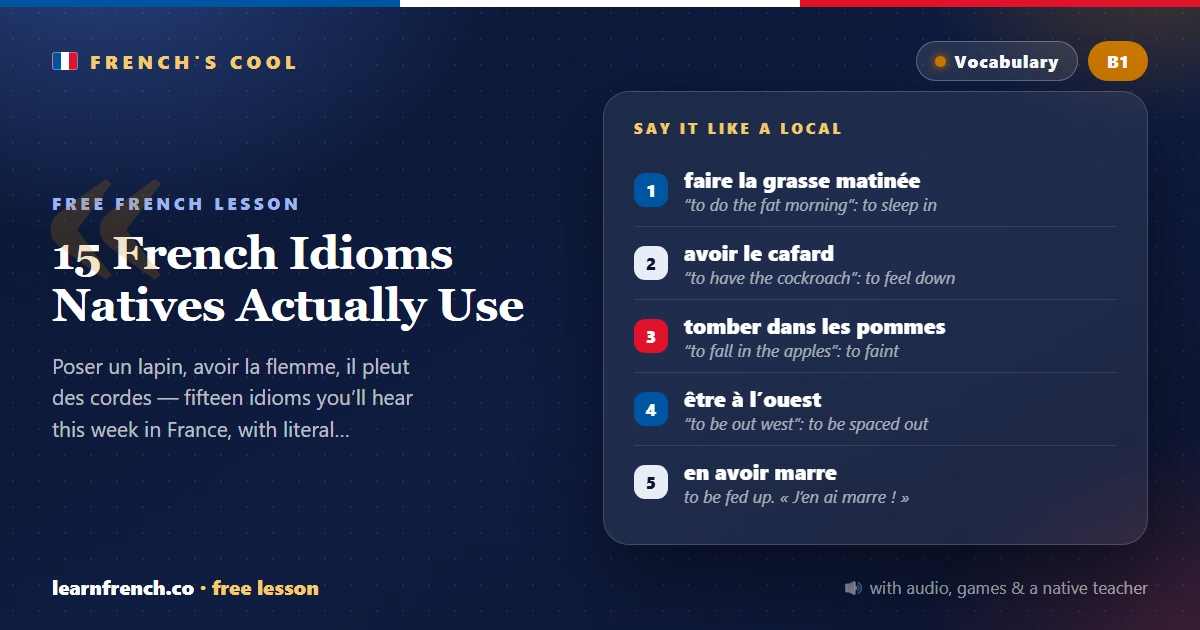
15 French Idioms Natives Actually Use
Poser un lapin, avoir la flemme, il pleut des cordes — fifteen idioms you’ll hear this week in France, with literal translations worth the price of admission.
What you'll learn
Idioms are where French stops being a subject and starts being fun. These fifteen are current, common, and safe in any company — literal meanings included, because they’re glorious.
🎬 This lesson in one minute
The quick version — the full lesson is below. More shorts →
Daily life
- avoir la flemme — lit. “to have the laziness”: can’t be bothered. « J’ai la flemme de cuisiner. »
- faire la grasse matinée — “to do the fat morning”: to sleep in.
- poser un lapin — “to place a rabbit”: to stand someone up.
- un coup de main — “a hit of hand”: a helping hand. « Tu me donnes un coup de main ? »
- un coup de fil — a phone call. « Passe-moi un coup de fil. »
Feelings & states
- avoir le cafard — “to have the cockroach”: to feel down.
- tomber dans les pommes — “to fall in the apples”: to faint.
- être à l’ouest — “to be out west”: to be spaced out.
- avoir un coup de foudre — “a lightning strike”: love at first sight.
- en avoir marre — to be fed up. « J’en ai marre ! »
Conversation spice
- ça marche — “it walks”: OK, deal. The waiter’s favourite word.
- c’est pas la mer à boire — “it’s not the sea to drink”: it’s not that hard.
- revenons à nos moutons — “back to our sheep”: back to the point (a 500-year-old joke from a medieval farce).
- il pleut des cordes — “it’s raining ropes”: it’s pouring.
- coûter les yeux de la tête — “to cost the eyes of the head”: to cost a fortune.
How to actually learn them
Pick three, not fifteen. Use each once in your next conversation — misuse included; the correction is the memory. Idioms stick by incident, not by list.
20 common French idioms, from literal nonsense to fluent French
Every French idiom below is everyday French — the kind native French speakers drop into conversational French without noticing. For each one: what the French expression literally means, and the English equivalent. English speakers will recognise a few (some are even used in English), but most translate into pure nonsense — which is exactly why French learners who master them sound like a native.
- Avoir le cafard — literally means “to have the cockroach” — to feel down, to have the blues.
- Mettre son grain de sel — “to put in one’s grain of salt” — to give an unasked-for opinion. English speakers say “to put in your two cents”.
- Voir rouge — “to see red” — one of the rare idioms used in English identically.
- Faire la grasse matinée — “to do the fat morning” — to sleep in. Use this expression on Sundays.
- Coûter les yeux de la tête — “to cost the eyes of your head” — the English expression is “to cost an arm and a leg”.
- Poser un lapin — “to place a rabbit” — to stand someone up. A favourite of French friends discussing dating.
- Être dans la lune — “to be in the moon” — to daydream; used to talk about someone not listening.
- Il pleut des cordes — “it’s raining ropes” — British English says “it’s raining cats and dogs”.
- Avoir un poil dans la main — “to have a hair in the hand” — to be lazy. A French person will mime the hair.
- Donner sa langue au chat — “to give your tongue to the cat” — to give up guessing.
- Comme une lettre à la poste — “like a letter at the post office” — smoothly, without a hitch.
- Avoir le coup de foudre — “to be struck by lightning” — love at first sight; the idiom means instant love, not weather.
- Les carottes sont cuites — “the carrots are cooked” — it’s all over; used to refer to a lost cause.
- Ne pas être dans son assiette — “to not be in one’s plate” — to feel off-colour. Old French kept assiette’s older sense of “seat”.
- Appeler un chat un chat — “to call a cat a cat” — to call a spade a spade. Modern French also says « dire les choses ».
- Se mettre sur son trente-et-un — “to put yourself on your thirty-one” — to dress to the nines.
- Avoir d’autres chats à fouetter — “to have other cats to whip” — bigger fish to fry. French also loves its cat idioms.
- C’est la fin des haricots — “it’s the end of the beans” — it’s the last straw, all is lost (said with a smile).
- Tomber dans les pommes — “to fall in the apples” — to faint. A French word puzzle with a disputed origin.
- Chercher midi à quatorze heures — “to look for noon at 2 p.m.” — to overcomplicate things: exactly what learners do when they translate idioms word for word.
How to make a lot of idioms stick? The same advice as the rest of language learning: meet each idiom in a sentence, say it aloud, and reuse it the same week. Pick five that fit your life, use them with French speakers, and they move from “idiomatic curiosity” to the way you speak French. That habit — not flashcard marathons — is what teaching French for years shows to work, and it is how these idioms in French become yours.
FAQ
Can I translate English idioms literally into French?
Almost never — “it’s raining cats and dogs” means nothing in French (it pleut des cordes does). When French and English LOOK the same but aren’t, you’re in false-friend territory.
Are these formal or informal?
All fifteen are register-neutral to casual — fine with colleagues, fine with friends. For genuinely street-level language, see French slang & argot.
Why do so many idioms use avoir?
French states run on avoir — hunger, fear, luck, years. The full family is in avoir expressions.
Quick practice
Play the Quiztap to start · quick practice from this material
📊 Chart it: More picture-idioms with audio: les expressions imagées.