Voici vs Voilà: The Little Words French Uses Constantly
« Voilà » might be the most French word there is — waiters say it, teachers say it, everyone ends explanations with it. Its twin « voici » is more formal.
What you'll learn
« Voilà » might be the most French word there is — waiters say it, teachers say it, everyone ends explanations with it. Its twin « voici » is more formal. Here’s how they work, and why voilà means far more than « there it is ».
👉 In real life, voilà does almost everything
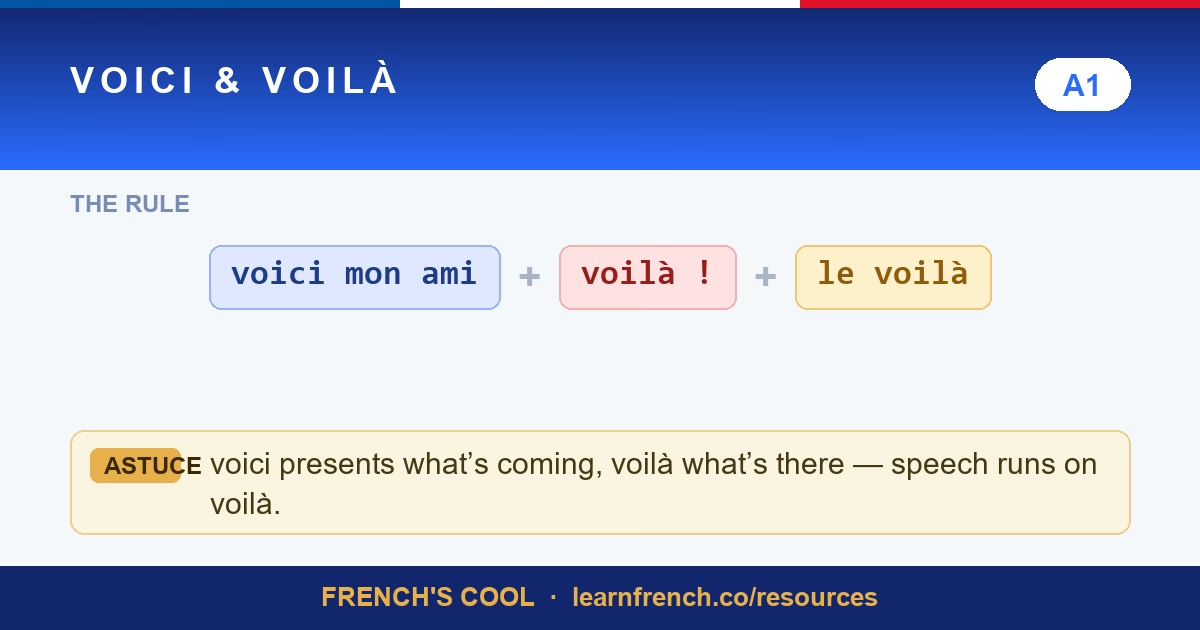
The textbook split — voici = here is (near), voilà = there is (far) — has collapsed in speech: voilà hands things over, points, concludes and agrees. Voici survives in writing and presentations: voici mon CV, voici les chiffres.
🎬 This lesson in one minute
The quick version — the full lesson is below. More shorts →
The textbook rule
Voici = here is (near me) · Voilà = there is (over there). « Voici mon frère, et voilà ma sœur là-bas. » In real life, voilà has eaten voici — the French use voilà for near and far alike, and voici survives mostly in writing and introductions.
What voilà really does all day
- Handing something over: « Voilà ! » — here you go (the waiter’s word).
- Introducing: « Voilà Mamadou, il est sénégalais. » — meet Mamadou.
- That’s exactly it: « Voilà ! » — the delighted YES when someone gets it right.
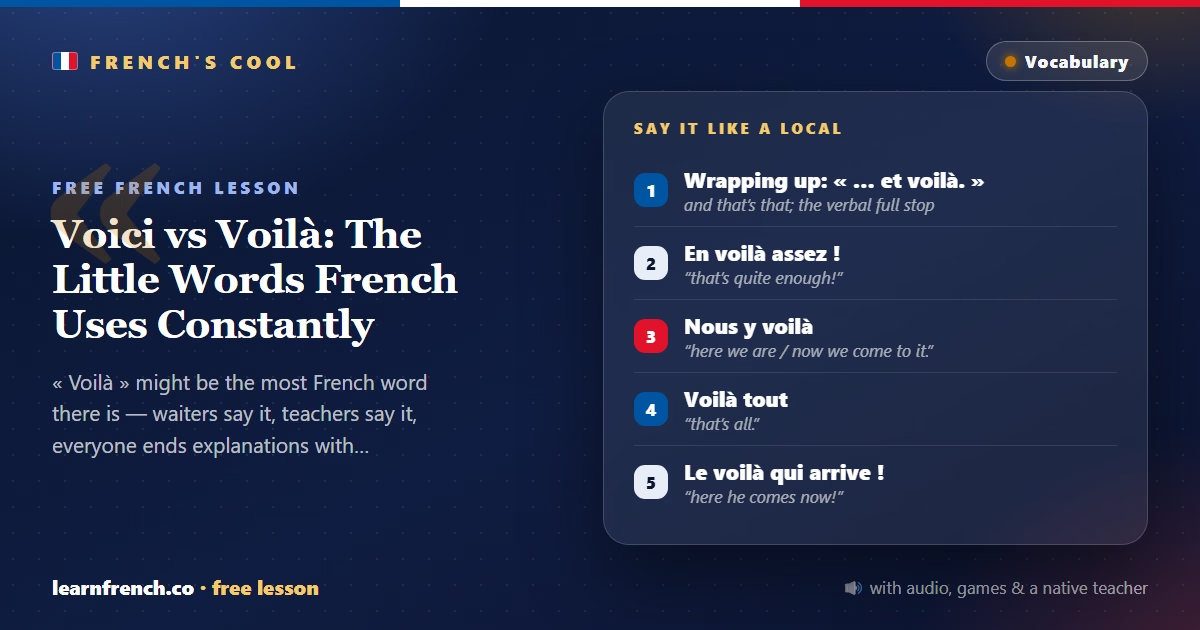
- Wrapping up: « … et voilà. » — and that’s that; the verbal full stop.
- With time (like il y a): « Voilà deux ans que j’habite ici. » — I’ve lived here two years now.
Grammar in one line
Voici/voilà work like verbs without conjugation: they take a noun (« Voilà le bus »), a pronoun BEFORE them (« Le voilà ! » — there he is!, « Nous voilà » — here we are), or a whole clause (« Voilà pourquoi… » — that’s why…). Learn « Le voilà ! » as a chunk — it’s everyday gold.
Hear a natural introduction in Xavier’s clip « Voici Mamadou », then practise introducing people with the introductions lesson.
The voilà combos the French actually say
- Voilà voilà… — “so, yeah…” : the universal story-ender.
- Et voilà le travail ! — “and there you go, job done!” (proud flourish)
- En voilà assez ! — “that’s quite enough!”
- Nous y voilà. — “here we are / now we come to it.”
- Voilà tout. — “that’s all.”
- Le voilà qui arrive ! — “here he comes now!”
Drop one of these into conversation and watch a French speaker’s eyebrows rise approvingly. More natural fillers in the petits mots chart.
In real sentences
Read each one aloud, then tap 🔊 and shadow the audio — rhythm first, speed later.
Drill it: il y a · spoken fillers · c’est vs il est
✍️ Your turn: hand it over
« There she is! » = ? (pronoun first)
Show answer
La voilà ! — object pronouns hook onto the front: me voilà, nous voilà, les voilà.
« Voilà trois mois que j’attends » = ? (time trick)
Show answer
I’ve been waiting for three months — voilà + duration + que works like depuis, with extra impatience.
« That’s exactly why » = ? (conclusion)
Show answer
Voilà pourquoi — the standard way to land an explanation.
A waiter sets your plate down. What do they say? (service word)
Show answer
Voilà ! — or et voilà ! The hand-over word of French service.
Attach a file in a formal email — voici or voilà? (register)
Show answer
Voici : « Voici le document demandé. » Writing keeps voici alive.
FAQ
Do French people still use voici?
Yes, but mostly in writing, formal speech and set phrases (« en voici un exemple »). In conversation, voilà covers both near and far — using voilà everywhere will sound perfectly natural.
What does « et voilà » mean?
It’s the verbal flourish that closes an action or explanation — « and there you have it / done! ». Flip a crêpe, plate it, « et voilà ! ».
Is voilà related to il y a?
They overlap when talking about time: « voilà deux ans que… » ≈ « il y a deux ans que… » (it’s been two years that…). For « ago » alone, use il y a — see our il y a guide.
What does the bare « voilà » mean that French people keep saying?
It is the agreement-and-closure filler: « exactly / that’s it / so there you go ». Someone summarises your point correctly — voilà. You finish a story — et voilà. It signals a full stop with a nod.
Voilà vs il y a — both « there is »?
Il y a states existence neutrally (il y a un café au coin); voilà POINTS, presents, hands over (voilà le café — here it is / here you go). If your finger could do it, it’s voilà.
Quick practice
Play the Quiztap to start · quick practice from this material