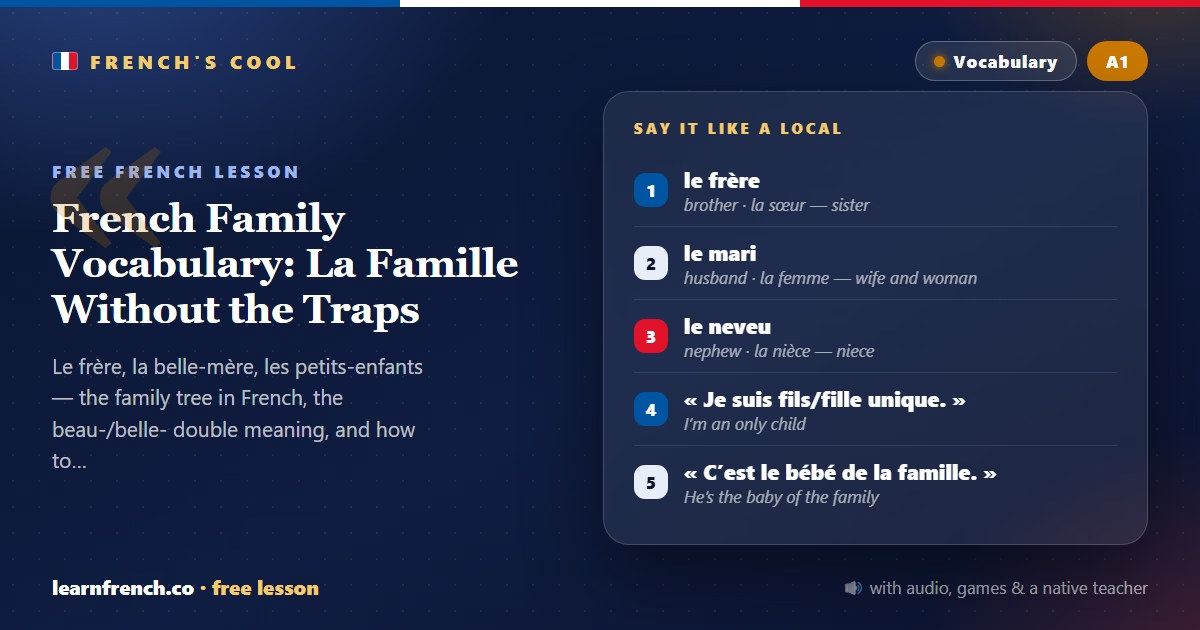
French Family Vocabulary: La Famille Without the Traps
Le frère, la belle-mère, les petits-enfants — the family tree in French, the beau-/belle- double meaning, and how to talk about your own family naturally.
What you'll learn
« Tu as des frères et sœurs ? » is guaranteed first-conversation material. Here’s the whole family tree — including the famous belle-mère trap.
🎬 This lesson in one minute
The quick version — the full lesson is below. More shorts →
The core
- les parents — parents (also: relatives!) · la mère / le père
- le frère — brother · la sœur — sister
- le fils — son (say “feess”) · la fille — daughter and girl
- le mari — husband · la femme — wife and woman
- l’aîné(e) — the eldest · le/la cadet(te) — the youngest
One generation out
- les grands-parents: la grand-mère, le grand-père (mamie & papi at home)
- les petits-enfants: le petit-fils, la petite-fille — grandchildren
- l’oncle / la tante · le cousin / la cousine
- le neveu — nephew · la nièce — niece
The beau- / belle- trap
French uses ONE prefix for both in-laws and step-family: la belle-mère = mother-in-law or stepmother; le beau-père, le beau-frère, la belle-sœur — same double duty. Context decides, and nobody finds it ambiguous but you. Bonus: les beaux-parents = the in-laws.
Talking about your family
- « J’ai deux frères et une sœur. » — I have two brothers and one sister.
- « Je suis fils/fille unique. » — I’m an only child.
- « C’est le bébé de la famille. » — He’s the baby of the family.
- « On se voit à Noël. » — We see each other at Christmas.
The modern family
- le demi-frère / la demi-sœur — half-brother / half-sister
- une famille recomposée — a blended family · une famille monoparentale — a single-parent family
- le compagnon / la compagne — long-term partner, no ring required
- le/la conjoint(e) — spouse or partner, the word official forms love
- pacsé(e) — in a PACS, the civil partnership half of France seems to have
- le fiancé / la fiancée — you already know this one; English borrowed it wholesale
In real life
At home, nobody says l’oncle et la tante — kids say tonton and tata. Parents call their children les gosses or les gamins (the kids) — though be careful: in Quebec, gosses means something else entirely, so say les enfants over there. And a favourite between couples: ma moitié — my other half.
First conversation: a real exchange
— Tu as des frères et sœurs ?
— Oui, j’ai un grand frère, il habite à Lyon. Et toi ?
— Moi, je suis fille unique. Mais j’ai plein de cousins !
— Nous, on est quatre. Les repas de famille, c’est le chaos.
Note the pattern: un grand frère, une petite sœur — big and little is how people actually say older and younger (l’aîné and le cadet are the tidier pair you met above). And on est quatre — there are four of us — is how the French count themselves. Bounce every question back with Et toi ? and you sound like a local.
Common mistakes
- « son mère » → « sa mère » — the possessive agrees with the noun, not the owner. His mother and her mother are both sa mère.
- « une demie-sœur » → « une demi-sœur » — demi- never agrees before the noun.
- « mon oncle et tante » → « mon oncle et ma tante » — French repeats the possessive for each person.
- Avoiding « ma femme » because it feels like “my woman” → ma femme is the normal word for wife. Mon épouse belongs at the town hall.
FAQ
Why « mon amie » if amie is feminine?
Before a vowel, ma becomes mon for the sound: mon amie, mon école. It’s still feminine — the possessive system is unpacked in mon, ma, mes.
Grand-mère or grande-mère?
Grand-mère — grand stays short in the family words, with a hyphen: grand-mère, grand-père, grands-parents. Gender logic for everything else lives in le or la?.
How do I introduce my family in conversation?
The full script — name, origin, family, job — is in introduce yourself in French.
Quick practice
Play the Quiztap to start · quick practice from this material
📊 Chart it: Drill the family tree with audio: la famille vocabulary chart.