How to Introduce Yourself in French (with Real Examples)
Learn to introduce yourself in French naturally, with ready-to-use phrases for your name, where you're from, and what you do.
What you'll learn
The introduction is the moment that decides whether a conversation flows or stalls. The good news: French introductions follow a reliable pattern. Learn the formula once and you can introduce yourself in any situation — a class, a dinner, a job interview.
🎬 This lesson in one minute
The quick version — the full lesson is below. More shorts →
The basic formula
A natural introduction usually covers four things: your name, where you’re from, what you do, and why you’re learning French.
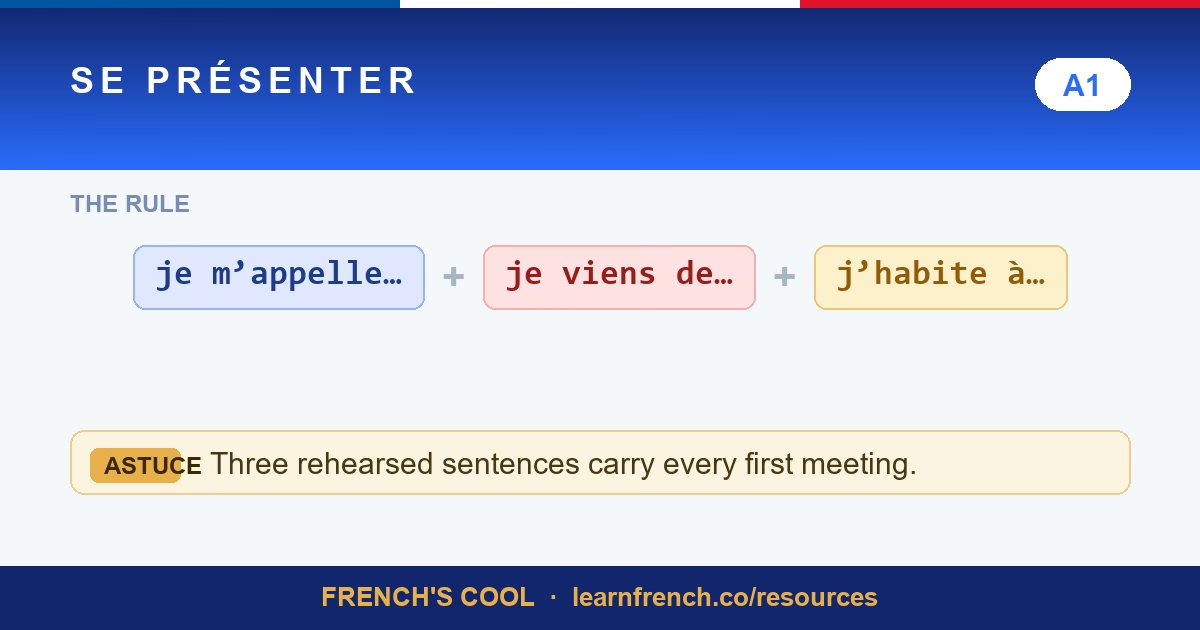
- Je m’appelle… — My name is… (literally ‘I call myself’)
- Je viens de… / Je suis… — I’m from… / I am… (Je suis anglais / américaine / canadien)
- Je travaille dans… / Je suis [job]. — I work in… / I’m a [job]
- J’apprends le français parce que… — I’m learning French because…
Formal vs informal
The structure is the same; only the register shifts. Compare:
- Formal: Bonjour, je m’appelle Sarah. Enchantée. Vous travaillez ici ?
- Informal: Salut, moi c’est Sarah. Et toi, tu fais quoi ?
Enchanté(e) (‘pleased to meet you’) is the polite phrase to learn first — add an extra e in writing if you’re a woman.
Talking about your job
Note that French drops the article: you say Je suis professeur (not ‘a teacher’). A few common ones:
- Je suis ingénieur / médecin / professeur / étudiant(e) / retraité(e).
- Je travaille dans la finance / l’informatique / le marketing / la santé.
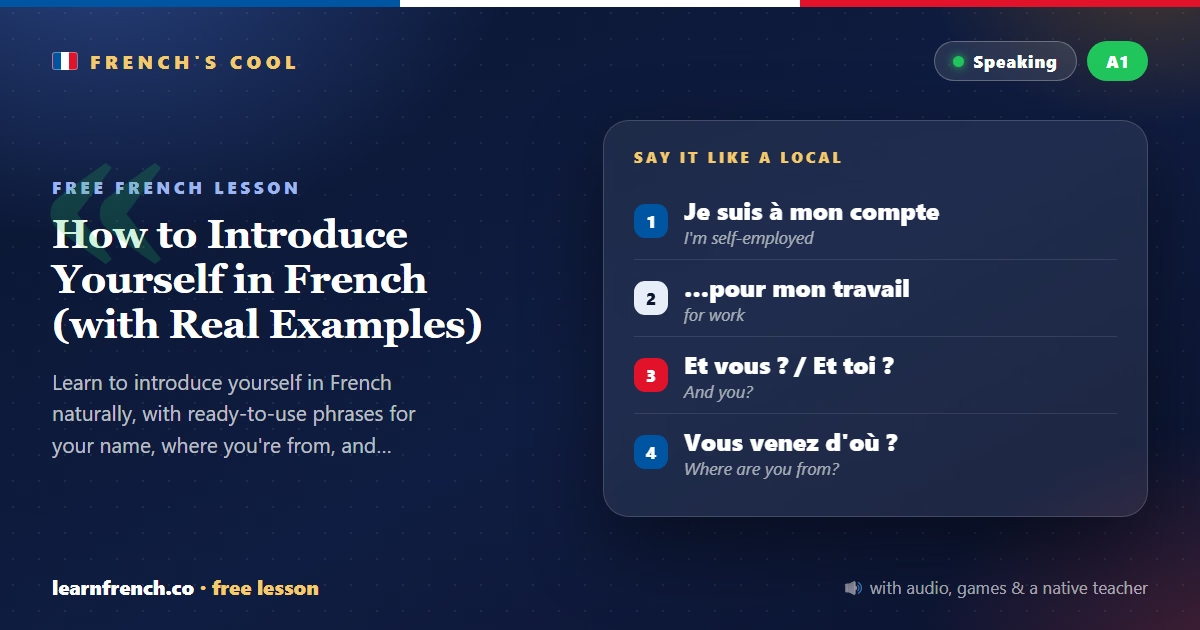
- Je suis à mon compte. — I’m self-employed.
Why you’re learning — this is where you connect
This single line makes you memorable. A few honest options:
- …parce que j’adore la culture française. — because I love French culture.
- …pour mon travail. — for work.
- …parce que je vais déménager en France. — because I’m moving to France.
- …parce que ma famille est française. — because my family is French.
Questions to ask back
A good introduction is a two-way street. Bounce the conversation back:
- Et vous ? / Et toi ? — And you?
- Vous venez d’où ? — Where are you from?
- Qu’est-ce que vous faites dans la vie ? — What do you do?
- Depuis combien de temps apprenez-vous le français ? — How long have you been learning French?
Two cultural notes that matter
- La bise: friends often greet with a light cheek kiss. In a professional setting, a handshake is the safe default — follow the other person’s lead.
- Tu or vous: with someone you’ve just met in a formal context, use vous until invited to switch.
Put it together
Bonjour ! Je m’appelle Tom, je suis canadien et je travaille dans le marketing. J’apprends le français parce que j’adore la culture française — et un jour je voudrais vivre à Lyon. Et vous ?
Practise it with a real teacher
Reading about French is one thing — saying it out loud, with someone who corrects you gently and adapts to your level, is what makes it stick. Your first 20-minute lesson with Xavier is free, with no card and no commitment. Book your free lesson and let’s put this into practice.
✍️ Quick quiz — did it stick?
My name is → je m’___ (reflexive verb)
Show answer
appelle
I come from Canada → je viens ___ Canada. (masculine country)
Show answer
du
I live in Paris → j’___ à Paris. (verb)
Show answer
habite
Play the Quiztap to start · quick practice from this material
Loading the quiz…
The two scripts: formal and informal, side by side
Every introduction in the french language runs one of two scripts, and choosing the right one IS the first impression. The informal version, for peers and social settings: « Salut, moi c’est Léa » — literally “me, it’s Léa”, and it is how native french speakers under fifty actually give their name in french most of the time, far more than the textbook « je m’appelle… ». Follow with basic information: « j’ai 25 ans, je viens de Lyon, je travaille dans le marketing », add a hobby — « j’adore la rando » — and close with « à plus ! » to say goodbye. The formal version, for work and officialdom: « Bonjour, je m’appelle Léa Dupont », vous throughout, « enchantée » (delighted) on the handshake, and « au revoir, bonne journée » as the goodbye. Same basics, different register — and switching between the formal and informal registers correctly is worth more than any advanced vocabulary.
When someone asks about you, the key phrases bounce back with et vous / et toi: « Et vous, qu’est-ce que vous faites ? ». That single reflex — answer, then return the question — is what turns a memorized introductory monologue into real conversations in french. Practise the different ways aloud (flashcards teach recognition; speaking teaches speaking), and the essential phrases here will carry you through any french-speaking country’s small talk. Master these two scripts and you can get to know anyone — which is, after all, the entire point of language learning: build confidence with one stranger at a time, confidently, in their language. Any french course teaches the formal script; the informal one is the gift native speakers notice.
FAQ
How do you introduce yourself in French examples?
Informal: « Salut, moi c’est Marc, j’ai 30 ans, je suis prof. » Formal: « Bonjour, je m’appelle Marc Renaud, je suis enseignant, enchanté. » Both in under ten seconds — French introductions run short.
How do French people actually introduce themselves?
Casually: « moi c’est + first name », often skipping the surname entirely outside work. The full je m’appelle + name + occupation format is for formal contexts, forms and phone calls.
Do the French say “je ne sais quoi”?
Yes, but sparingly and literally — « il a un je-ne-sais-quoi » (an indefinable something). It’s English that turned it into a catchphrase; don’t build an introduction around it.
What are 50 French words with meaning?
For introductions you need far fewer: bonjour, salut, je, m’appelle, moi, c’est, j’ai, ans, je viens de, j’habite à, je travaille, j’adore, enchanté, et toi, et vous, à plus, au revoir. Seventeen words, infinite first meetings — the vocabulary lists above add the rest.
Age, origins and hobbies: rounding out your introduction
After your name, three sentences complete the picture:
- Age: « J’ai 32 ans. » — French uses avoir, never être: literally « I have 32 years ». «
Je suis 32 ans» is the classic beginner mistake. - Where you’re from: « Je viens de Londres » (I come from London) or « Je suis anglais(e) / américain(e) / australien(ne) » — nationality adjectives agree with your gender.
- Hobbies: « J’aime + infinitive »: « J’aime voyager et cuisiner » (I like travelling and cooking). Or the warmer « Je suis passionné(e) de photo » — I’m passionate about photography.
The mistakes that give you away
- «
Je suis 25 ans» → J’ai 25 ans (avoir, not être) - «
Je m’appelle est Paul» → Je m’appelle Paul (no extra « est ») - Introducing yourself with « salut » to an official or older stranger → open with bonjour + vous
- Forgetting to ask back — « Et vous ? / Et toi ? » turns a statement into a conversation
Introducing yourself in French FAQ
« Je suis » or « je m’appelle »?
Both work. « Je m’appelle Xavier » (my name is Xavier) is the standard, slightly fuller version; « Je suis Xavier » (I am Xavier) is fine in relaxed settings or when someone is expecting you. What you cannot do is combine them — no « je m’appelle est ».
Tu or vous when introducing myself?
Default to vous with anyone new who isn’t clearly your peer at an informal event. The other person can offer « on se tutoie ? » — full rules in our tu vs vous guide.
How do French speakers actually do it?
Lightly. In social settings the French rarely deliver a rehearsed paragraph — a « Bonjour, moi c’est Claire » (hi, I’m Claire) with a handshake or bise, then the conversation reveals the rest. Learn the full formula, then relax it.
🧰 Your practice kit
This guide gave you the big picture — now drill the details with these free interactive charts (each with audio examples and exercises):
Prefer a human? Book a free lesson with Xavier →
Keep going: The family part of your introduction gets easier with French family vocabulary.