The French Gerund: En + Participe Présent
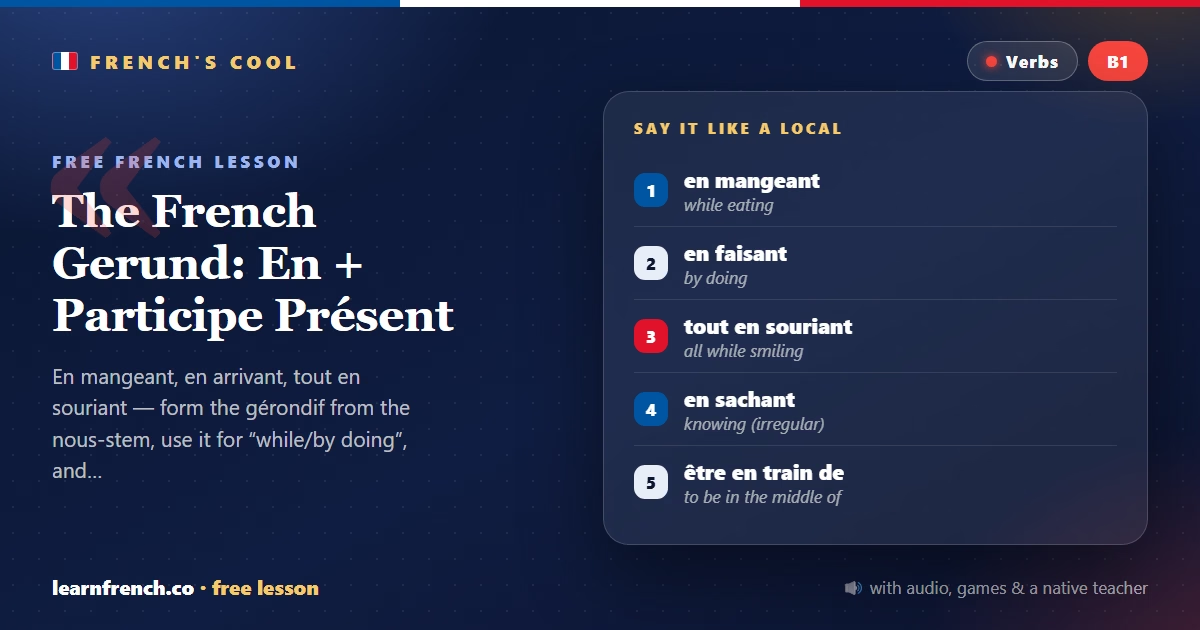
En mangeant, en arrivant, tout en souriant — form the gérondif from the nous-stem, use it for “while/by doing”, and dodge the English -ing traps.
What you'll learn
« J’apprends le français en regardant des films. » One little structure — en + -ant — covers English’s “while doing”, “by doing” and “upon doing”. It’s the most useful B1 upgrade there is.
🏃 en + -ant = while doing, by doing
Take the nous-form, drop -ons, add -ant: nous mangeons → en mangeant. Only three irregular participles exist in the whole language: étant (être), ayant (avoir), sachant (savoir). Everything else is mechanical.
🎬 This lesson in one minute
The quick version — the full lesson is below. More shorts →
Formation: the nous-stem + -ant
- parler → nous parl
ons→ en parlant - finir → nous finiss
ons→ en finissant - faire → nous fais
ons→ en faisant - Three rebels only: être → en étant, avoir → en ayant, savoir → en sachant
Meaning 1: while (simultaneity)
« Je cuisine en écoutant la radio. » — I cook while listening to the radio. Both actions share the same subject — that’s the rule.
Meaning 2: by (method)
« On apprend en faisant. » — You learn by doing. « Il a réussi en travaillant dur. » This is the how-to gerund — recipe and self-help French runs on it.
Meaning 3: tout en — contrast
Add tout for “even while / all the while”: « Elle critique le film tout en le regardant. » — she criticises it even as she watches.
The -ing traps
- English -ing after like/before/without is an INFINITIVE in French: j’aime lire (not en lisant), sans payer, avant de partir.
- “I am eating” is just the present: je mange — or « je suis en train de manger » for emphasis.
Common mistakes to catch early
- « en mangant » → en mangeant — the nous-form keeps its e (nous mangeons), so the gerund keeps it too. Same story with ç: nous commençons → en commençant.
- « en regarder la télé » → en regardant la télé — after en, it’s always the -ant form, never the infinitive.
- « le en regardant » → en le regardant — object pronouns slot between en and the verb, exactly where they’d sit before a conjugated verb.
On the phone: getting to a friend’s place
— Allô ! Je fais comment pour venir chez toi ?
— C’est simple. En sortant du métro, tu prends la première à gauche.
— D’accord. Je te préviens quand ?
— Appelle-moi en arrivant, je descends t’ouvrir.
Two gerunds, zero heavy grammar: en sortant = “when you come out”, en arrivant = “when you get here”. English needs a whole clause each time; French does it in two words. Steal this pattern for every set of directions you ever give.
In real life: gerunds you’ll hear every day
Some gerunds are so common they behave like fixed vocabulary — learn these as single chunks:
- en attendant — meanwhile / in the meantime: « En attendant, bonne soirée ! » A very French way to wrap up a conversation.
- en passant — by the way, in passing: « Je te le dis en passant. »
- en remuant — straight off every recipe card: « Ajouter la farine en remuant. » — add the flour, stirring.
- en traversant — the parent classic: « Fais attention en traversant ! » — careful crossing the road.
The three-second self-check
Before you commit to en + -ant, ask two questions. Same subject for both actions? Could you glue the two ideas with “while” or “by” in English? Two yeses — the gerund is yours. Any no — reach for something else: a clause with quand, or a plain infinitive. It takes three seconds and catches most gerund errors before they leave your mouth.
In real sentences
Read each one aloud, then tap 🔊 and shadow the audio — rhythm first, speed later.
Drill it: past-tense pairing · connectors · the être chart
✍️ Your turn: -ant it
Build it: nous finissons → en ___. (drop -ons)
Show answer
en finissant.
The three irregular participles are…? (être, avoir, savoir)
Show answer
étant, ayant, sachant — the complete list.
What does tout add in « tout en travaillant »? (simultaneity+)
Show answer
Emphasis on doing both at once, often with contrast: il critique tout en profitant du système.
Whose action is it in « je l’ai vu en sortant »? (one-subject rule)
Show answer
The SPEAKER’s — the gérondif always belongs to the sentence’s subject: as I was leaving.
« I like swimming » = j’aime en nageant? (the -ing trap)
Show answer
No — j’aime nager. English -ing after a verb is a French INFINITIVE; the gérondif only means while/by doing.
FAQ
Gérondif or participe présent alone?
With EN = gerund (adverb: how/when). Without EN, the participle works as an adjective/clause and can have its own subject — much rarer. When in doubt, use en.
Can the subjects differ?
No — « en sortant du métro, il a plu » is the classic dangling error (the rain didn’t leave the métro!). Same subject for both verbs, always.
Where do the nous-forms come from?
Straight from the present tense — revise it in the French present tense, and see « être en train de » in the complete tense guide.
What is the difference between en mangeant and mangeant alone?
With en = while/by (adverbial, everyday). Without en it is a written-French participle describing a noun: « les élèves sachant nager… » (pupils who can swim). Speak the first, read the second.
Can I use it for two actions in sequence?
No — the gérondif means SIMULTANEOUS. For sequences use avant de / après avoir: après avoir mangé, on est partis (after eating, we left).
Quick practice
Play the Quiztap to start · quick practice from this material