The French Imperative: Give Orders Without Sounding Rude
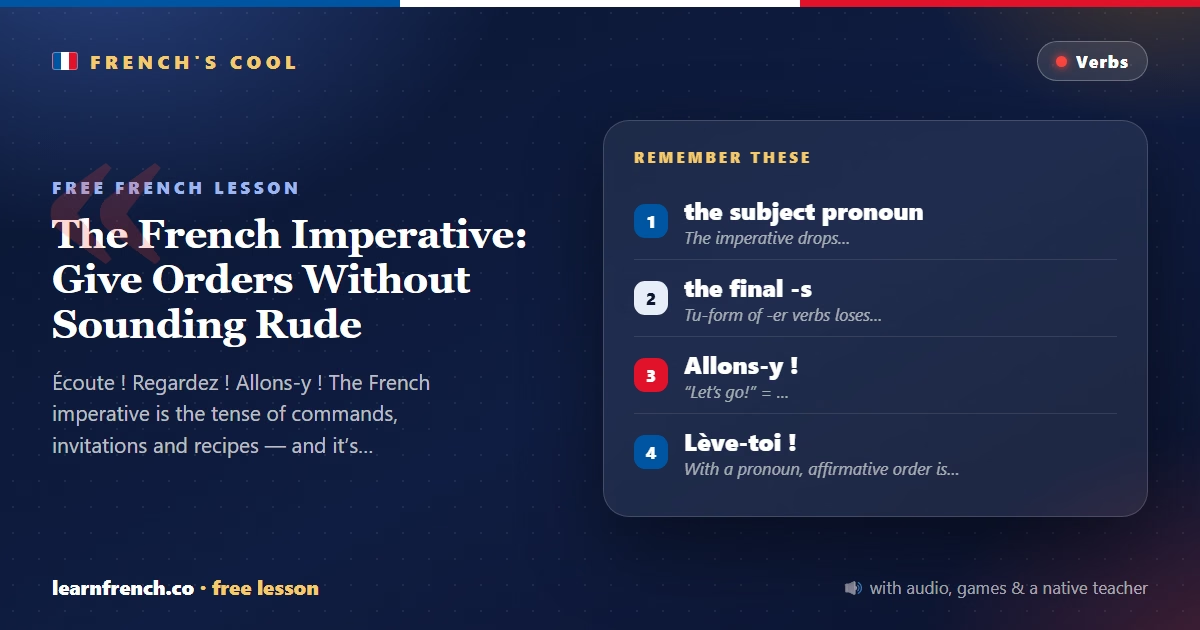
Écoute ! Regardez ! Allons-y ! The French imperative is the tense of commands, invitations and recipes — and it’s refreshingly simple: take the present tense, drop the subject.
What you'll learn
Écoute ! Regardez ! Allons-y ! The French imperative is the tense of commands, invitations and recipes — and it’s refreshingly simple: take the present tense, drop the subject. Then learn two quirks and three polite wrappers.
📢 Three forms, no subject, one dropped s
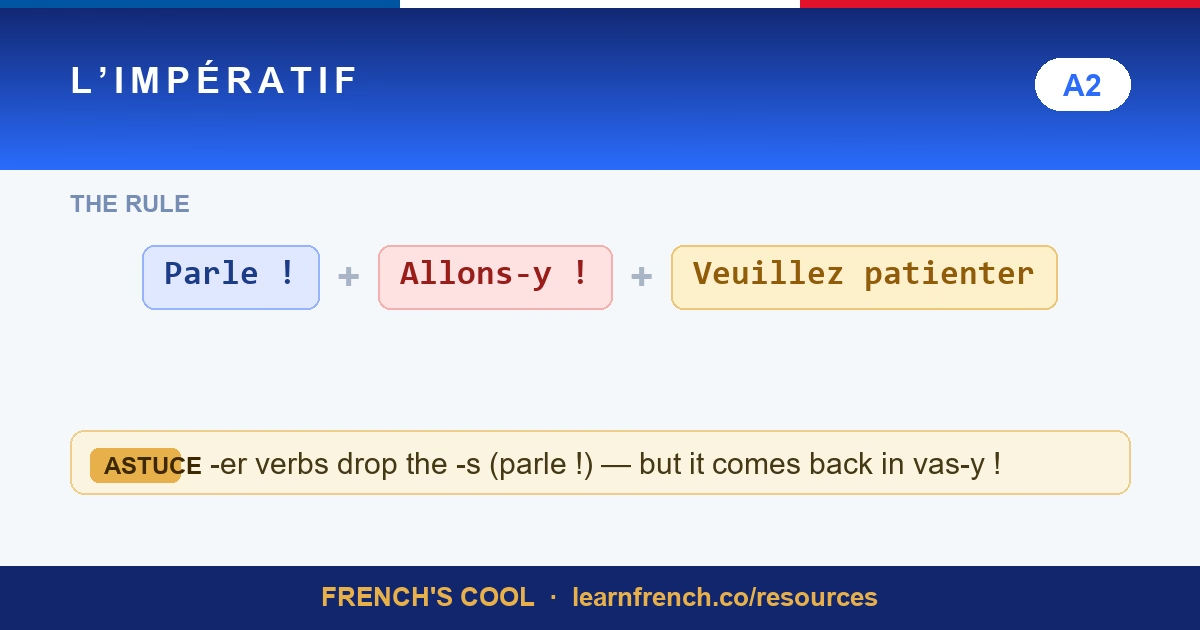
The imperative exists only for tu, nous and vous, with no pronoun in front: Parle ! Parlons ! Parlez ! For -er verbs the tu form drops its s: tu parles → Parle ! — except before y and en: Vas-y ! Parles-en !
🎬 This lesson in one minute
The quick version — the full lesson is below. More shorts →
The three forms
| Person | parler | finir | aller |
|---|---|---|---|
| (tu) | Parle ! | Finis ! | Va ! |
| (nous) | Parlons ! | Finissons ! | Allons ! |
| (vous) | Parlez ! | Finissez ! | Allez ! |
Quirk 1: -er verbs lose the -s in the tu form: tu parles → Parle ! But it comes back before y and en for the sound: Vas-y ! Parles-en !
Quirk 2: four verbs go rogue: être → sois, soyons, soyez; avoir → aie, ayons, ayez; savoir → sache; vouloir → veuillez (the polite-email classic: « Veuillez patienter »).
Where the pronouns go
Affirmative: after the verb with hyphens, moi/toi forms: Donne-le-moi ! Lève-toi ! Negative: back in front, normal forms: Ne me le donne pas. Ne te lève pas. (Reflexive verbs love the imperative — full list in the reflexive verbs guide.)
Making it polite
A bare imperative can sound blunt in French. Soften it: add s’il vous plaît; swap in Veuillez + infinitive (formal writing); or step out of the imperative entirely: Pourriez-vous ouvrir la fenêtre ? beats « Ouvrez la fenêtre » in almost every adult situation.
In real sentences
Read each one aloud, then tap 🔊 and shadow the audio — rhythm first, speed later.
Drill it: object pronouns · the être chart · apologising in French
✍️ Your turn: command it
Tell a friend to speak: ___ ! (drop the s)
Show answer
Parle ! — the -er tu form loses its s in the imperative.
« Go there! » = ? (the exception)
Show answer
Vas-y ! — the s returns before y for the liaison.
« Give it to me » vs « don’t give it to me » = ? (pronoun flip)
Show answer
Donne-le-moi ! / Ne me le donne pas ! — pronouns follow in the affirmative, precede in the negative.
The imperative of être (tu) = ? (irregular)
Show answer
Sois — sois, soyons, soyez (from the subjunctive stem).
Soften « envoyez le document » for a formal email. (one magic verb)
Show answer
Veuillez envoyer le document — veuillez + infinitive is the polite imperative of business French.
FAQ
Why does « va » become « vas-y »?
Pure euphony — French hates the vowel clash « va y ». The s returns to glue the sounds: vas-y [vazi]. Same with parles-en.
Is there an imperative for « ils »?
No — you can only command people you’re talking to (tu, vous) or include yourself (nous = “let’s…”). For third parties, French uses que + subjunctive: Qu’ils attendent !
What is « Veuillez »?
The formal imperative of vouloir — literally “be willing to”. It fronts every polite French email: Veuillez trouver ci-joint… (Please find attached…).
Conjugation drills on the imperative chart, and the courtesy toolkit — greetings, please, sorry — on the politeness chart and in how to apologize.
How do I keep imperatives from sounding rude?
Add the padding the French add: s’il te plaît / s’il vous plaît, je vous en prie, donc (assieds-toi donc). Or step around it entirely with tu peux…? / pourriez-vous…? — softer than any bare imperative.
What happens with reflexive verbs?
The pronoun follows in the affirmative and becomes toi: lève-toi, dépêche-toi. In the negative it moves back in front: ne te lève pas, ne t’inquiète pas.
Quick practice
Play the Quiztap to start · quick practice from this material