French Si Clauses: If-Sentences in Three Patterns
« If I had known… » French builds every if-sentence from just three patterns — and one golden rule that instantly removes the most common mistake.
What you'll learn
« If I had known… » French builds every if-sentence from just three patterns — and one golden rule that instantly removes the most common mistake. Here are the si clauses, sorted from everyday to regretful.
🪜 Three ladders, and si never takes the future
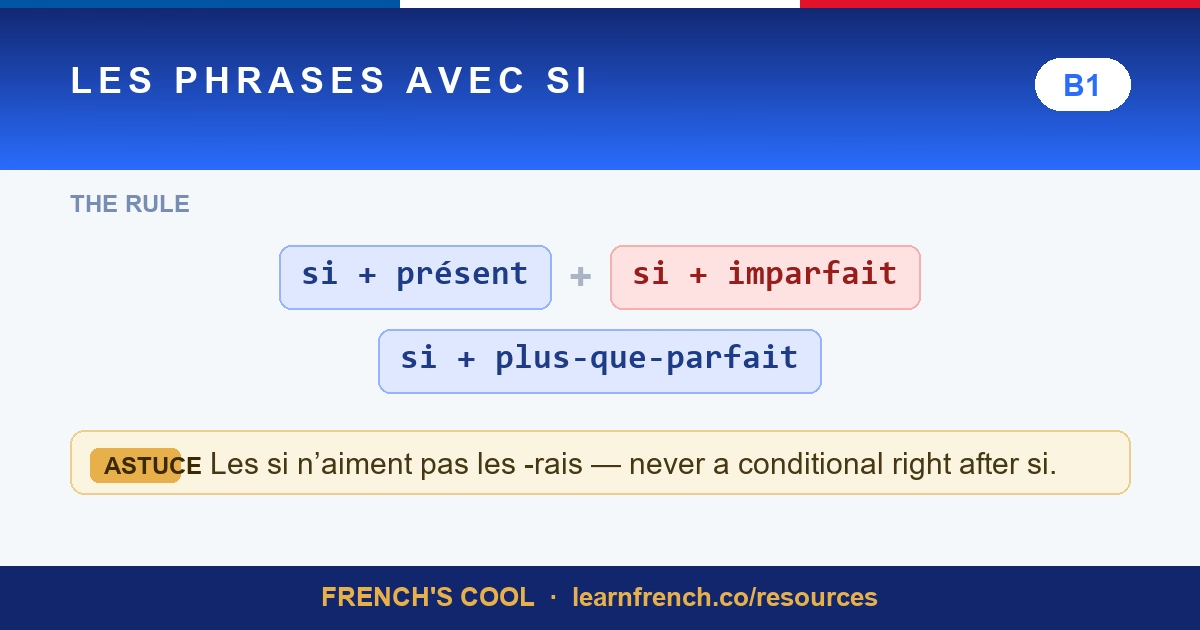
Likely: si + présent → futur (s’il pleut, on restera). Imagined: si + imparfait → conditionnel (si j’avais…, je ferais). Regret: si + plus-que-parfait → conditionnel passé (si j’avais su, je serais venu). The si-half never holds a future or a conditional.
🎬 This lesson in one minute
The quick version — the full lesson is below. More shorts →
The three patterns
| Pattern | Meaning | Example |
|---|---|---|
| si + présent → présent/futur/impératif | real possibility | Si tu veux, on y va. / S’il pleut, je resterai. |
| si + imparfait → conditionnel | hypothetical now | Si j’avais le temps, je voyagerais. |
| si + plus-que-parfait → conditionnel passé | regret about the past | Si j’avais su, je ne serais pas venu. |
The golden rule
French children learn it as a rhyme: « Les si n’aiment pas les -rais » — si never sits next to a future or conditional. English says “if I WOULD have known”; French forbids it: the conditional lives in the OTHER half of the sentence. Si + imparfait, conditional after the comma. Every time.
Two bonus uses of si
- Suggestions: Si on + imparfait = “how about…”: Si on allait au cinéma ? (Shall we go to the movies?)
- The other si: answering a NEGATIVE question with yes: « Tu ne viens pas ? » — « Si ! » (Yes I am!). Oui can’t do this job.
Small spelling note
Si elides only before il(s): s’il pleut, s’ils veulent — but si elle, si on, si Anne. Writing « si il » is the typo French teachers circle in red.
In real sentences
Read each one aloud, then tap 🔊 and shadow the audio — rhythm first, speed later.
Drill it: the conditional · the plus-que-parfait · imparfait vs passé composé
✍️ Your turn: climb the ladder
Si j’ai le temps, je ___ (venir). (ladder 1)
Show answer
viendrai — si + présent pairs with the futur.
Si tu ___ (être) moi, qu’est-ce que tu ferais ? (ladder 2)
Show answer
étais — the imagined ladder wants the imparfait after si.
Why is « si je serais riche » wrong? (the classic error)
Show answer
The conditional never enters the si-half: si j’étais riche, je serais… — the conditional lives in the OTHER half.
What does bare « si on allait au ciné ? » do? (no second half)
Show answer
Makes a suggestion — si + imparfait alone = « how about…? ». Pure spoken French.
Does si elide before elle? (spelling detail)
Show answer
No — only before il/ils: s’il pleut, but si elle vient. Never s’elle.
FAQ
Can si + présent be followed by the future?
Yes — the future goes in the RESULT half: S’il fait beau demain, on ira à la plage. What’s banned is future/conditional directly after si.
What tense is « si j’avais su »?
Plus-que-parfait (had known) — pattern 3, the regret machine. Pair it with the conditionnel passé: je ne serais pas venu. The past tenses are unpacked in the past tenses guide.
Is « si j’aurais » ever right?
Never in standard French — it’s the classic error even natives joke about. Si j’avais, je donnerais. Let the rhyme protect you: les si n’aiment pas les -rais.
Drill the result half on the conditional chart and conditionnel passé chart; the full tense system is in the verb tenses guide.
What about si meaning « whether »?
Different animal, no ladder: je ne sais pas si elle viendra is indirect speech, and there the future is perfectly fine. The ladder rules apply only to true condition→result sentences.
Can the ladders mix?
Yes, when the times differ: si j’avais étudié (back then), je parlerais français aujourd’hui (now) — past condition, present result. Build the two halves on their own timelines and the grammar follows.
Quick practice
Play the Quiztap to start · quick practice from this material
Keep going: The two tenses doing the heavy lifting here each have their own lesson: the conditional and the plus-que-parfait.