Il y a: The Most Useful Three Words in French
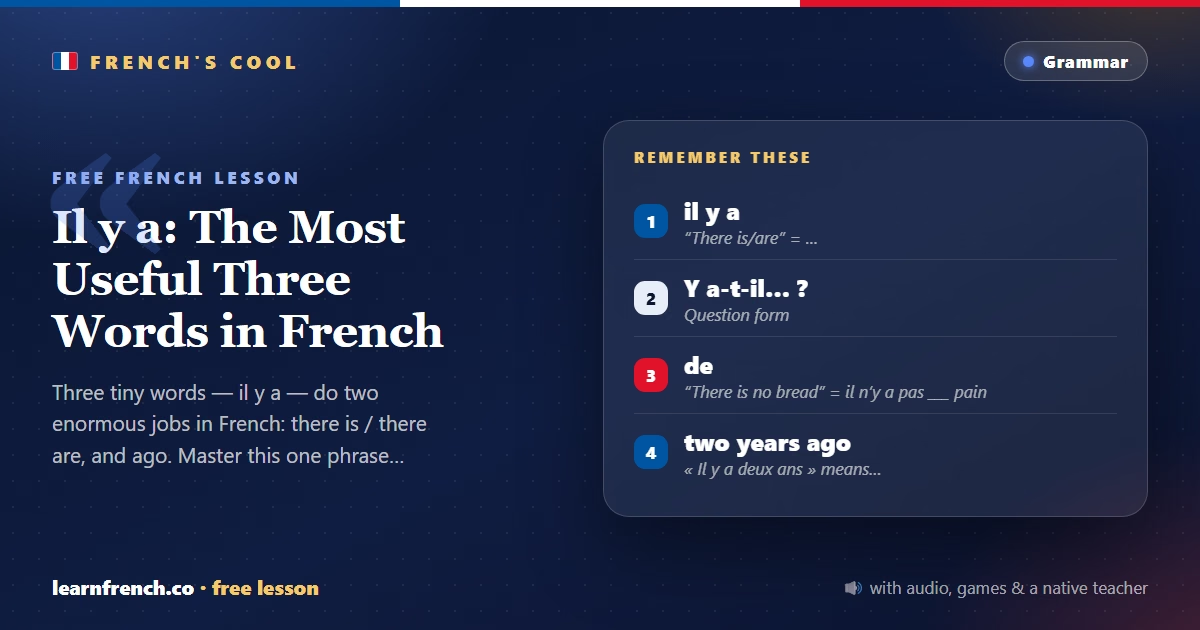
Three tiny words — il y a — do two enormous jobs in French: there is / there are, and ago. Master this one phrase and you can describe any scene and place any event in time. Here’s everything it does.
What you'll learn
Three tiny words — il y a — do two enormous jobs in French: there is / there are, and ago. Master this one phrase and you can describe any scene and place any event in time. Here’s everything it does.
🧱 One frozen block, two jobs
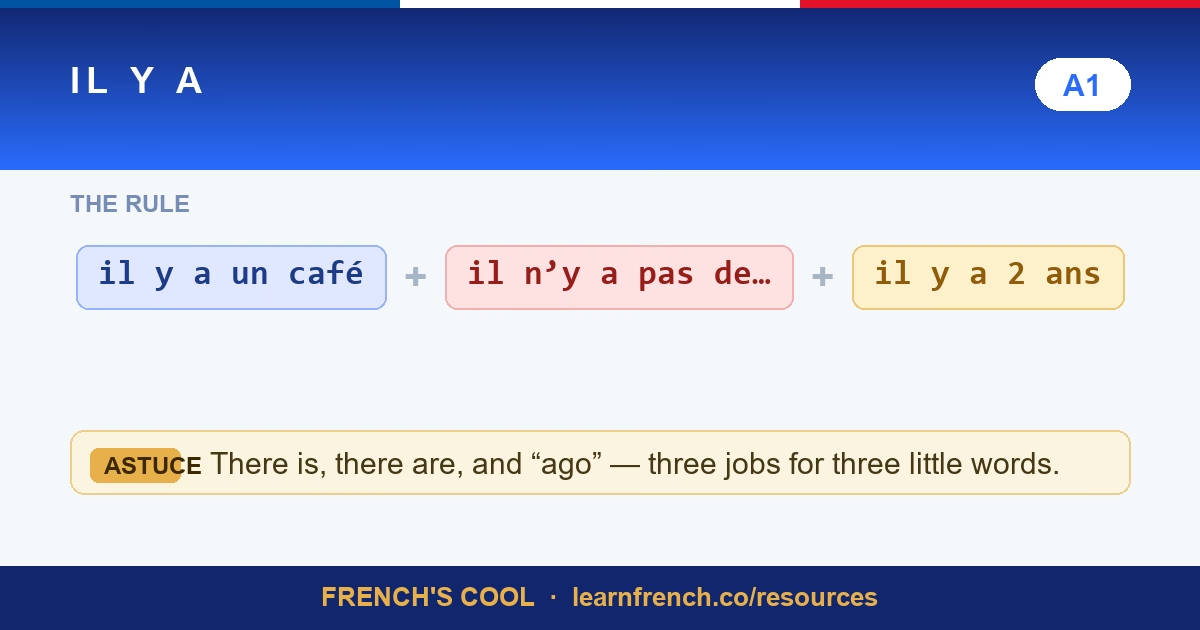
Il y a never changes for number — il y a un chat, il y a des chats (there is / there are). Its second job: time-distance — il y a deux ans = two years AGO. Learn it as one welded block; the il never refers to anyone.
🎬 This lesson in one minute
The quick version — the full lesson is below. More shorts →
Job 1: there is / there are
Unlike English, French uses ONE form for singular and plural:
- « Il y a un problème. » — There is a problem.
- « Il y a des croissants. » — There are croissants.
- « Il y a beaucoup de monde. » — There are a lot of people.
Questions: « Est-ce qu’il y a une pharmacie près d’ici ? » (Is there a pharmacy nearby?) or the elegant inversion « Y a-t-il… ? ». Negative: « Il n’y a pas de wifi » — note des/un/une become de after the negative.
Job 2: ago
Put il y a before a length of time and it means ago:
- « Je suis arrivé il y a deux ans. » — I arrived two years ago.
- « Elle a appelé il y a cinq minutes. » — She called five minutes ago.
Pair it with the passé composé and you can place any story in time.
How the French actually say it
In fast speech, « il y a » shrinks to « y a » (ya): « Y a un problème », « Y a pas de souci » (no worries!). You’ll hear it constantly in real conversation and in our video lessons. Recognise it, and use the full form until the short one feels natural.
Il y a through the tenses
The il y never changes — only the avoir inside conjugates:
| Tense | Form | Example |
|---|---|---|
| Present | il y a | Il y a un problème. |
| Imparfait | il y avait | Il y avait beaucoup de monde. (there were) |
| Passé composé | il y a eu | Il y a eu un accident. (there was, one-off) |
| Futur | il y aura | Il y aura du soleil demain. (there will be) |
| Conditionnel | il y aurait | Il y aurait une solution ? (might there be?) |
Choose il y avait vs il y a eu exactly like imparfait vs passé composé: background vs event.
In real sentences
Read each one aloud, then tap 🔊 and shadow the audio — rhythm first, speed later.
Drill it: en vs y · voici & voilà · past tenses
✍️ Your turn: build with the block
« There are three cats » = ? (frozen block)
Show answer
Il y a trois chats — the block never becomes ils y ont.
Negate: « il y a du lait ». (de after pas)
Show answer
Il n’y a pas DE lait — du/de la/des all collapse to de after the negative.
« I moved here five years ago » = ? (job two)
Show answer
J’ai déménagé ici il y a cinq ans — il y a + duration, at the END of the sentence.
Past and future of il y a? (conjugate the a)
Show answer
Il y avait (there was/were), il y aura (there will be) — only avoir moves; il y stays.
What does « il y en a marre »… sorry, « il y en a » mean? (with en)
Show answer
There are some / some of them: des questions ? Oui, il y en a. (And y’en a marre = people are fed up — street version.)
FAQ
What does il y a literally mean?
Word for word: « it there has » — il (it) + y (there) + a (has, from avoir). Nonsense literally, which is why you learn it as one chunk meaning « there is/are ».
How do I say « there was » and « there will be »?
Conjugate the avoir inside it: il y avait (there was/were), il y a eu (there was, completed), il y aura (there will be). The il y never changes — only the avoir does.
What is the difference between il y a and voilà?
Il y a states that something exists; voilà points at it. « Il y a un taxi » = a taxi exists nearby. « Voilà le taxi ! » = here’s the taxi, look!
Practise with the games on the grammar library, and hear « il y a des francophones » in Xavier’s 30-second clip.
Why do I hear « y a » instead of il y a?
Spoken French drops the il: y a un problème, y a pas de souci. Universal in conversation, absent from writing. Understand it everywhere; produce it once your French is comfortable.
Il y a vs voilà vs c’est — quick rule?
Il y a states that something exists (il y a un café); voilà points and hands over (voilà le café); c’est identifies (c’est un bon café). Existence, gesture, identity — three different sentences.
Quick practice
Play the Quiztap to start · quick practice from this material
Keep going: Once you can say something exists, say WHERE it is: prepositions of place.