French Weather Expressions: Quel Temps Fait-il?
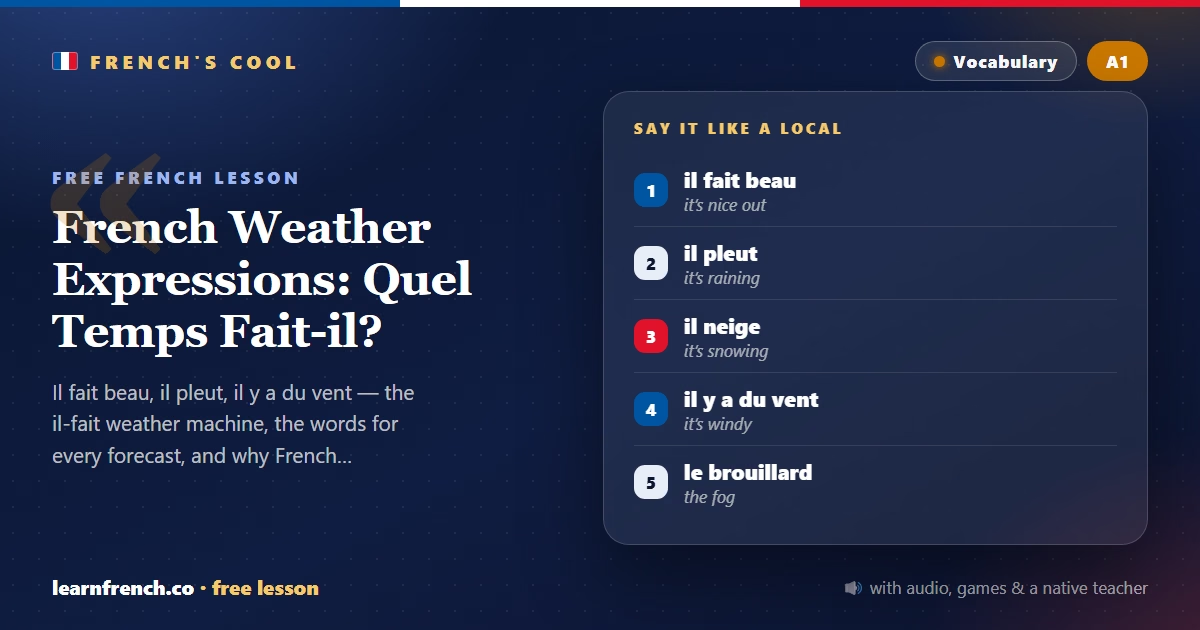
Il fait beau, il pleut, il y a du vent — the il-fait weather machine, the words for every forecast, and why French weather runs on the verb faire.
What you'll learn
Weather is the world’s default small talk, and French does it with one strange, wonderful rule: the weather makes. « Il fait beau » — it makes nice. Learn the machine once and every forecast follows.
🎬 This lesson in one minute
The quick version — the full lesson is below. More shorts →
The il-fait machine
- Il fait beau. — It’s nice out.
- Il fait mauvais. — The weather’s bad.
- Il fait chaud / froid. — It’s hot / cold.
- Il fait vingt degrés. — It’s 20 degrees.
- Il fait gris. — It’s grey (a very French forecast).
Verbs of their own: rain and snow
Two stars refuse the machine and conjugate themselves: « Il pleut » (it’s raining — pleuvoir) and « Il neige » (it’s snowing — neiger). Past: il a plu, il a neigé.
Il y a + noun
- Il y a du soleil. — It’s sunny.
- Il y a du vent. — It’s windy.
- Il y a des nuages. — It’s cloudy.
- Il y a du brouillard. — It’s foggy.
- Il y a un orage. — There’s a storm.
Asking and reacting
« Quel temps fait-il ? » (What’s the weather like?) — note it’s temps, the same word as “time”. React like a local: « Quelle chaleur ! » (what heat!), « Il fait un froid de canard ! » (duck-cold — freezing!), « Il pleut des cordes. » (raining ropes — pouring).
Common mistakes: quick repairs
Four classic learner sentences, fixed in one move each.
- « Il fait pluie » → « Il pleut ». Rain refuses the machine, remember — it drives itself.
- « Il pleure » → « Il pleut ». Near-twins: pleuvoir is rain, pleurer is crying. Announce weather, not tears.
- « Il est chaud » → « Il fait chaud ». Worse than wrong: il est chaud describes a person, and in slang it means keen — a very different forecast.
- « Une orage » → « Un orage ». Storm is masculine; the vowel hides the article, so learners guess. Don’t guess — memorise it and move on.
Tomorrow’s weather: slide in va
Real small talk lives in the forecast. Keep the same machine and change one gear: put va before the infinitive.
- Il va pleuvoir. — It’s going to rain.
- Il va faire beau demain. — It’s going to be nice tomorrow.
- Il va neiger ce week-end. — It’s going to snow this weekend.
- On annonce de la pluie pour demain. — Rain is forecast for tomorrow.
That pattern is plain futur proche — the weather simply borrows it. The forecast itself is la météo: « Tu as vu la météo ? » opens half the conversations in France.
At the bus stop: a real exchange
— Il fait un froid de canard ce matin !
— Ah oui. Et il va neiger cet après-midi, apparemment.
— Encore ? Il a déjà neigé lundi…
— C’est l’hiver. Moi, j’ai froid depuis novembre.
Notice the moves: an exclamation to open, apparemment (apparently) to pass on a forecast without owning it, and a shrugging « C’est l’hiver » to close. That’s a complete French conversation — no names exchanged, none needed.
Temperatures, seasons and the forecast: the rest of the toolkit
To talk about temperatures in French, keep the verb “faire”: « il fait 25 degrés » — and yes, the French use celsius, so recalibrate your instincts (25° is a lovely day, not a cold one). Add the adverb très for emphasis — « il fait très chaud » — and moins for negatives: « il fait moins cinq » (minus five). These key French weather expressions work for every number you know, which makes this lesson a sneaky way to boost your vocabulary and revise numbers at the same time.
A few more common phrases that round out your French vocabulary for the forecast: « le ciel est couvert » (overcast), « il y a des éclaircies » (sunny spells), « quel temps fait-il ? » (what’s the weather like?). Notice le temps means both “weather” and “time” — French and English split that word differently, one of those English words vs French words traps. La météo is the forecast itself.
Why does this phrase family matter so much? Weather small talk is French culture’s universal opener — the boulangerie, the bus stop, the elevator. Master this grammar pattern (impersonal il + faire), learn a dozen French weather terms, and you can open a conversation anywhere in France. It is beginner material with intermediate payoff, and one of the first things any free French lesson should teach. Use the audio buttons in the examples above — hearing French audio while you read is the fastest way to improve your French ear as you learn French online.
FAQ
How do you say different types of weather in French?
The pattern « il fait + adjective » covers most: il fait beau, mauvais, chaud, froid, frais, doux. Rain and snow use their own French verb each: il pleut, il neige — see the conjugation notes above.
What are the 4 weathers in French?
If you mean the four classics: le soleil (sun), la pluie (rain), le vent (wind), la neige (snow). If you mean seasons: le printemps, l’été, l’automne, l’hiver.
How do you say the word weather in French?
« Le temps » — « Quel temps fait-il ? » is “What’s the weather like?”. The forecast is « la météo ».
What are the six weather words?
Learn these six first: le soleil, la pluie, le vent, la neige, les nuages (clouds), l’orage (storm). With « il fait » and « il y a », those six describe the weather almost every day of the year.
Why « il fait froid » and not « c’est froid »?
Weather is impersonal il + faire — a fixed machine. C’est froid describes an object (the soup), not the sky.
How do I say “I’m cold”?
J’AI froid — with avoir, never être. The body runs on avoir: avoir expressions.
Temps means both “time” and “weather”?
Yes — context decides, and the three French time-words untangle in temps vs fois vs heure.
Quick practice
Play the Quiztap to start · quick practice from this material
📊 Chart it: Pair the forecast with the calendar: months & seasons vocabulary.