Quel vs Qu’est-ce que: How to Ask “What” in French
English has one « what »; French splits it in two — and picking the wrong one is instantly noticeable.
What you'll learn
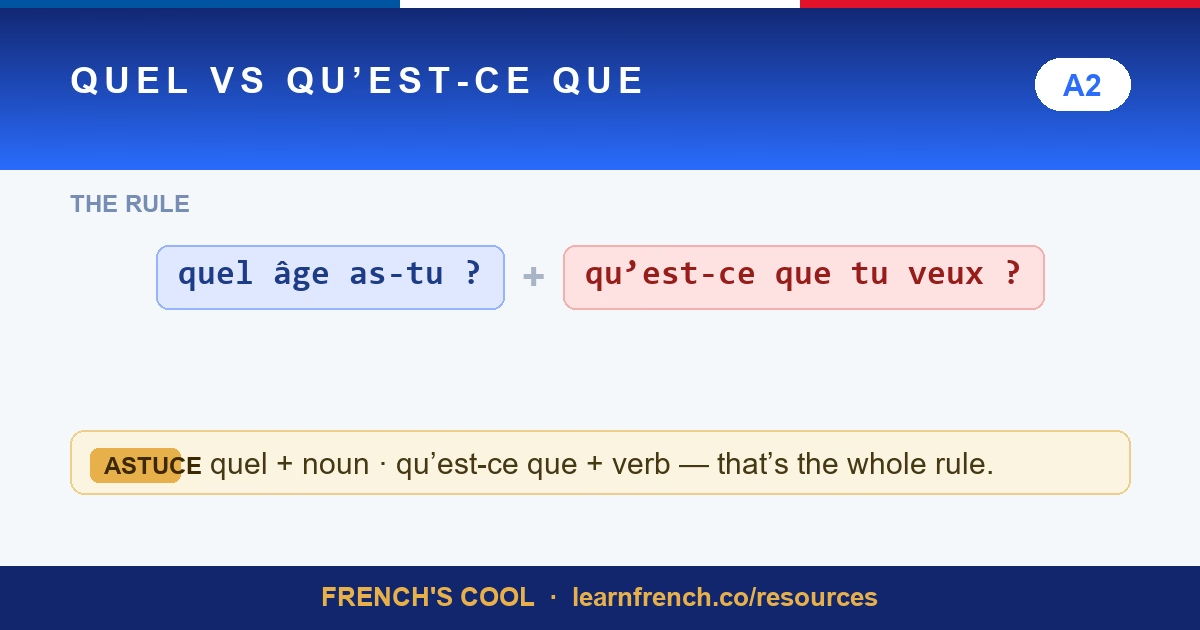
English has one « what »; French splits it in two — and picking the wrong one is instantly noticeable. The rule is beautifully simple once you see it: quel goes with a noun, qu’est-ce que goes with a verb.
❓ Noun or clause — that is the whole choice
Quel (quelle, quels, quelles) sits before a NOUN and agrees with it: quelle heure, quels livres. Qu’est-ce que starts a full CLAUSE with its own subject and verb: qu’est-ce que tu veux ? If a noun follows directly, it must be quel.
🎬 This lesson in one minute
The quick version — the full lesson is below. More shorts →
Quel + noun
Quel is an adjective, so it needs a noun (and agrees with it):
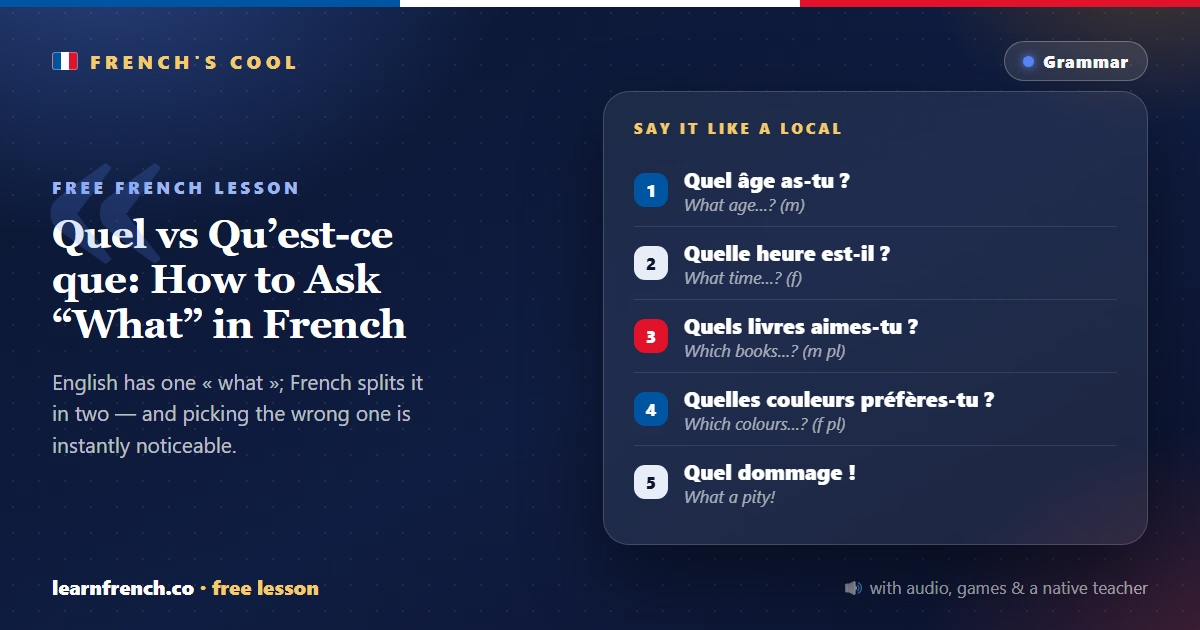
- Quel âge as-tu ? — What age…? (m)
- Quelle heure est-il ? — What time…? (f)
- Quels livres aimes-tu ? — Which books…? (m pl)
- Quelles couleurs préfères-tu ? — Which colours…? (f pl)
Four spellings, one sound — the agreement is silent, which is why writing it right matters.
Qu’est-ce que + verb
When « what » is the OBJECT of a verb, use qu’est-ce que: « Qu’est-ce que tu manges ? » (What are you eating?). Its formal twin is inversion with que: « Que manges-tu ? ». And when « what » is the SUBJECT: qu’est-ce qui — « Qu’est-ce qui se passe ? » (What’s happening?).
The cheat table
| You want | Use | Example |
|---|---|---|
| what/which + noun | quel(le)(s) | Quelle est ton adresse ? |
| what + verb (object) | qu’est-ce que | Qu’est-ce que tu veux ? |
| what + verb (subject) | qu’est-ce qui | Qu’est-ce qui ne va pas ? |
| what?! (reaction) | quoi | Quoi ?! |
Quel the exclaimer
Quel moonlights as “what a…!” — no verb needed:
- Quel dommage ! — What a pity!
- Quelle bonne idée ! — What a good idea!
- Quel beau temps ! — What lovely weather!
- Quelle horreur ! — How awful!
Same agreement as the question use (quel/quelle/quels/quelles). Two chunks to memorise today: Quel dommage ! and Quelle bonne idée ! — instant conversational colour.
Lequel: quel’s pronoun cousin
When the noun is already known, quel drops it and becomes lequel (which one): « Il y a deux menus. Lequel tu préfères ? ». It agrees the same way — laquelle, lesquels, lesquelles — and fuses with à and de: auquel, duquel.
Quel with prepositions: the everyday combos
- À quelle heure … ? — At what time…?
- De quel pays viens-tu ? — What country are you from?
- Dans quelle rue … ? — On what street…?
- Pour quelle raison … ? — For what reason…?
The preposition rides in front — French never strands it at the end like English (« What are you from? » is impossible). Drill the full question toolkit in asking questions in French.
In real sentences
Read each one aloud, then tap 🔊 and shadow the audio — rhythm first, speed later.
Drill it: French small talk · c’est vs il est · the pronoun on
✍️ Your turn: quel or qu’est-ce que?
« ___ heure est-il ? » (noun follows)
Show answer
Quelle — heure is a feminine noun, so quel agrees: quelle.
« What are you doing? » = ? (clause follows)
Show answer
Qu’est-ce que tu fais ?
Qu’est-ce QUI vs qu’est-ce QUE — what decides? (subject or object)
Show answer
qui when the « what » is the SUBJECT (qu’est-ce qui se passe ?); que when it is the OBJECT (qu’est-ce que tu vois ?).
Turn it into an exclamation: « what a view! » (no verb needed)
Show answer
Quelle vue !
The informal version of « qu’est-ce que tu fais ? » (word order)
Show answer
Tu fais quoi ? — quoi lands after the verb in casual speech.
FAQ
Why is it « Quelle est ton adresse » and not « Qu’est-ce que ton adresse »?
Because « what » links to the NOUN adresse through être. With être + noun, French wants quel: Quelle est la question ? Quel est le problème ?
Is « quoi » rude?
As a reaction alone (« Quoi ?! ») it’s informal, like « What?! ». In casual speech you’ll also hear « Tu fais quoi ? » — relaxed but fine among friends.
Where do I practise question words?
All of them — qui, que, où, quand, pourquoi, comment — live on the question words chart with audio, and the full method is in asking questions in French.
Do I have to use est-ce que at all?
No — French has three registers for every question: Tu fais quoi ? (casual) / Qu’est-ce que tu fais ? (neutral, always safe) / Que fais-tu ? (formal inversion). The est-ce que version is the one that is never wrong.
Someone said « quoi ? » is rude — true?
As « what did you say? », yes, it is the French « huh? ». Use « comment ? » or « pardon ? » with anyone you vouvoie. Quoi is fine inside sentences (tu fais quoi ?) — just not alone at strangers.
Quick practice
Play the Quiztap to start · quick practice from this material