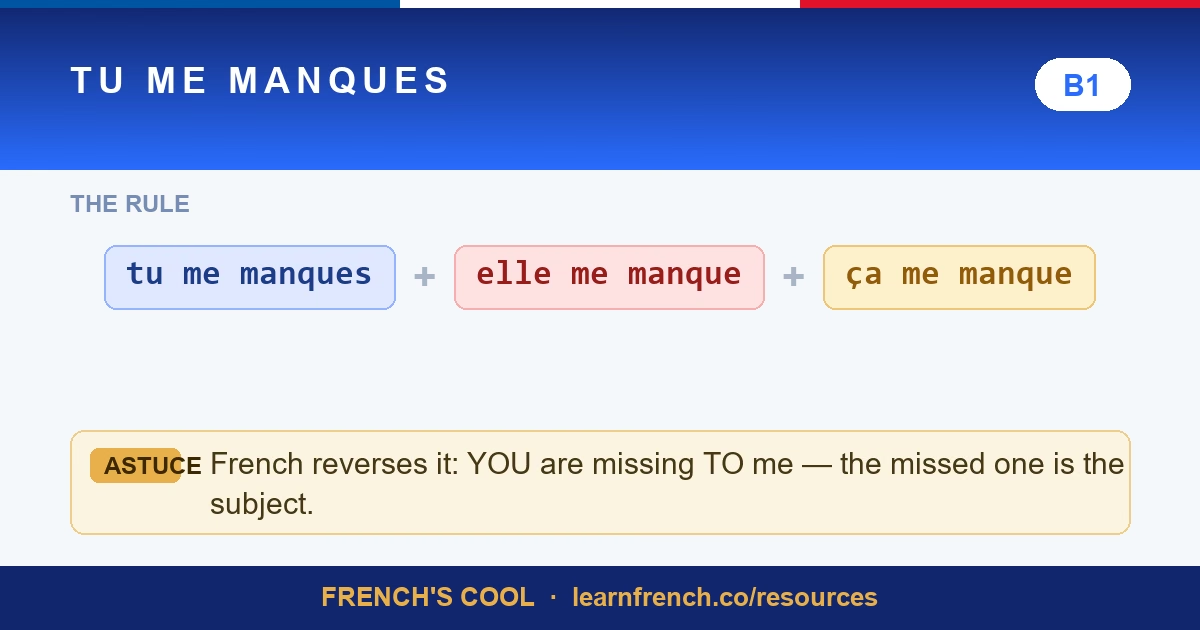
Tu Me Manques: Why French Reverses “I Miss You”
« I miss you » in French is « tu me manques » — literally “you are missing from me.” The person you miss is the SUBJECT, and you are the object.
What you'll learn
« I miss you » in French is « tu me manques » — literally “you are missing from me.” The person you miss is the SUBJECT, and you are the object. It’s the single most famous reversal in French, and once it clicks, it’s actually beautiful.
🔁 Flip the arrow
In French the person you miss is the subject, and you are the indirect object: Tu me manques = you are-missing to-me. Point the arrow FROM the missed person TO the misser and the pronouns place themselves.
🎬 This lesson in one minute
The quick version — the full lesson is below. More shorts →
Rewire the direction
Think of manquer à as “to be missing from”:
- Tu me manques. — You are-missing from-me. = I miss you.
- Je te manque ? — Am I missing from you? = Do you miss me?
- Elle nous manque. — We miss her.
- Paris me manque. — I miss Paris.
- Mes amis me manquent. — I miss my friends. (plural subject → plural verb!)
The golden check: the verb agrees with the missed thing, not with you — « mes amis me manquent ».
The other manquers
Manquer moonlights with different constructions:
- manquer + noun = to miss (a train, a class): « J’ai manqué le bus. » — no reversal here!
- manquer de = to lack: « Il manque de patience. » — he lacks patience.
- il manque… = something’s missing: « Il manque une chaise. » — there’s a chair missing.
- manquer de + infinitive = to nearly do: « J’ai manqué de tomber ! » — I nearly fell.
Only the emotional “missing someone” flips its direction — the others behave like English.
In real sentences
Read each one aloud, then tap 🔊 and shadow the audio — rhythm first, speed later.
Drill it: object pronouns · the pronoun on · all verb charts
✍️ Your turn: who misses whom?
« I miss him » = ? (flip it)
Show answer
Il me manque.
« She misses us » = ? (we are missing to her)
Show answer
Nous lui manquons.
« I missed you » in the passé composé = ? (être or avoir?)
Show answer
Tu m’as manqué (avoir — and no, not « je t’ai manqué », that means YOU missed ME).
What does « j’ai manqué le bus » mean? (no emotion here)
Show answer
I missed the bus — manquer + direct object = fail to catch.
« Il manque de patience » = ? (manquer de)
Show answer
He lacks patience.
FAQ
How do I say « I miss you » to a group?
« Vous me manquez » — you (plural) are missing from me. And « I miss you all a lot »: « vous me manquez beaucoup ».
Why not « je te manque » for I miss you?
Because that means the opposite — YOU miss ME. Getting this backwards accidentally declares that they miss you… confident, but wrong. Anchor the correct version as a chunk: TU ME MANQUES.
Does plaire work the same way?
Yes! « Ce film me plaît » — the film pleases me = I like it. French has a small family of these reversed verbs: manquer, plaire, and arguably falloir. Meet plaire on its verb page.
How do I say I miss doing something?
Use ça me manque de + infinitive: « Ça me manque de jouer au foot » (I miss playing football). The activity becomes the thing that is missing to you — same reversed logic.
Is there a simpler way out if I keep getting it wrong?
In casual speech you can lean on « ça me manque » (I miss that/it) while the reflex builds. But learn the reversal — it also runs plaire (« ce film me plaît ») and rester, so it pays three times.
Quick practice
Play the Quiztap to start · quick practice from this material