French for Job Interviews: Phrases and Strategy
How to introduce your parcours, talk strengths, ask sharp questions and hold the right register in a French interview.
What you'll learn
A job interview in French is as much about register and structure as vocabulary. French recruiters expect a clear, confident parcours (career story) and the polite formality of vous throughout. Here’s how to prepare and the phrases to lean on.
🎬 This lesson in one minute
The quick version — the full lesson is below. More shorts →
Presenting your background (le parcours)
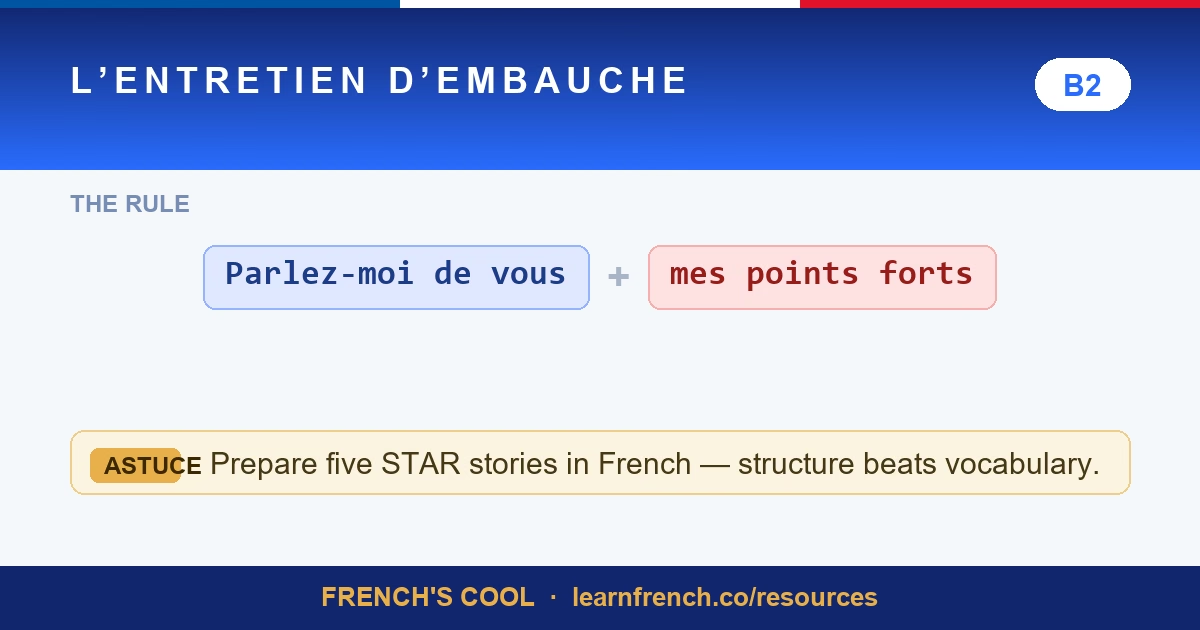
French interviews often open with Parlez-moi de vous (tell me about yourself) or Présentez-moi votre parcours. Structure your answer: studies, then experience, then why this role.
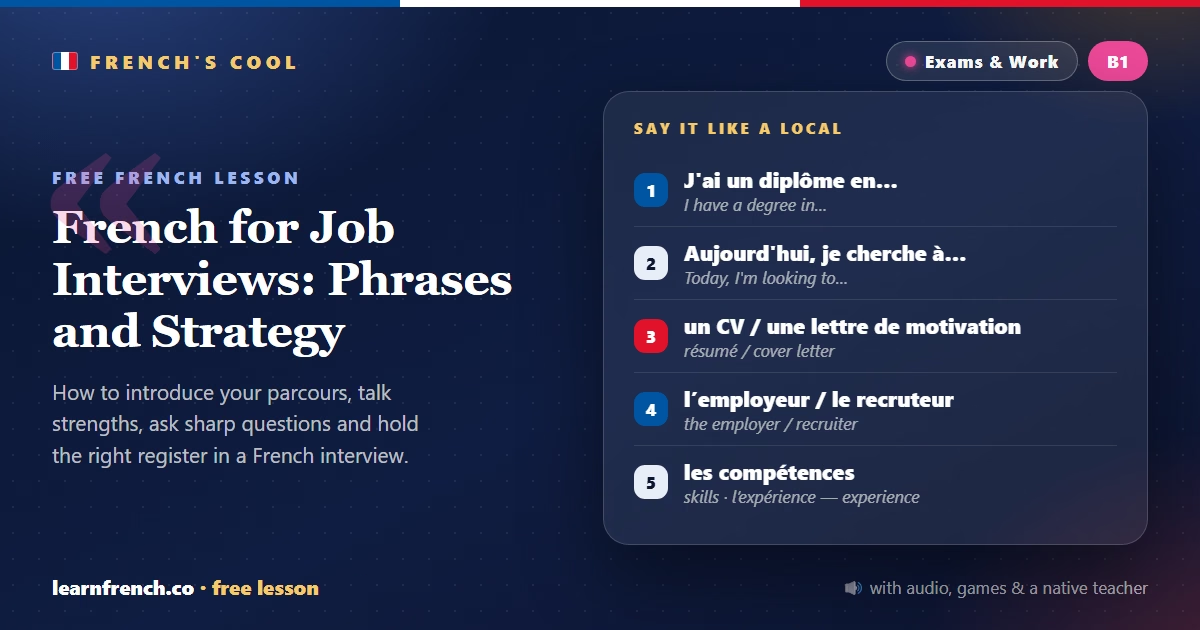
- J’ai un diplôme en… — I have a degree in…
- J’ai travaillé pendant cinq ans dans… — I worked for five years in…
- Aujourd’hui, je cherche à… — Today, I’m looking to…
Strengths and weaknesses
- Mes points forts sont… — My strengths are… (la rigueur, l’autonomie, l’esprit d’équipe)
- Un point que je travaille, c’est… — Something I’m working on is… (frame weaknesses as growth)
- Je suis quelqu’un de… — I’m someone who is… (organisé, curieux, fiable)
Why this company
Recruiters value motivation. Show you’ve researched them:
- Ce qui m’attire dans votre entreprise, c’est… — What draws me to your company is…
- Je partage vos valeurs concernant… — I share your values regarding…
Questions to ask them
Asking nothing reads as disinterest. Have two ready:
- Comment décririez-vous l’équipe ? — How would you describe the team?
- Quelles seraient les priorités des premiers mois ? — What would the priorities of the first months be?
Closing well
End with warmth and the formal register: Je vous remercie pour votre temps. Je reste à votre disposition pour toute information complémentaire. (Thank you for your time. I remain available for any further information.)
A note on register
Use vous from start to finish, even if the company feels relaxed. Speak a little more slowly and formally than in casual conversation — clarity and politeness signal professionalism in France.
Practise it with a real teacher
Reading about French is one thing — saying it out loud, with someone who corrects you gently and adapts to your level, is what makes it stick. Your first 20-minute lesson with Xavier is free, with no card and no commitment. Book your free lesson and let’s put this into practice.

✍️ Quick quiz — did it stick?
strengths → les points ___ (interview classic)
Show answer
forts
I can (know how to) use Excel → je ___ utiliser Excel. (savoir)
Show answer
sais
Polite wish: je ___ évoluer dans l’entreprise. (conditional)
Show answer
voudrais
Play the Quiztap to start · quick practice from this material
Loading the quiz…
The questions verbatim — and the scaffolding to answer them
A real interview conducted in French recycles a short list of common interview questions, so prepare these five word-for-word. « Parlez-moi de vous » — the opener; answer with a three-part arc: formation, professional experience, motivation. « Quel est votre poste actuel ? » — describe your current job in the present tense, achievements in the passé composé: « j’ai travaillé cinq ans chez…, j’ai géré une équipe de… » (j’ai travaillé is the single most useful verb form of the hour). « Qu’est-ce qui vous motive ? » — motivation questions want concrete nouns, not adjectives: les défis, la relation client, la précision. « Quelles sont vos qualités et vos défauts ? » — the qualities/flaws ritual is compulsory theatre; pick a real flaw with a fix attached. « Vous êtes disponible quand ? » — availability, notice periods (le préavis), and the salary question « vos prétentions salariales ? » where a range beats a number.
The culture layer decides as much as the language skills. Vous throughout — no interviewer will offer tu, and the interview stays formal from handshake to merci; titles matter (Madame, Monsieur, never first names uninvited); and the French work culture prizes structured answers — the same taste for plans that gave the world the dissertation en trois parties rewards you for numbering your points aloud: « trois raisons : premièrement… ». Prepare your answers out loud, not on paper — pronunciation under stress is a muscle, and rehearsing with a timer is what makes candidates feel more confident when the qu’est-ce qui vous questions start landing. Whether the role needs the language daily or your french language skills are themselves the qualification, ten rehearsed sentences of clean, confident French about your own career outperform an hour of improvised brilliance: interviewers in every francophone job market read prepared French as respect — help you prepare is literally what they think the language is for.
FAQ
How do I prepare for a French interview?
Script and rehearse the five classics above out loud, research the company in French (their site’s wording gives you vocabulary), prepare two questions to ask, and drill your numbers — dates, team sizes, salary range — until they come out at speech speed.
What are the top 5 interview questions and answers?
Parlez-moi de vous / votre poste actuel / vos motivations / qualités et défauts / votre disponibilité. The scaffolds above turn each into a 30–45 second structured answer — the length French interviewers expect.
What are the 5 C’s of an interview?
Competence, confidence, communication, culture-fit, curiosity — and in France, communication includes register: flawless vous and a structured answer ARE competence signals.
What are the 5 W’s in French?
Qui, quoi, où, quand, pourquoi (+ comment). Interview prep hack: answer all six about your last role, aloud — that’s your « parlez-moi de vous » built from parts.
Common French job interview questions and answers
Most French job interview (entretien d’embauche) questions are predictable. Prepare an answer for each of these and you’ll walk in calm:
| Question (French) | What they’re really asking | Answer starter |
|---|---|---|
| Parlez-moi de vous. | Tell me about yourself. | « Je suis… j’ai [X] ans d’expérience en… » |
| Pourquoi ce poste ? | Why this role? | « Ce poste correspond à… parce que… » |
| Pourquoi notre entreprise ? | Why this company? | « Votre entreprise est reconnue pour… » |
| Quelles sont vos qualités ? | Your strengths? | « Je suis rigoureux(se), organisé(e) et… » |
| Quels sont vos défauts ? | Your weaknesses? | « J’ai tendance à… mais je travaille dessus en… » |
| Où vous voyez-vous dans 5 ans ? | 5-year plan? | « Je me vois évoluer vers… » |
| Quelles sont vos prétentions salariales ? | Salary expectations? | « Selon le marché, j’envisage une fourchette de… » |
Key French interview vocabulary
- un entretien d’embauche — a job interview · un poste — a position
- un CV / une lettre de motivation — résumé / cover letter
- l’employeur / le recruteur — the employer / recruiter
- les compétences — skills · l’expérience — experience
- un contrat (CDI / CDD) — permanent / fixed-term contract
- le salaire / la rémunération — salary / pay
Drill the full set on our workplace vocabulary charts and pair it with the French for work guide.
French job interview FAQ
How do you introduce yourself in a French job interview?
Start with « Parlez-moi de vous » by giving a tight 60-second summary: your name, your relevant experience, and one sentence on why you’re here. Keep it professional and use vous. Rehearse it out loud until it flows — first impressions in a French job interview matter enormously.
How do you answer « quels sont vos défauts ? » (your weaknesses)?
Name a genuine but non-fatal weakness and show how you manage it: « J’ai tendance à être perfectionniste, mais j’ai appris à fixer des priorités. » French recruiters want honesty plus self-awareness, not a fake « I work too hard ».
Should I use tu or vous in a French interview?
Always vous. A French job interview is formal; use vous, full sentences and polite conditionals throughout, even if the interviewer seems relaxed. Let them offer tu — which, in an interview, they almost never will.
How to prepare for a French job interview
Preparation is what turns nerves into confidence. Before any French job interview, work through this checklist:
- Research the company and rehearse your « pourquoi notre entreprise ? » answer aloud.
- Polish your CV and lettre de motivation — the interviewer will ask about them line by line.
- Prepare your stories. Have two or three concrete examples of achievements ready, in French.
- Practise out loud — ideally with a French-speaking partner or teacher — so the common questions feel automatic.
- Prepare your own questions to ask them (see above); it signals real interest.
French interview etiquette and culture
French interviews are more formal than in many English-speaking countries. Arrive five minutes early, greet with a firm handshake and « Bonjour Madame / Monsieur », use vous throughout, and dress a notch smarter than the role. Modesty is valued over hard selling: state your achievements factually rather than boasting. Direct questions about prétentions salariales (salary) usually come later in the process, so let the interviewer raise money first.
After the interview
Send a short thank-you email within 24 hours: « Je vous remercie pour notre entretien et reste à votre disposition pour tout complément d’information. » It’s polite, professional, and keeps you top of mind. Then note the interview questions you found hard and drill better answers for next time.
🧰 Your practice kit
This guide gave you the big picture — now drill the details with these free interactive charts (each with audio examples and exercises):
Prefer a human? Book a free lesson with Xavier →