French Plural Nouns: Beyond Just Adding -S
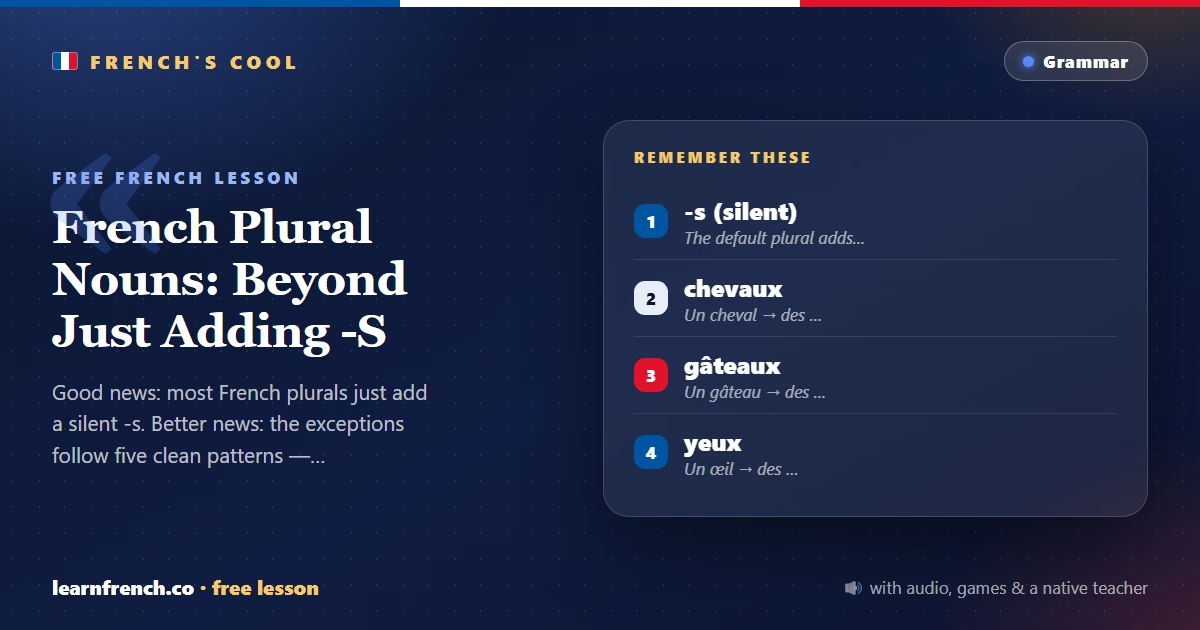
Good news: most French plurals just add a silent -s. Better news: the exceptions follow five clean patterns — including one list of seven words that every French child chants at school.
What you'll learn
Good news: most French plurals just add a silent -s. Better news: the exceptions follow five clean patterns — including one list of seven words that every French child chants at school. Here’s the whole system.
🔈 The article carries the plural, not the noun
Most plurals add a silent -s, so chat and chats SOUND identical — the ear hears the plural in the article: le chat /lə/ vs les chats /le/. Spelling exceptions are small clubs: -eau/-eu take -x (gâteaux), most -al become -aux (journaux).
🎬 This lesson in one minute
The quick version — the full lesson is below. More shorts →
The five patterns
| Ending | Plural | Example | Watch out |
|---|---|---|---|
| most nouns | + s | un livre → des livres | the s is SILENT |
| -s, -x, -z | no change | un fils → des fils, une voix → des voix | the article does all the work |
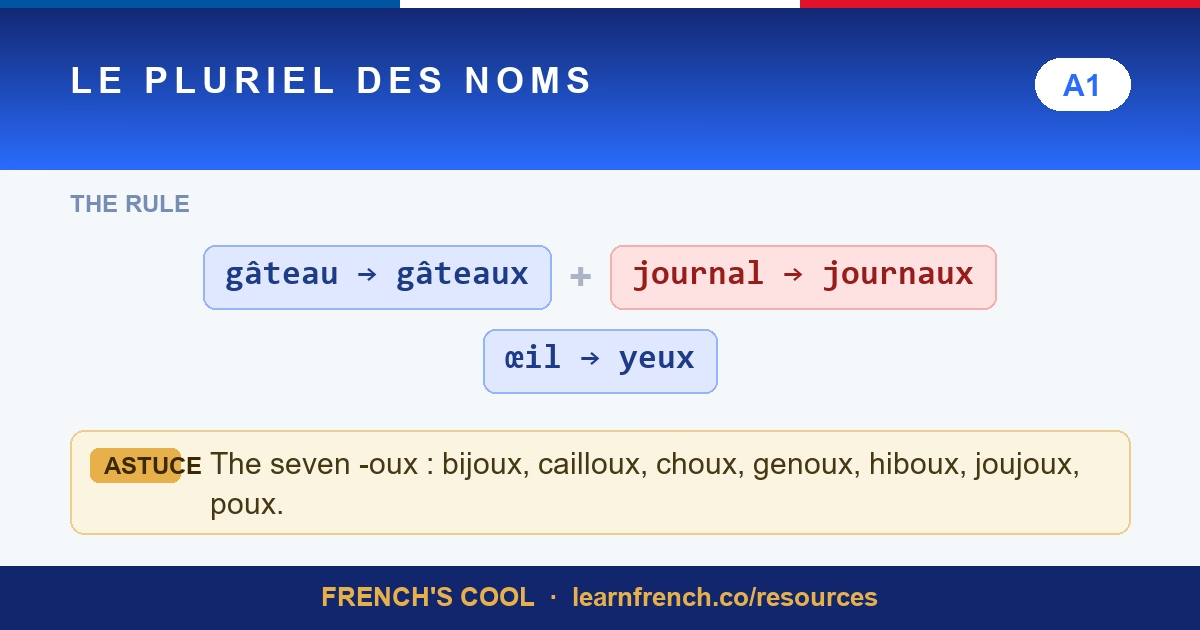
| -eau, -eu | + x | un gâteau → des gâteaux, un jeu → des jeux | exceptions: des pneus, des bleus |
| -al | → -aux | un journal → des journaux | but: des bals, festivals, carnavals |
| -ou | + s | un trou → des trous | …except the famous seven ↓ |
The seven -oux words
French schoolchildren memorise them as a chant: bijoux, cailloux, choux, genoux, hiboux, joujoux, poux — jewels, pebbles, cabbages, knees, owls, toys, lice. Seven words, -x instead of -s, no logic, pure heritage. Learn the chant, own the exception.
The shape-shifters
- un œil → des yeux — the most dramatic plural in French
- monsieur → messieurs, madame → mesdames, mademoiselle → mesdemoiselles (the “my” inside pluralises!)
- le ciel → les cieux (poetic skies)
You can’t HEAR most plurals
Livre and livres sound identical — French plurals live in the article: le/la [lə/la] vs les [le], un/une vs des. That’s why articles are non-negotiable in French (as covered in the articles lesson) — drop them and the listener loses the number.
In real sentences
Read each one aloud, then tap 🔊 and shadow the audio — rhythm first, speed later.
Drill it: noun gender · possessives · ce, cet, cette, ces
✍️ Your turn: build the plural
gâteau → plural? (-eau club)
Show answer
gâteaux — -eau and -eu take -x: bateaux, cheveux, jeux.
journal → plural? (-al club)
Show answer
journaux — most -al nouns become -aux: animaux, chevaux, hôpitaux.
œil → plural? (the wildest one)
Show answer
yeux — totally irregular, and everyday: j’ai les yeux bleus.
What happens to nez, prix, bras in the plural? (already armed)
Show answer
Nothing — nouns ending in -s, -x or -z are invariable: un prix, des prix.
How do you HEAR the plural in « les chats dorment »? (not the s)
Show answer
In les /le/ (vs le /lə/) and in the verb — the final -s of chats stays silent.
FAQ
Do French family names take an -s?
No — chez les Dupont, les Martin. The article goes plural, the name stays put. (Royal dynasties are the exception: les Bourbons.)
What happens to adjectives in the plural?
They agree too, with similar patterns (-al → -aux: des problèmes internationaux), and des often becomes de before them: de bons amis — details in adjective placement.
How do compound nouns pluralise?
By logic, piece by piece: nouns and adjectives inside them agree (des grands-parents), verbs and prepositions don’t (des ouvre-boîtes). When in doubt, the dictionary is honourable.
Full pattern tables with audio on the plural of nouns chart, and the other half of noun agreement in le or la?
Which -al words refuse -aux?
A short guest list: bals, carnavals, festivals, chacals, récitals, régals. Everything else follows the -aux rule — learn the exceptions as a chant and move on.
How do monsieur and madame pluralise?
They are compounds, so both halves move: monsieur → messieurs (mes + sieurs), madame → mesdames, mademoiselle → mesdemoiselles. That is why the plural starts with mes-.
Quick practice
Play the Quiztap to start · quick practice from this material