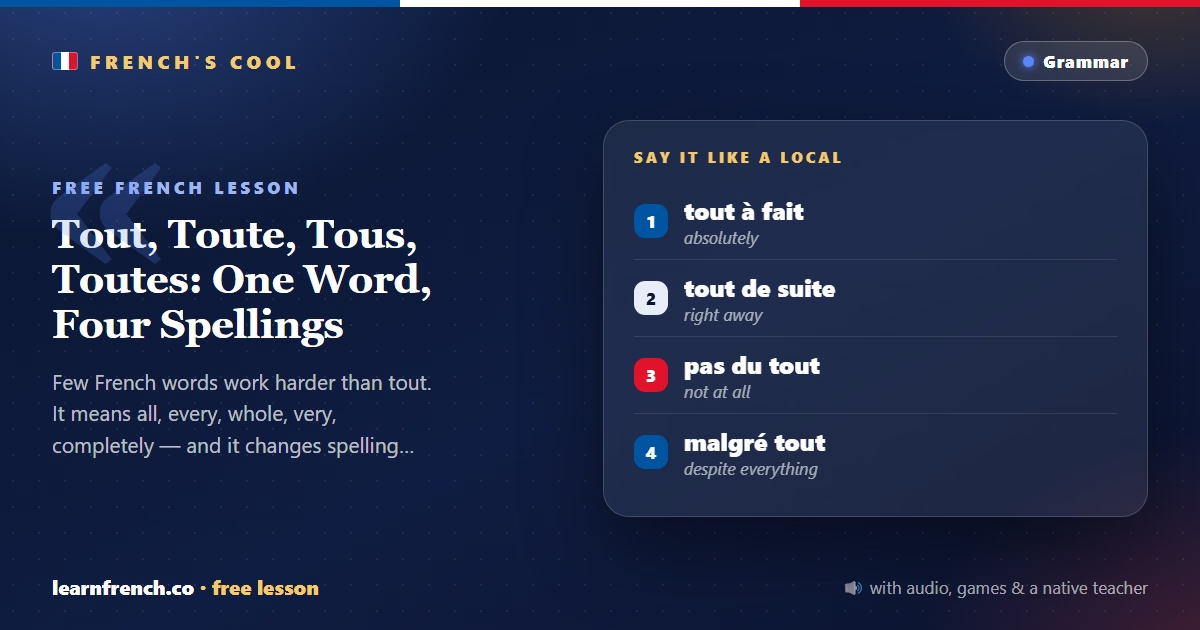
Tout, Toute, Tous, Toutes: One Word, Four Spellings
Few French words work harder than tout. It means all, every, whole, very, completely — and it changes spelling depending on the job. Four forms, three jobs: here’s the map.
What you'll learn
Few French words work harder than tout. It means all, every, whole, very, completely — and it changes spelling depending on the job. Four forms, three jobs: here’s the map.
🧩 Agree with the noun, sound the s for people
As a determiner, tout agrees with what follows: tout le vin, toute la ville, tous les jours, toutes les nuits — and tous sounds like /tu/. As a pronoun (« ils sont tous là ») the s wakes up: /tus/. Hear the s, and it means « all of them ».
🎬 This lesson in one minute
The quick version — the full lesson is below. More shorts →
Job 1: adjective — agrees with the noun
| Form | With | Example |
|---|---|---|
| tout | masc. sing. | tout le monde (everyone) |
| toute | fem. sing. | toute la journée (the whole day) |
| tous | masc. pl. | tous les jours (every day) |
| toutes | fem. pl. | toutes les semaines (every week) |
Pattern: tout + article + noun. Singular = whole/entire, plural = every/all.
Job 2: pronoun — and a secret pronunciation rule
Standing alone for people or things: Tout va bien (everything), Ils sont tous là (they’re ALL here). Here’s the trick nobody tells you: as an adjective, tous is pronounced [tu] — silent s. As a pronoun, it’s [tus] — the s SOUNDS. « Tous [tu] mes amis sont tous [tus] venus. »
Job 3: adverb — meaning “very, completely”
Before an adjective, tout means totally: Il est tout content. Elle habite tout près. As an adverb it’s normally invariable — with one charming exception: before a feminine adjective starting with a consonant, it agrees anyway: Elle est toute seule.
The expressions you can steal today
- tout à fait — absolutely
- tout de suite — right away
- tout à l’heure — earlier / in a bit (both directions in time!)
- pas du tout — not at all
- malgré tout — despite everything
In real sentences
Read each one aloud, then tap 🔊 and shadow the audio — rhythm first, speed later.
Drill it: adjective agreement · the pronoun on · c’est vs il est
✍️ Your turn: which tout?
« all day » = tout / toute la journée? (la journée)
Show answer
toute la journée — feminine noun, feminine tout.
How do you pronounce tous in « ils sont tous là »? (pronoun)
Show answer
/tus/ with the s sounded — it stands alone, so it is the pronoun.
« every day » = ? (plural)
Show answer
tous les jours.
Does tout le monde take a plural verb? (trap)
Show answer
No — singular: tout le monde EST là. It behaves like « everybody » grammatically singular.
Adverbial tout: « elle est ___ surprise ». (the one exception)
Show answer
toute surprise — adverbial tout is invariable EXCEPT before a feminine adjective starting with a consonant.
FAQ
Why is it « tout le monde est » and not « sont »?
Because tout le monde is grammatically singular (“all the world”). Singular verb, always: Tout le monde est là.
How do I know when tous sounds like [tus]?
If you could replace it with “all of them”, the s sounds: ils sont tous [tus] partis. If a noun follows, it’s silent: tous [tu] les jours.
Is « toute seule » a mistake?
No — it’s the adverb’s one agreement quirk before feminine consonant-starting adjectives: elle est toute seule, but elle est tout étonnée (vowel → no agreement).
Full paradigm with audio on the tout chart; the agreement logic behind it lives in adjective placement.
Why do I sometimes hear the s and sometimes not?
Determiner tous (before a noun) is /tu/: tous les jours. Pronoun tous (standing for people already mentioned) is /tus/: on y va tous. One sound distinction, carrying real meaning — worth drilling aloud.
What about fixed phrases like tout à fait and tout de suite?
Learn them as single words: tout à fait (absolutely), tout de suite (right away), tout à l’heure (in a bit / a bit ago), tous les deux (both). No agreement arithmetic needed — they never change.
Quick practice
Play the Quiztap to start · quick practice from this material