Lequel, Auquel, Duquel: Compound Relative Pronouns Demystified
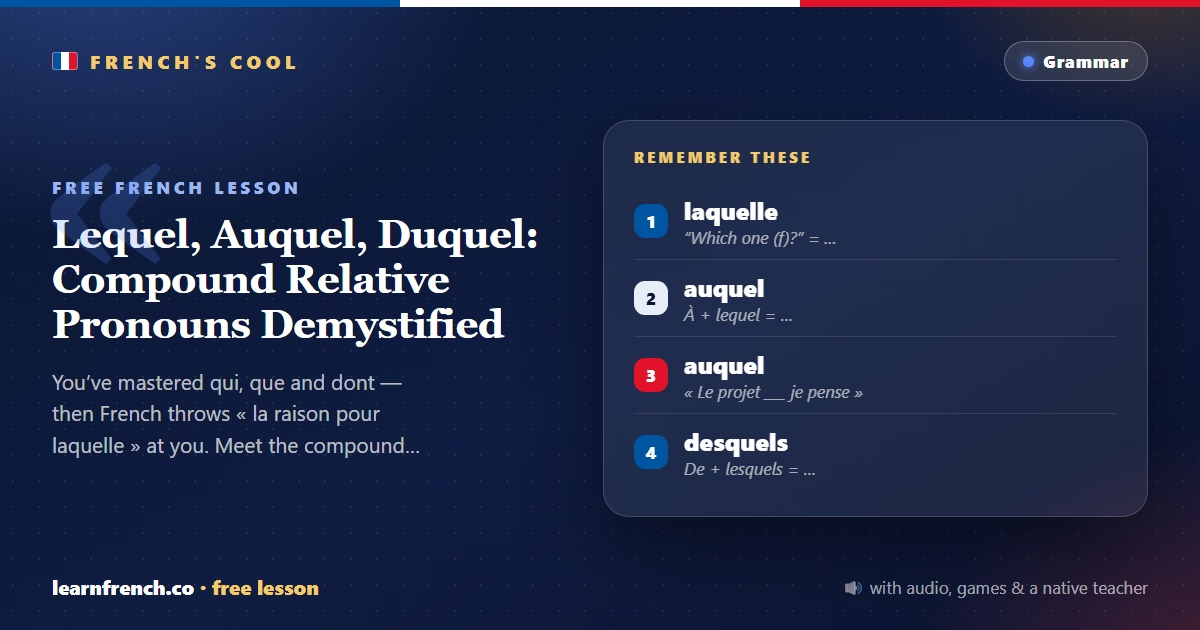
You’ve mastered qui, que and dont — then French throws « la raison pour laquelle » at you. Meet the compound relatives: lequel and its contractions.
What you'll learn
You’ve mastered qui, que and dont — then French throws « la raison pour laquelle » at you. Meet the compound relatives: lequel and its contractions. They look intimidating; they’re actually just agreement + arithmetic.
🧩 lequel is le + quel — and it contracts like le
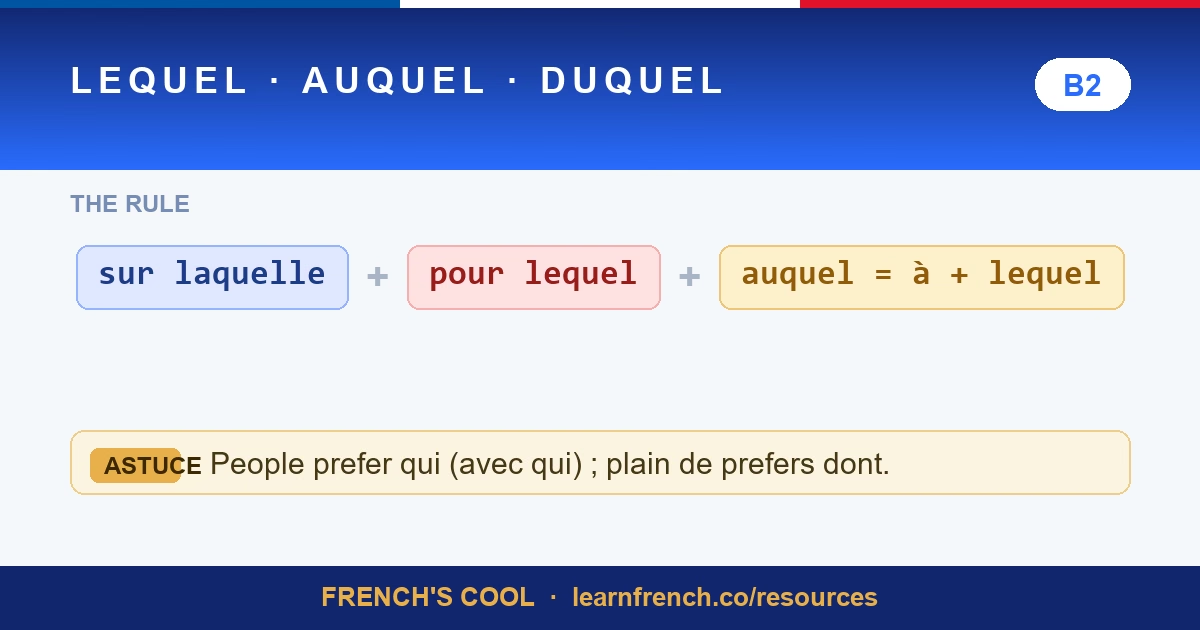
Because lequel contains the article, à and de swallow it exactly as they swallow le: à + lequel = auquel, de + lequel = duquel, à + lesquels = auxquels. The feminine singular resists: à laquelle, de laquelle — no contraction, ever.
🎬 This lesson in one minute
The quick version — the full lesson is below. More shorts →
When you need them: after a preposition
Whenever the relative clause starts with a preposition (sur, dans, avec, pour, sans…), plain que won’t do — you need lequel, agreed with the noun:
- la table sur laquelle j’ai posé les clés — the table ON WHICH…
- le projet pour lequel je travaille — the project FOR WHICH…
- les raisons pour lesquelles je pars — the reasons WHY (French says “for which”!)
The four base forms
| singular | plural | |
|---|---|---|
| masculine | lequel | lesquels |
| feminine | laquelle | lesquelles |
The arithmetic: à and de melt in
Exactly like à + le = au, the prepositions fuse: à + lequel = auquel, à + lesquels = auxquels, de + lequel = duquel, de + lesquelles = desquelles (laquelle resists: à laquelle, de laquelle). « Le problème auquel je pense » — the problem I’m thinking about (penser à!).
Two mercies
- People prefer qui: after a preposition with a person, French likes avec qui, pour qui: l’amie avec qui je voyage. Lequel works but sounds stiff.
- Dont beats duquel: when de belongs directly to the verb, use dont: le livre dont je parle — never « duquel je parle ». Duquel survives mainly after compound prepositions: à côté duquel, au milieu desquels.
In real sentences
Read each one aloud, then tap 🔊 and shadow the audio — rhythm first, speed later.
Drill it: qui, que, dont · quel vs qu’est-ce que · à vs de
✍️ Your turn: contract it
à + lesquels = ? (contract)
Show answer
auxquels.
de + laquelle = ? (the resistant one)
Show answer
de laquelle — feminine singular never contracts.
« the exam I’m thinking about » : l’examen ___ je pense. (penser à)
Show answer
auquel — penser à + lequel.
For people, what usually replaces avec lesquels? (simpler)
Show answer
avec qui — les amis avec qui je voyage. Lequel stays for things.
« the book I’m talking about » — duquel or dont? (shortcut)
Show answer
Dont: le livre dont je parle. Dont replaces de + lequel whenever de attaches straight to the verb; duquel survives after compound prepositions (près duquel, à côté duquel).
FAQ
Isn’t lequel also a question word?
Yes — same forms, different job: Lequel tu préfères ? (Which one do you prefer?) The relative use just recycles them after prepositions.
How do I say « the day when »?
Not with lequel — French uses où for time: le jour où on s’est rencontrés. Où also covers places, saving you dans laquelle: la ville où j’habite.
Do I really need these at A2/B1?
Recognition first, production later — they’re everywhere in written French. Start producing pour lequel/laquelle (reasons) and auquel (penser à); the rest follows at B2.
Drill all the forms on the compound relatives chart, with the basics on the relative pronouns chart and question-word lequel in asking questions.
When do I actually NEED duquel rather than dont?
Only after preposition phrases ending in de: près de, à côté de, au bout de, à cause de… — le pont au bout duquel se trouve le café. If the de belongs to the verb itself (parler de, avoir besoin de), dont is the natural choice.
Is lequel as a question word formal?
Not at all — Lequel tu préfères ? is everyday spoken French whenever a choice is on the table. It is the RELATIVE lequel (auquel, duquel) that leans written and formal.
Quick practice
Play the Quiztap to start · quick practice from this material