Encore vs Toujours: Still, Again and Always, Untangled
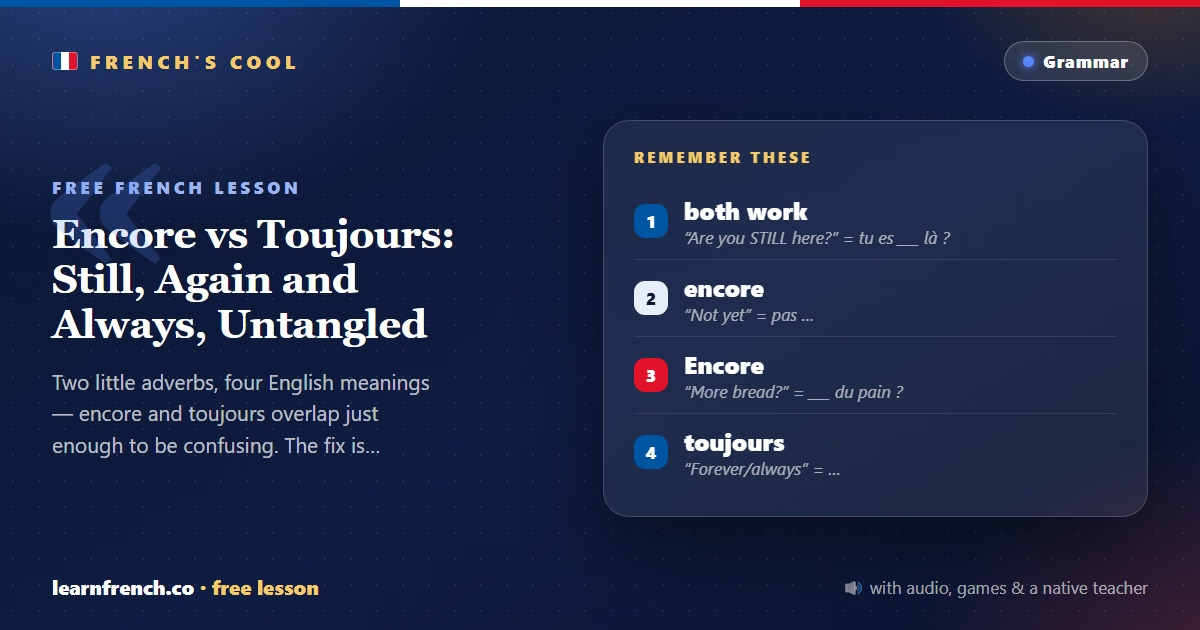
Two little adverbs, four English meanings — encore and toujours overlap just enough to be confusing. The fix is knowing which meanings belong to which word, and where the two genuinely trade places.
What you'll learn
Two little adverbs, four English meanings — encore and toujours overlap just enough to be confusing. The fix is knowing which meanings belong to which word, and where the two genuinely trade places.
🔄 Both mean « still » — the negatives never mix
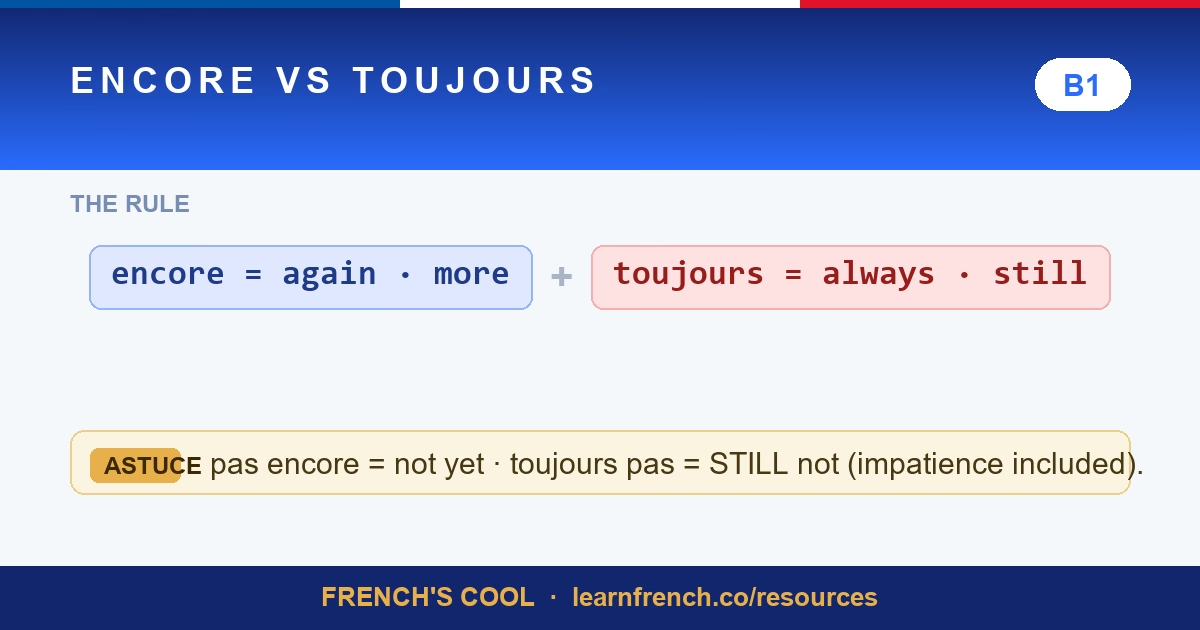
Il dort encore and il dort toujours BOTH mean he’s still sleeping. But encore also means again/more, toujours also means always — and the negatives are strict: pas encore = not yet, toujours pas = STILL not (with a sigh).
🎬 This lesson in one minute
The quick version — the full lesson is below. More shorts →
What toujours owns
- Always (habits): Il est toujours en retard. — He’s always late.
- Still (continuing states): Tu habites toujours à Lyon ? — Do you still live in Lyon?
What encore owns
- Again: Il a encore oublié ses clés. — He forgot his keys AGAIN. (Note the exasperation — encore carries it beautifully.)
- More: Encore du café ? — More coffee? / Tu veux encore jouer ? — again/more.
- Still (ongoing actions): Il dort encore. — He’s still asleep.
- Yet, in the negative: Pas encore. — Not yet.
The shared zone: “still”
For “still”, both often work: « Il pleut encore » ≈ « Il pleut toujours ». Nuance: encore leans “still going on (and it may stop)”, toujours leans “as before, unchanged”. In the NEGATIVE they split cleanly:
| French | Means | Flavour |
|---|---|---|
| pas encore | not yet | neutral, patient |
| toujours pas | STILL not | impatient: it should have happened! |
« Le train n’est pas encore là » (calm) vs « Le train n’est toujours pas là ! » (checking your watch, sighing in French).
Encore’s hidden job: “even”
One meaning most textbooks skip: in front of a comparative, encore means “even”.
- C’est encore mieux. — It’s even better.
- Il fait encore plus froid qu’hier. — It’s even colder than yesterday.
- C’était encore pire. — It was even worse.
Toujours can’t take this job — « toujours mieux » just means “always better” (or “still better”), never “even better”. When you want to crank a comparison up a notch, encore is your word.
Common mistakes to unlearn
Three traps I hear every week:
- Saying « Il est encore en retard » to mean “he’s always late”. A French ear hears “late AGAIN” — one more event, not a habit. For the character flaw, you want toujours: Il est toujours en retard.
- Saying « Je n’ai pas toujours fini » for “I haven’t finished yet”. That actually means “I haven’t always finished” — an odd confession. Not yet is pas encore, every time: Je n’ai pas encore fini.
- Ordering “more coffee” with plus. In everyday speech the ne of negation vanishes, so « je veux plus de café » — said without the final s sound of plus — means “I don’t want any MORE coffee”. Zero coffee arrives. Encore du café dodges the whole minefield.
At the café: both words in the wild
— Alors, Marc n’est toujours pas là ?
— Non, pas encore. Il a encore raté son bus.
— Encore ! Bon… tu veux encore un café, en attendant ?
— Volontiers. Au fait, il habite toujours à Lyon, Marc ?
— Oui, toujours.
Five flavours in five lines: toujours pas (still not — foot tapping), pas encore (not yet — calm), encore raté (missed it again), encore un café (one more), toujours à Lyon (still there, unchanged). Read it aloud twice and the pairs start sorting themselves.
A memory anchor
Toujours is literally tous + jours — “all days”. If the idea stretches over all the days — always, or still-as-before — it’s toujours. Everything built on repetition or addition — again, more, one more, not yet — belongs to encore. When in doubt, ask yourself: habit or rerun?
In real sentences
Read each one aloud, then tap 🔊 and shadow the audio — rhythm first, speed later.
Drill it: temps, fois, heure · il y a · connectors
✍️ Your turn: encore or toujours?
« Not yet » = ? (patience)
Show answer
Pas encore — neutral, it’s coming.
« STILL not here » = ? (impatience)
Show answer
Toujours pas — the word order carries the exasperation: il n’a toujours pas répondu.
« more bread » = ? (encore’s other job)
Show answer
Encore du pain — encore + partitive = more of it.
Il pleut encore vs il pleut toujours — any difference? (fine nuance)
Show answer
Nearly none for « still raining »; encore leans « again?! », toujours leans « as ever ». Context rules.
« even better » = ? (encore + comparative)
Show answer
Encore mieux / encore plus beau — encore boosts comparatives, like English « even ».
FAQ
Does encore mean “encore!” like at a concert?
That’s where English borrowed it — but French audiences actually shout « Une autre ! » or « Bis ! ». Real French encore is the everyday again/more/still word.
What is « encore une fois »?
One more time / once again: Répète encore une fois. You’ll also hear toujours in the philosophical sense: c’est toujours ça (at least that’s something).
Where do these adverbs go in the sentence?
After the conjugated verb: il dort encore, il est toujours là. In the passé composé, between auxiliary and participle: il a encore oublié. Same slot as the frequency adverbs on the frequency adverbs chart.
More time-talk: depuis, pendant & il y a and the expressing time chart.
How do I know if toujours means still or always?
The verb’s time-shape: an ongoing situation reads as still (il travaille toujours ici), a habit or timeless truth reads as always (je prends toujours un café à 8 h). Ambiguity is rare and French speakers resolve it by context, as you will.
What is « toujours est-il que… »?
A fixed connector: « the fact remains that… ». Nothing to do with time — file it with the connectors, not with toujours.
Quick practice
Play the Quiztap to start · quick practice from this material