The French Subjunctive, Finally Made Simple
The French subjunctive without the fear — it's a mood, not a tense. How to build it, the irregulars that matter, the triggers (vouloir/emotion/doubt/il faut), when NOT to use it (je pense que, espérer que), and the same-subject infinitive shortcut. With audio and a quiz.
What you'll learn
The subjunctive scares learners more than any other part of French — and it really doesn’t deserve to. It’s not a tense (it doesn’t tell you when); it’s a mood — the form French uses when something is wanted, feared, doubted or necessary rather than stated as a plain fact. Here’s the whole thing on one page.
🎬 This lesson in one minute
The quick version — the full lesson is below. More shorts →
🧠 The one idea to hold onto
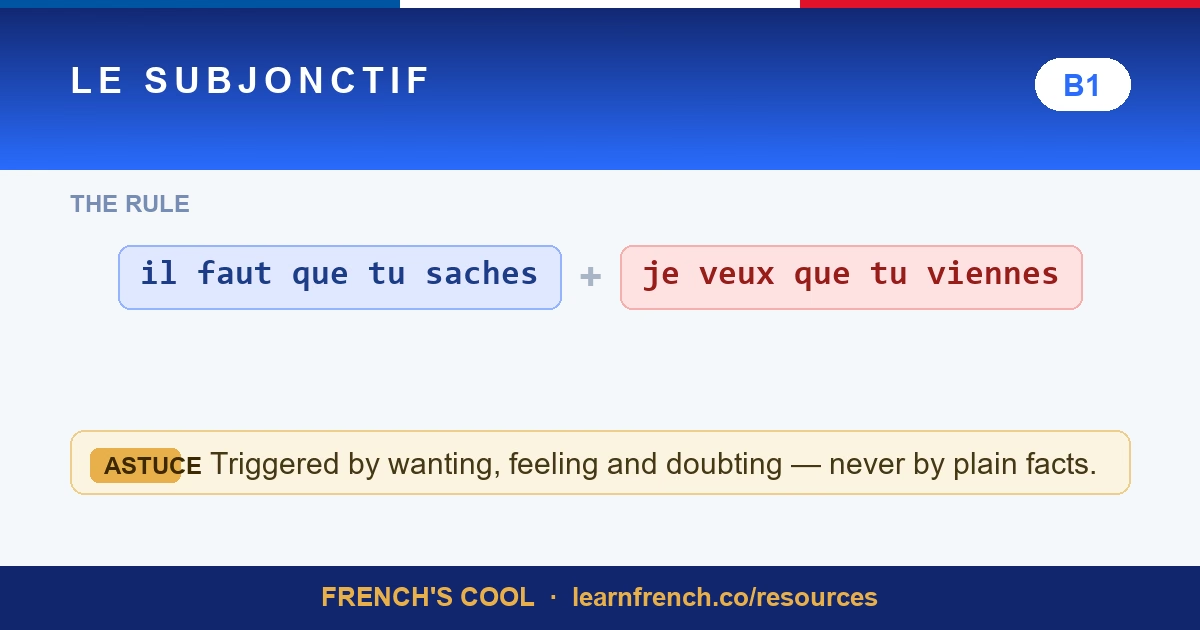
Indicative = fact. Subjunctive = not-quite-fact (wish, emotion, doubt, necessity). « Je sais qu’il vient » (fact → indicative) vs « Je veux qu’il vienne » (wish → subjunctive).
1. How to build it — the formation rules
For almost every verb: take the ils form of the present, drop -ent, add the endings -e, -es, -e, -ions, -iez, -ent.
The nous/vous forms borrow from the imperfect (que nous parlions, que vous parliez) — which is why they often look identical to the imperfect.
2. The irregulars worth memorising
Only a handful, but they’re the most common verbs — learn these cold:
3. The French subjunctive rules — when to use it
The subjunctive lives in the second half of a sentence, after que, when the first half expresses:
- Will / wish: vouloir que, désirer que, exiger que — je veux que tu viennes.
- Emotion: être content/triste/surpris que, avoir peur que — je suis ravi que tu sois là.
- Doubt / possibility: douter que, il est possible que, je ne pense pas que — je doute qu’il vienne.
- Necessity: il faut que, il est important que — il faut que je parte.
- Certain conjunctions: pour que, bien que, avant que, à condition que, jusqu’à ce que.
4. When NOT to use it (the relief section)
Plenty of « que » sentences stay in the indicative, because they state facts or beliefs:
- je pense que / je crois que / je sais que + indicative — je pense qu’il a raison.
- il est certain / il est clair que + indicative — it’s presented as true.
- espérer que + indicative (yes, really — hope takes the indicative!) — j’espère qu’il viendra.
Flip one to the negative and doubt creeps in: je ne pense pas qu’il ait raison → subjunctive.
5. The shortcut that actually works
Same subject on both sides? You often skip the subjunctive entirely and use an infinitive:
That’s the same rule you saw for pour vs pour que: one subject → infinitive, two subjects → que + subjonctif.
✍️ Subjunctive check
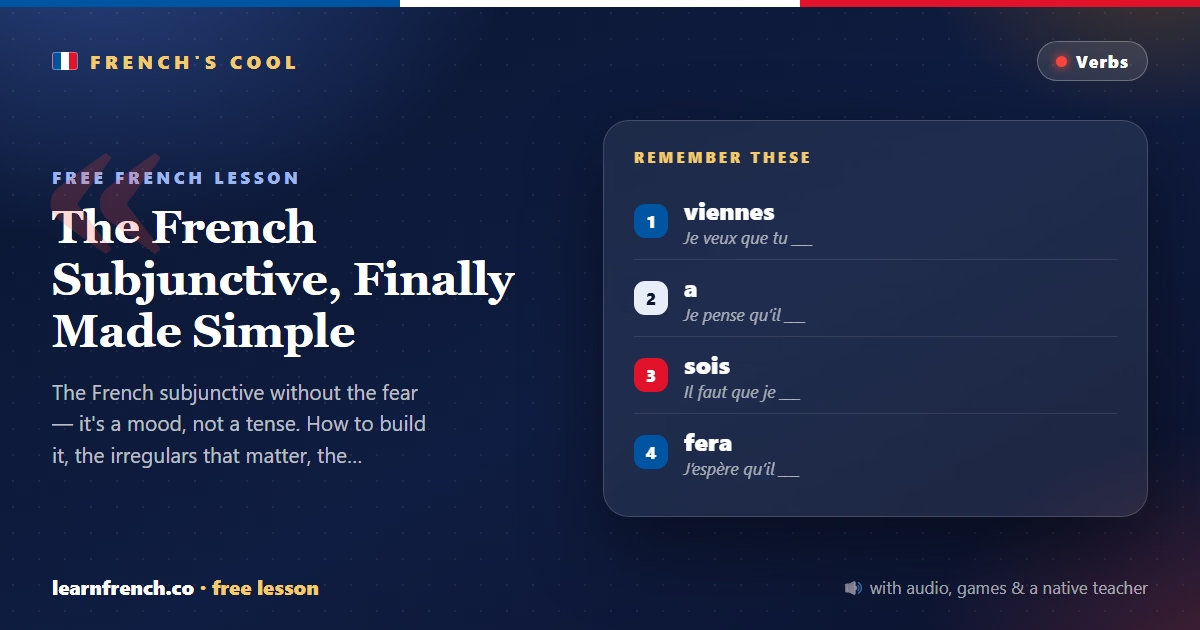
Je veux que tu ___ (venir). (two subjects → subj)
Show answer
viennes
Je pense qu’il ___ (avoir) raison. (je pense = fact → indicative)
Show answer
a
Il faut que je ___ (être) à l’heure. (il faut que → subj (irregular))
Show answer
sois
J’espère qu’il ___ (faire) beau. (espérer que → indicative!)
Show answer
fera
Play the Quiztap to start · quick practice from this material
Loading the quiz…
The mechanics: forming it, triggering it, surviving it
To form the subjunctive, start from the third person plural of the present tense: take ils parlent, drop -ent, and add the subjunctive endings -e, -es, -e, -ions, -iez, -ent. Que je parle, que tu finisses, qu’ils vendent — for most verbs the subjunctive conjugation is hiding in plain sight, which is why learners who conjugate from the ils-stem stop fearing it within a week. The irregular subjunctive forms worth memorising are the usual suspects: que je sois (être), que j’aie (avoir), que j’aille (aller), que je fasse (faire), que je puisse (pouvoir) — irregular verbs here as everywhere in french grammar.
When is the subjunctive used? The structure is always the same: a main clause with a trigger, que, then a dependent clause with two different subjects. Verbs expressing wish, emotion, doubt and necessity require the subjunctive: je veux que tu viennes, il faut que nous partions, j’ai peur qu’il soit tard. Same subject? No subjunctive — French switches to the infinitive: je veux venir, never *je veux que je vienne*. And the classic exam trap: je pense que takes the indicative (it asserts), but its negative — je ne pense pas que — takes the subjunctive, because doubt entered the room. Certainty verbs never use the subjunctive; uncertainty verbs always do; that one axis explains most subjunctive sentences you will ever build.
Perspective to keep you sane while learning the subjunctive: French has no future subjunctive at all (the present form covers it), and of the four historical forms only two appear in modern speech — the present and the past (que j’aie parlé). Fluent french speakers use the common subjunctive triggers as fixed phrases (il faut que, pour que, bien que, avant que), so learn the phrases rather than the theory, expect to make mistakes on the boundary cases (natives argue about après que), and let the examples of sentences above do the drilling. That is the honest route to use subjunctive forms naturally — free french lessons’ worth of theory compressed into one reflex: trigger heard, ils-stem found, ending attached.
FAQ
What is the hardest tense in French?
By reputation, the subjunctive — but it’s a mood, not a tense, and its difficulty is knowing WHEN, not HOW. Formation-wise the passé simple is stranger; day-to-day, choosing passé composé vs imparfait causes more real errors.
What are the 4 types of subjunctive?
Present (que je parle), past (que j’aie parlé), imperfect (que je parlasse) and pluperfect (que j’eusse parlé). Only the first two exist in spoken French — the last two survive in literature and jokes about literature.
Is « je pense que » subjunctive?
No — affirmative je pense que takes the indicative: je pense qu’il vient. Negate or question it and the subjunctive appears: je ne pense pas qu’il vienne. Belief asserted = indicative; belief doubted = subjunctive.
The full present subjunctive, all six persons
Take parler. The stem comes from ils parlent → parl-, then add the subjunctive endings:
- que je parle · que tu parles · qu’il/elle parle
- que nous parlions · que vous parliez · qu’ils/elles parlent
Notice the shape: je/tu/il/ils forms sound like the present indicative, while nous/vous look like the imparfait. Two-stem verbs follow the same « boot » pattern: boire → que je boive BUT que nous buvions; prendre → que je prenne / que nous prenions; venir → que je vienne / que nous venions.
Subjunctive vs indicative: the real difference
The indicative states facts the speaker treats as real: « Je sais qu’il vient. » The subjunctive mood marks what is wanted, doubted, feared or felt — filtered through someone’s head rather than asserted: « Je veux qu’il vienne. » Same verb, same person — the mood tells your listener whether you are reporting reality or reacting to an idea. That is why « je pense que » takes the indicative but « je ne pense pas que » flips to the subjunctive: denying an opinion turns the clause into a maybe.
Are there really four subjunctive tenses?
Technically yes — in practice you need one and a half:
- Present subjunctive — 95% of real usage: « Il faut que tu viennes. »
- Past subjunctive — completed action after a trigger: « Je suis content que tu sois venu. » (subjunctive of avoir/être + past participle)
- Imperfect & pluperfect subjunctive — literary fossils (« qu’il fût », « qu’il eût été »). Recognise them in classic novels; no one says them.
Phrases you can use tonight
The fastest way in is whole sentences, not rules:
- « Il faut que j’y aille. » — I have to go. (the most-said subjunctive in French)
- « Je veux que tu sois là. » — I want you to be there.
- « Bien qu’il soit tard… » — although it’s late…
- « C’est dommage que tu ne puisses pas venir. » — it’s a shame you can’t come.
- « Pour que tout le monde comprenne… » — so that everyone understands…
French subjunctive FAQ
Is the subjunctive the hardest part of French?
It is the most feared, which is different. The conjugation itself is light — one set of endings, a handful of irregulars. The skill is noticing the trigger phrases, and those are a finite list you drill. Most learners find the passé composé vs imparfait choice harder in daily speech.
Do French people actually use it?
Constantly — « il faut que », « je veux que », « avant que » are everyday glue. What they don’t use are the literary tenses; the street version is « faut que j’y aille ».
Which irregular subjunctives should I learn first?
The big five: être → sois, avoir → aies, faire → fasse, aller → aille, pouvoir → puisse. Drill them on the subjunctive chart and the per-level lessons from A1 to native.
🧰 Master the subjunctive
The resources that drill exactly this:
🎯 More practice — translation — put it into French
Translate into French: « that I speak » (translation)
Show answer
ils parlent → que je parle
Translate into French: « that I finish » (translation)
Show answer
ils finissent → que je finisse
Translate into French: « that I take » (translation)
Show answer
ils prennent → que je prenne
Translate into French: « I have to leave now. » (translation)
Show answer
Il faut que je parte maintenant.
Translate into French: « I’m glad you came. » (translation)
Show answer
Je suis content que tu sois venu.
Want the subjunctive to become automatic? Book a free lesson with Xavier →
🎮 Practise this lesson
Games built from this exact page — turn what you just read into play:
🧩 Sentence Builder rebuild these sentences
🎧 Listening Game which sentence do you hear?