Quand vs Lorsque — and the Future Rule English Gets Wrong
Quand and lorsque both mean “when”, and choosing between them is the easy part. The real prize of this lesson is a grammar rule where French is MORE logical than English — and where English speakers…
What you'll learn
Quand and lorsque both mean “when”, and choosing between them is the easy part. The real prize of this lesson is a grammar rule where French is MORE logical than English — and where English speakers make a silent mistake for years.
🎬 This lesson in one minute
The quick version — the full lesson is below. More shorts →
Quand vs lorsque: the actual difference
| quand | lorsque | |
|---|---|---|
| Questions | ✔ Quand pars-tu ? | ✘ never |
| “When” clauses | ✔ everyday | ✔ formal/written |
| Register | neutral, spoken default | elegant, literary |
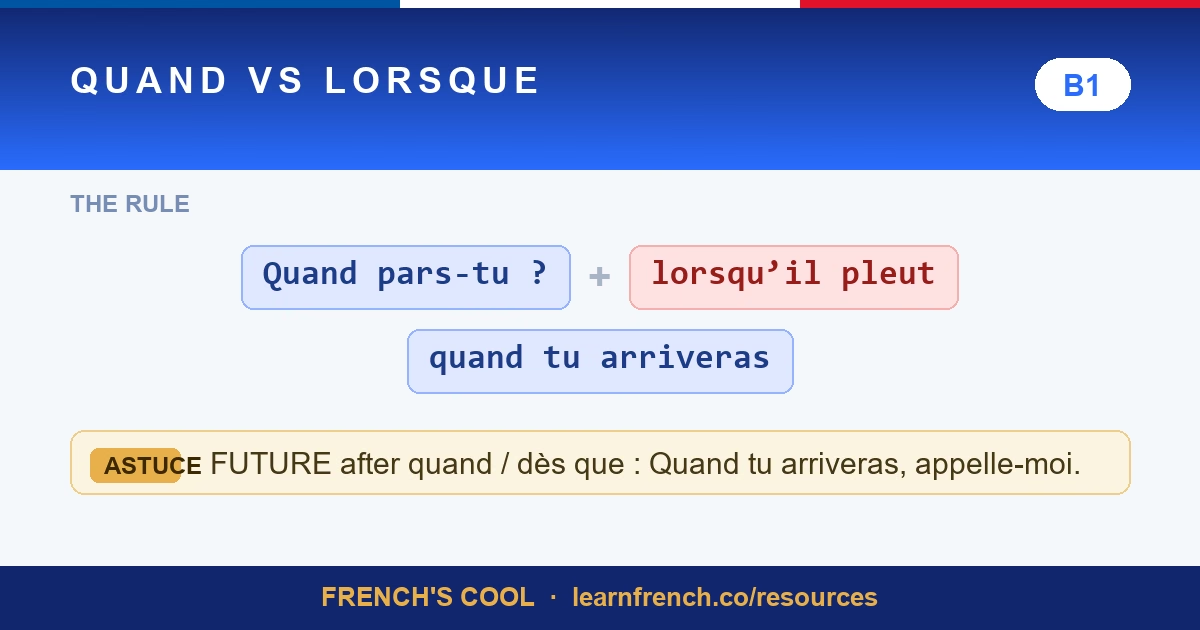
That’s it: lorsque is quand in a suit, and it can’t ask questions. (It elides: lorsqu’il pleut.)
★ The future rule
English says « When you arrive, call me » — present tense for a future event. French refuses the illusion: if it’s future, SAY future:
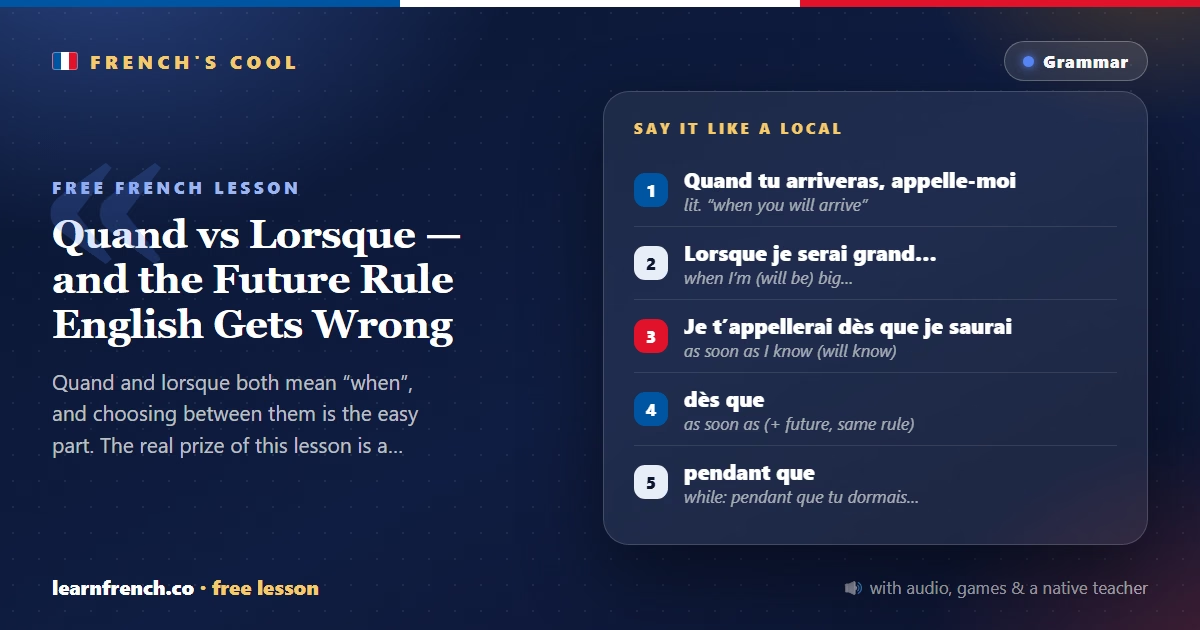
- Quand tu arriveras, appelle-moi. — lit. “when you will arrive”
- Lorsque je serai grand… — when I’m (will be) big…
- Je t’appellerai dès que je saurai. — as soon as I know (will know)
Note the contrast with si clauses, where the future is BANNED after si. French: future after quand, never after si. English does the exact opposite of neither. Choose your fighter.
The when-family
- dès que — as soon as (+ future, same rule)
- pendant que — while: pendant que tu dormais…
- au moment où — at the moment when (où does time! see qui, que, dont)
- chaque fois que — every time that
Three mistakes to stop making
- ✘ Le jour quand je suis né… → ✔ Le jour où je suis né… After a time noun — le jour, l’année, le moment — French wants où, never quand. English “the day when” is the trap; step around it.
- ✘ Quand’il pleut… → ✔ Quand il pleut… Quand never elides — that apostrophe belongs to lorsqu’il alone. In speech you do hear the glue, though: a liaison, « quan-t-il ».
- ✘ Quand il pleut et quand il fait froid… → ✔ Quand il pleut et qu’il fait froid… When a second “when” clause tags along, French swaps the repeat for a simple que. Fussy? Yes. Natives do it without thinking.
Level up: the double future
Once the future rule feels natural, French raises the stakes. If one future action must be FINISHED before the other starts, the finished one takes the futur antérieur — literally “will have done”:
- Quand tu auras fini, on partira. — when you’ve finished (will have finished), we’ll leave
- Dès que j’aurai reçu le mail, je te préviendrai. — as soon as I’ve got the email, I’ll let you know
English hides all this behind a modest “when you’ve finished”. French shows its work — and getting this right is one of the fastest ways to sound genuinely advanced.
Coffee after work: quand in the wild
— Tu finis quand, ce soir ?
— Vers 18 heures. Pourquoi ?
— On prend un café quand tu auras fini ?
— Volontiers. Je t’appellerai dès que je serai sorti du bureau.
Note the first line: in everyday speech, quand happily sits at the END of the question. Same question, three registers: Quand pars-tu ? (formal), Quand est-ce que tu pars ? (neutral), Tu pars quand ? (the spoken default). And notice who never got invited for coffee: lorsque. In real conversation, it almost never is.
FAQ
What about « quand même »?
A different beast entirely — “anyway, still, all the same”: Il pleut, mais on y va quand même. One of the most-used phrases in spoken French.
Can quand mean « whereas »?
In formal French, alors que/tandis que do contrast better. Keep quand for time and you’ll never sound wrong.
Which tense after « quand » for past habits?
The imparfait: quand j’étais petit… (when I was little) — the classic story-opener from the past tenses guide.
Master the future forms themselves via the futur proche lesson and the complete tense guide, with the conditional on the conditionnel chart.
Quick practice
Play the Quiztap to start · quick practice from this material